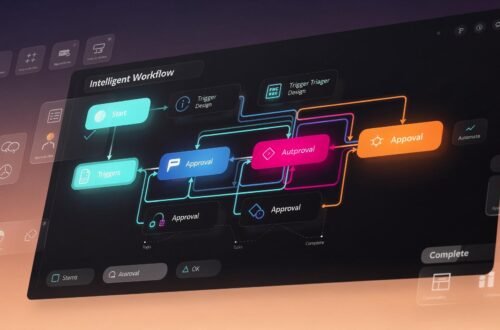

The search term droven.io new gadgets 2026 can be confusing because it sounds like the name of a specific collection of products. A closer look suggests that it is better understood as a topic covering emerging consumer technology, including AI-powered devices, smart wearables, connected home products, productivity hardware, robotics, and other new gadgets. Droven.io itself presents technology reviews and coverage of AI and related technology topics, rather than appearing to be the manufacturer of a single proprietary gadget line.
That distinction matters. Someone searching for new gadgets does not necessarily need another list of expensive products. They usually want to know what is actually new, how the technology works, what problems it can solve, and whether a device is worth their money.
This guide explores droven.io new gadgets 2026 from that practical perspective. You will learn about the major categories shaping new consumer technology, how AI is changing the role of everyday devices, where the technology is genuinely useful, and what to check before buying anything.
What Does Droven.io New Gadgets 2026 Actually Mean?
The phrase droven.io new gadgets 2026 is best treated as a search topic about emerging gadgets and technology trends rather than the official name of a single product range.
The topic can include devices such as:
- AI-powered wearables
- Smart glasses and extended reality devices
- Smart rings and health trackers
- AI-enabled laptops and computers
- Smart home devices
- Home robots and automated cleaning systems
- Foldable and flexible-screen devices
- Connected productivity and creator tools
The important idea connecting these categories is that modern gadgets are increasingly more than standalone pieces of hardware.
A traditional device might perform one clear function. A modern smart device may combine sensors, software, AI processing, cloud services, mobile apps, and internet connectivity.
For example, a wearable does not simply collect information from a sensor. Its software may organize that information, identify patterns, and present recommendations or alerts. Whether those recommendations are useful depends on the quality of the sensors, algorithms, software, and the context in which the device is used.
This is why evaluating new gadgets requires more than comparing specifications.
Why 2026 Gadgets Are Different From Traditional Electronics
The biggest change is not that every gadget suddenly became intelligent. The more important shift is the increasing combination of hardware and software.
A modern device may use AI in several ways:
- Processing information – analyzing text, images, audio, or sensor data.
- Personalizing results – adapting suggestions based on settings, behavior, or previous interactions.
- Automating actions – performing certain tasks with less manual input.
- Understanding context – using information such as location, time, connected devices, or the current task to make a response more relevant.
- Working locally – in some cases, processing data on the device instead of sending every task to a remote server.
However, the word AI should not automatically be treated as proof that a gadget is better.
A useful question is: What does the AI feature actually do that could not be done just as easily without it?
If the answer is unclear, the feature may be more useful in marketing than in daily life.
The Main Categories Behind Droven.io New Gadgets 2026
AI Smart Glasses and Spatial Computing
Smart glasses are one of the most interesting areas of consumer technology because they attempt to move digital information away from the phone screen and closer to the user’s natural field of view.
Depending on the product, smart glasses may combine:
- Cameras
- Microphones
- Speakers
- Voice assistants
- AI services
- Navigation features
- Translation tools
- Visual displays
The potential advantage is convenience.
Imagine a traveler who needs directions while walking through an unfamiliar city. Instead of repeatedly taking out a phone, a hands-free device could provide information through audio or a display.
A field technician could potentially access instructions while keeping both hands available for equipment.
A user could also capture a photo or ask a voice assistant for information without immediately reaching for another device.
The Limitation of Smart Glasses
The technology also creates serious questions.
A device containing cameras and microphones can affect not only the person wearing it, but also people nearby. Buyers should understand:
- When recording is active
- Where recordings are stored
- Whether information is processed locally or remotely
- What account or cloud services are required
- How other people are notified about recording
Smart glasses may become more useful, but usefulness should not be confused with universal adoption. Battery life, comfort, privacy, price, and software support remain important factors.

Smart Wearables Are Moving Beyond Basic Tracking
Wearables are another major part of the droven.io new gadgets 2026 conversation.
Smartwatches and smart rings can collect information from sensors while the user goes about daily life. Depending on the device, that information may relate to movement, sleep, heart rate, activity, or other wellness measurements.
The value of a wearable is not simply the amount of data it produces.
Consider two different users.
User A checks their wearable constantly but does not understand what the measurements mean.
User B uses the device to notice long-term patterns in sleep, exercise, or daily activity and adjusts their routine accordingly.
The second use is potentially more valuable because the data is connected to a decision.

An Important Health-Tech Misconception
Consumer wearables should not automatically be treated as medical diagnostic tools.
A device can provide useful measurements or trends while still having limitations related to sensor accuracy, software interpretation, individual differences, and the conditions under which it is used.
Health-related claims should always be checked against the manufacturer’s current documentation and, where relevant, independent or regulatory information.
A sensible approach is to treat consumer health data as information that may help you understand patterns, not as a replacement for professional medical advice.
AI PCs and Local Processing
Another important gadget category is the AI-enabled computer.
Modern laptops and other computers may include specialized hardware designed to handle certain AI workloads more efficiently. The practical benefit can depend heavily on the software being used.
For example, an AI feature might help with:
- Transcription
- Image processing
- Audio enhancement
- Translation
- Searching personal files
- Summarizing supported content
- Running certain AI models locally
Local processing can offer potential advantages.
If a task runs on the device, information may not need to be sent to a remote server for every operation. This can improve responsiveness and may provide privacy benefits in some situations.
But there is an important limitation: not every AI feature runs locally.
Some features still depend on cloud services, accounts, subscriptions, or an internet connection. Buyers should check how a specific feature works rather than assuming that an “AI PC” label guarantees complete offline AI functionality.

Smart Home Gadgets: Useful When They Solve a Real Problem
Smart home technology can include lighting, security cameras, thermostats, speakers, sensors, cleaning devices, and other connected products.
The most useful smart home gadgets usually solve a specific problem.
For example:
Example: Energy Management
A connected system may allow a homeowner to monitor compatible devices or automate when certain equipment operates.
The important question is not whether the system has an app.
The important question is whether it provides information or automation that helps the user make a better decision.
Example: Home Security
A connected camera may provide notifications when it detects activity.
That sounds simple, but the real-world experience depends on accuracy. If the device generates constant false alerts, the owner may eventually ignore important notifications.
This illustrates a wider lesson about AI-powered gadgets: automation is valuable only when its results are reliable enough to be useful.
Example: Robot Cleaning
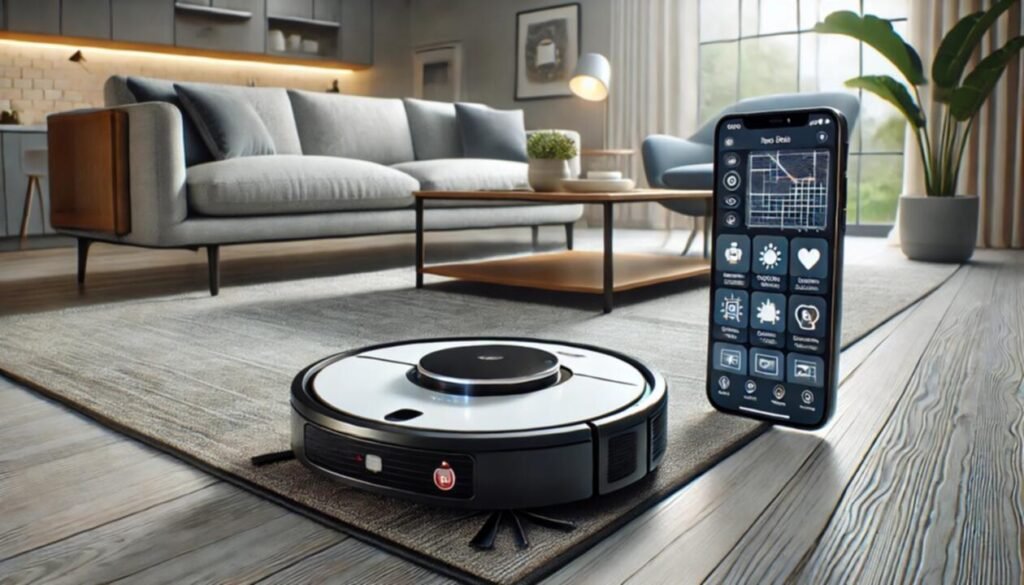
A robot vacuum can save time by handling routine floor cleaning. However, its usefulness depends on the layout of the home, floor types, obstacles, maintenance requirements, and the quality of its navigation.
A product demonstration may show a perfect environment. A real home may contain cables, furniture, pets, thresholds, and unexpected objects.
Always evaluate a gadget based on your actual environment.
Foldable Devices and New Hardware Designs
Foldable devices demonstrate that innovation does not always come from adding more software features.
The goal is usually to change the physical relationship between screen size and portability.
A larger display can be useful for:
- Reading
- Multitasking
- Watching video
- Working with documents
- Viewing creative content
However, a foldable design can introduce additional considerations.
| Factor | Traditional Device | Foldable Device |
|---|---|---|
| Design complexity | Usually simpler | Usually more complex |
| Moving parts | Often fewer | May include hinges |
| Screen design | Conventional | Flexible display technology |
| Repair considerations | Depends on the model | May be more specialized |
| Main advantage | Familiarity and simplicity | Larger screen in a compact form |
A foldable device is not automatically better. It may be better for a user who genuinely benefits from the larger flexible display.
For someone who mainly wants durability, simplicity, and lower repair complexity, a conventional device may still be the more practical choice.
Home Robotics: Automation With Clear Limits
Robotics is another area attracting attention, but expectations should remain realistic.
A consumer robot can be extremely useful when its job is narrow and clearly defined.
A robot vacuum, for example, does not need to understand every aspect of human life. It only needs to navigate a home and perform a specific cleaning task effectively.
The difficulty increases when a robot must operate safely in unpredictable environments and perform many different physical tasks.
This is why consumers should separate two ideas:
- A robot that performs one job well
- A general-purpose robot that can do almost anything
The first is already practical in certain categories. The second is a much more difficult technical challenge.
Also Read: What Is an AI Chatbot?
Real-World Examples of New Gadget Technology
A Student Using an AI Laptop
A student records a lecture using a supported application. The software converts speech into text, allowing the student to review key sections later.
The value is not simply that AI produced a transcript.
The real benefit is that the student can search and organize information more efficiently. However, the transcript should still be reviewed for errors, especially when technical terminology, names, or numbers are involved.
A Traveler Using Smart Translation Features
A traveler uses a connected device to help understand spoken or written language.
This can make communication easier, but translation systems can misunderstand accents, context, idioms, and specialized vocabulary.
The technology is useful as assistance. It should not be blindly trusted in high-stakes situations.
A Remote Worker Using AI Audio Processing
A remote worker joins an online meeting from a noisy location. Software may reduce background noise or improve voice clarity.
The technology solves a concrete problem: making communication easier without requiring professional audio equipment.
This is a good example of a feature that may be more valuable than a long list of impressive but rarely used functions.
A Homeowner Using Automated Cleaning
A robot cleaning device follows a schedule and handles routine maintenance while the homeowner is busy.
The benefit is cumulative. Saving a small amount of effort repeatedly can be more valuable than a gadget that performs one impressive demonstration but rarely gets used.
Advantages of New AI-Powered Gadgets
The strongest potential benefits include:
Greater Convenience
Hands-free controls, automation, and intelligent suggestions can reduce repetitive actions.
Better Access to Information
Devices can help users search, summarize, translate, navigate, or organize information more quickly.
More Personalized Experiences
Software can adapt settings or recommendations based on user preferences and available data.
Improved Productivity
Useful gadgets can reduce friction in activities such as communication, content creation, note-taking, and routine computer work.
Accessibility Opportunities
Voice controls, captions, transcription, visual assistance, and alternative input methods can make technology easier to use for some people.
Limitations and Risks to Consider
New technology also introduces real drawbacks.
Privacy
Connected gadgets may collect voice recordings, images, location information, health data, or other personal information.
Before buying, check the current privacy policy and settings for the specific product.
Security
An internet-connected device can create additional security responsibilities. Weak passwords, outdated software, and poorly protected accounts can create risks.
Subscription Costs
A gadget’s purchase price may not represent its total cost.
Some features may require:
- Cloud storage
- Premium software
- AI service subscriptions
- Additional accessories
Always check whether important features remain available without an ongoing payment.
Software Dependence
A device can become less useful if its companion app, cloud service, or software support changes.
Long-term software support is an important part of a gadget’s value.
AI Errors
AI systems can misunderstand information or produce inaccurate results.
The risk becomes more serious when users treat an automated response as unquestionably correct.
How to Evaluate a New Gadget Before Buying
A simple process can help avoid impulse purchases.
1. Define the Problem
Ask: What specific problem am I trying to solve?
“Because it looks futuristic” is not necessarily a good reason to spend money.
2. Identify the Feature That Matters
Do not compare every specification equally.
If you need a travel device, weight and battery life may matter more than gaming performance.
If you need a wearable for overnight use, comfort may matter more than the number of available watch faces.
3. Check the Total Cost
Calculate:
- Purchase price
- Subscription fees
- Required accessories
- Repair costs
- Replacement costs
4. Understand the Data
Ask:
- What information does the gadget collect?
- Where is it stored?
- Can it be deleted?
- Is cloud processing required?
- Can important functions work offline?
5. Check Compatibility
A useful gadget that does not work properly with your existing phone, computer, apps, or home ecosystem can quickly become frustrating.
6. Wait for Independent Testing When Necessary
Launch announcements and marketing demonstrations show what a company intends a product to do.
Independent testing can provide a clearer picture of:
- Battery life
- Reliability
- Build quality
- Software problems
- Real-world performance
For products released or updated during 2026, current specifications, prices, availability, and independent reviews should be verified from reliable up-to-date sources before making a purchase.
Common Mistakes People Make With New Gadgets
Buying Technology Instead of a Solution
A new gadget may be impressive without being useful to the buyer.
Start with your problem, not the product.
Confusing AI With Quality
An AI feature can be useful, unnecessary, inaccurate, or poorly implemented.
Evaluate the feature itself.
Ignoring Privacy Settings
Many users accept default settings without understanding what information is being collected or shared.
Review privacy and account settings during setup.
Forgetting About Long-Term Support
Hardware can last for years, but software support may determine how useful it remains.
Assuming the Most Expensive Model Is the Best Choice
The best gadget is usually the one that fits your needs, not the one with the longest specification sheet.
Frequently Asked Questions
What is droven.io new gadgets 2026?
Droven.io new gadgets 2026 is best understood as a topic covering new consumer technology and emerging gadget trends, including AI devices, wearables, smart home technology, robotics, productivity hardware, and other connected electronics.
Is Droven.io a gadget manufacturer?
Available Droven.io content presents the site primarily as a technology and information platform covering topics such as AI tools and technology reviews, rather than as the manufacturer of a single proprietary gadget catalog.
Which new gadget category is most important in 2026?
There is no single answer for every buyer. AI wearables, smart glasses, AI-enabled computers, smart home devices, and robotics are all important categories, but their usefulness depends on the user’s specific needs.
Are AI gadgets always better than traditional gadgets?
No. AI can add useful capabilities, but it can also increase complexity, privacy concerns, cost, and the possibility of errors. The important question is whether the AI feature provides a practical benefit.
Should I buy a new gadget as soon as it launches?
Not necessarily. Early buyers may encounter software issues, limited accessories, or unclear long-term reliability. Waiting for independent testing can be a sensible choice, especially for expensive products.
Are AI-powered wearables accurate?
Accuracy depends on the specific device, sensor, software, and use case. Consumer wearables can provide useful information and trends, but users should not assume that every measurement is equivalent to professional or medical equipment.
What should I check before buying a smart gadget?
Check the total cost, privacy policy, security features, software support, compatibility, repair options, and whether the device solves a problem you actually have.
Does droven.io new gadgets 2026 only refer to AI products?
No. AI is an important part of the topic, but new gadgets can also involve advances in displays, sensors, batteries, connectivity, robotics, hardware design, and other areas of consumer technology.
Conclusion
The most useful way to understand droven.io new gadgets 2026 is not as a race to find the newest or most expensive device. It is a way to examine how AI, sensors, software, connectivity, and new hardware designs are changing consumer technology.
Smart glasses may make hands-free information more practical. Wearables can turn continuous sensor data into useful insights. AI-enabled computers can support new ways of processing information. Smart home devices and specialized robots can automate repetitive tasks.
But new technology always involves trade-offs.
Before buying a gadget, look beyond the launch announcement. Ask what problem it solves, what information it collects, what it costs over time, and whether you are likely to use it after the initial excitement disappears.
That is the real value of following droven.io new gadgets 2026: understanding not just what is new, but what is genuinely useful.