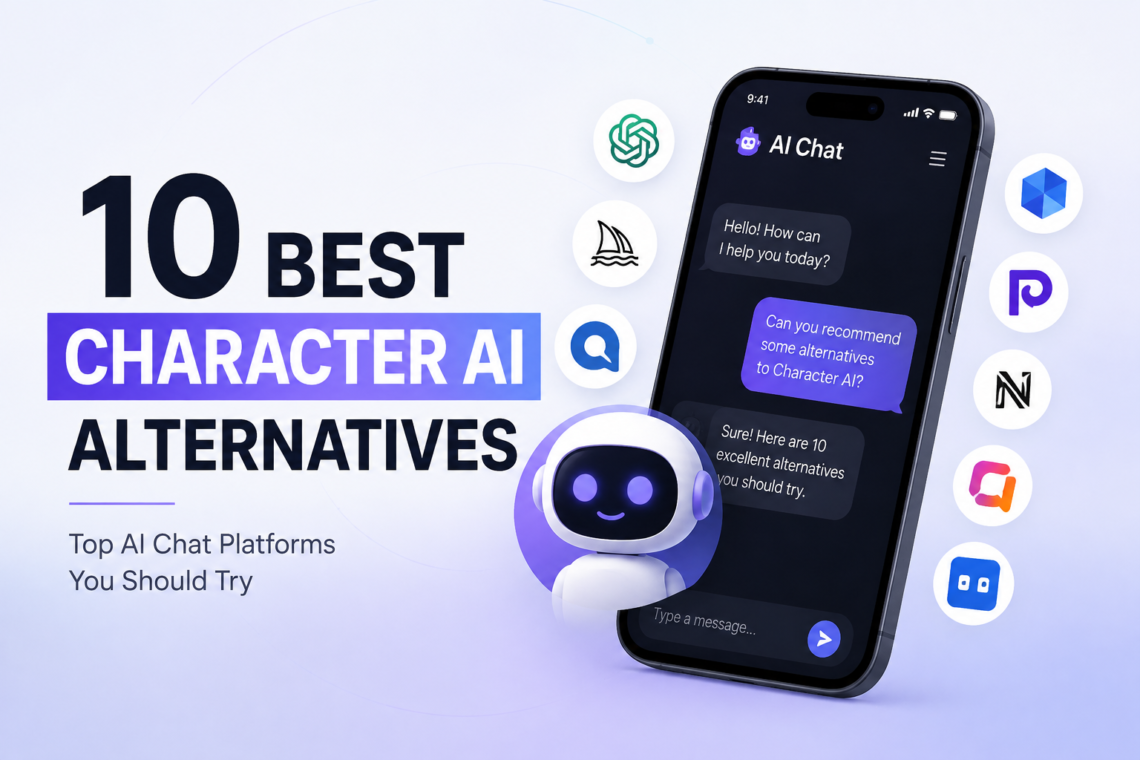
Character-based AI chat has become popular for entertainment, roleplay, creative writing, brainstorming, and simply having conversations with personalities designed for specific purposes. But Character AI is not the only option. Depending on what you want, you may need stronger privacy controls, fewer content restrictions, better memory, customizable characters, or tools designed for storytelling and roleplay.
This guide explores Character AI alternatives from a practical perspective. Rather than assuming one platform is best for everyone, it explains what different types of alternatives offer, where they work well, and what limitations you should consider.
You will also learn how to compare AI character platforms, what features actually matter, and how to choose an option that fits your specific use case.
What Are Character AI Alternatives?
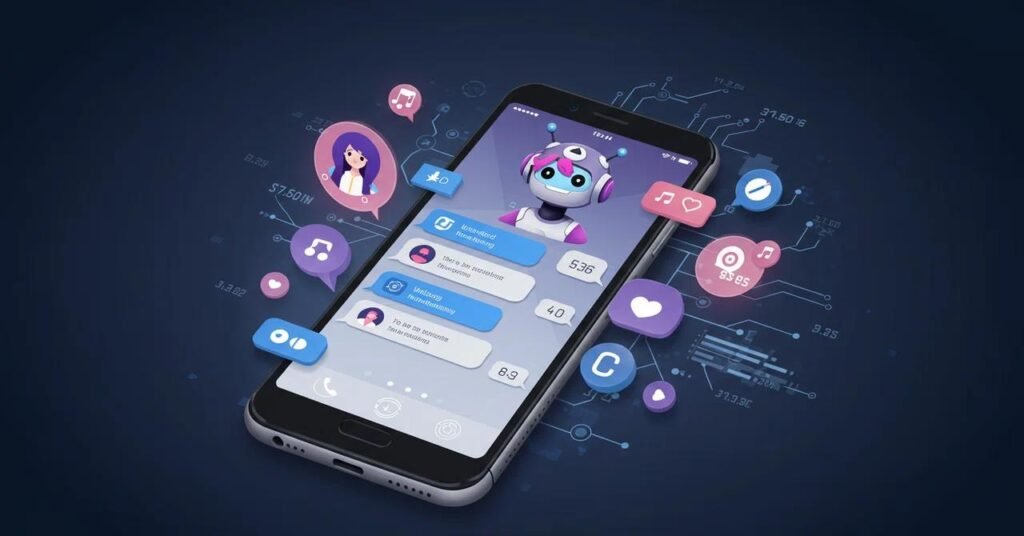
Character AI alternatives are AI platforms that let users interact with conversational characters, virtual personalities, AI companions, or custom chatbots.
The experience can vary significantly between platforms. One service may focus on emotional conversations and companionship, while another is built primarily for roleplay. Some allow extensive character customization, and others provide tools for running AI models locally.
Most alternatives fall into several broad categories:
- AI character chat platforms for talking with fictional or custom personalities
- AI companion apps focused on long-term, personal conversations
- Roleplay platforms designed for immersive storytelling
- Custom chatbot tools that let users define personalities and behavior
- Local AI interfaces that provide more control over models and data
The best choice depends less on which platform has the most features and more on what you actually want to do.
Why Look for Character AI Alternatives?
People look beyond Character AI for different reasons. A platform that works well for casual conversations may not be ideal for detailed roleplay or private experimentation.
Common reasons include:
More control over characters
Some users want to define exactly how a character behaves, speaks, remembers information, or responds to particular situations.
For example, a writer creating a fictional detective may want the character to consistently remember that they work in a specific city, have a particular personality, and know certain facts about an ongoing story.
Different content policies
AI platforms have different rules about what kinds of conversations they allow. Restrictions can affect creative writing and roleplay, even when the user’s purpose is fictional.
It is important to review a platform’s current policies rather than relying on old descriptions, because policies and moderation systems can change.
Better memory
Long conversations can become frustrating if an AI forgets important information.
Imagine spending twenty messages establishing that two characters are rivals, only for the AI to treat them as strangers later in the conversation. Platforms differ in how they handle context, persistent information, and long-term memory.
Privacy and local control
Some users prefer tools that allow them to run AI models on their own computer or maintain greater control over their conversations.
However, local AI usually requires more technical knowledge and suitable hardware.
Different conversation styles
No two AI models behave exactly the same way. One may be better at natural dialogue, while another may produce more detailed descriptions or follow instructions more reliably.
What to Look for in Character AI Alternatives
Before choosing a platform, it helps to understand the features that actually affect your experience.
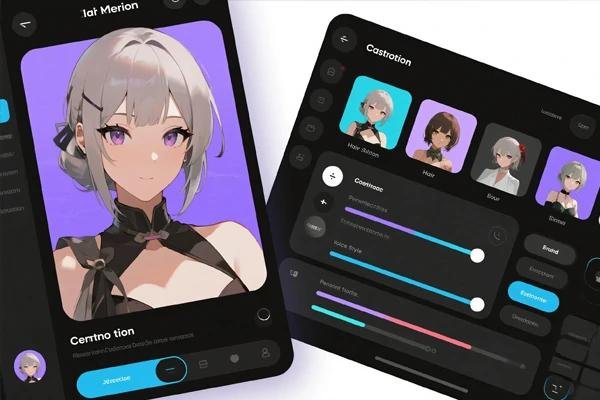
Character customization
Look at how much information you can define about a character.
Useful customization options may include:
- Name and background
- Personality traits
- Speaking style
- Scenario or setting
- Relationships with other characters
- Example dialogue
- Permanent instructions or character definitions
More customization does not automatically mean better conversations. A complicated character profile can still produce inconsistent results if the underlying model does not follow instructions well.
Memory and context
There are two related but different concepts:
Context is the information the AI can use from the current conversation.
Persistent memory is information that can remain available across conversations.
A roleplay tool may allow you to define important facts before the conversation begins. An AI companion may instead build memories over time.
Check how a platform currently handles both features because implementations can change.
Model quality
The underlying language model has a major effect on the experience.
Important qualities include:
- Ability to follow instructions
- Consistency of personality
- Natural dialogue
- Creative writing ability
- Ability to remember recent context
- Resistance to repetitive responses
A platform with a beautiful interface cannot completely compensate for weak or inconsistent AI responses.
Privacy and data handling
Before sharing personal information, review the platform’s current privacy policy.
Questions worth checking include:
- Are conversations stored?
- Can users delete their data?
- Is conversation data used to improve models?
- Can chats be made private?
- Is local use available?
Privacy policies may change, so verify this information directly on the provider’s official website before making a decision.
Pricing
Many AI services use a combination of free and paid access.
Possible limits include:
- Daily message limits
- Slower responses on free plans
- Access to fewer models
- Restrictions on memory or customization
- Subscription requirements for advanced features
Do not assume that a platform remains free simply because an older article says it is. Pricing should always be checked directly before subscribing.
Popular Types of Character AI Alternatives
Instead of treating every alternative as identical, it is more useful to understand the main categories.
1. Chai
Chai is a character-focused AI chat platform where users can interact with and create conversational bots.
It is primarily suited to people who want quick access to many different AI personalities without setting up their own local AI environment.
Best suited for:
- Casual AI conversations
- Exploring different personalities
- Creating simple custom bots
- Mobile-oriented character chatting
Potential limitations:
The quality of conversations can vary between characters, and platform features, access rules, and pricing may change over time.
Before choosing it, check its current character controls and subscription options.
2. Replika
Replika takes a different approach from fictional character chat platforms. It is primarily associated with the AI companion category.
The goal is generally more focused on maintaining an ongoing conversational relationship rather than jumping between hundreds of fictional characters.
Best suited for:
- Long-term conversations
- AI companionship
- Users who prefer one continuing AI persona
Potential limitations:
It may not be the best fit for someone who wants complex multi-character roleplay or highly flexible fictional worlds.
3. Janitor AI
Janitor AI is known as a character-chat and roleplay-oriented platform with a strong focus on user-created characters.
Its appeal for many users is the ability to explore detailed character scenarios and customize interactions.
Best suited for:
- Character roleplay
- Fictional conversations
- Exploring user-created characters
- More detailed scenarios
Potential limitations:
The setup, available model options, and platform experience can differ from simpler consumer apps. Users should review the current requirements and supported connection options.
4. Kindroid
Kindroid is another option in the AI companion and customizable AI persona space.
It is particularly relevant for users looking for an ongoing AI personality rather than a one-off chatbot interaction.
Best suited for:
- Persistent AI companions
- Personalized conversations
- Users interested in shaping an AI personality
Potential limitations:
Whether it is the right choice depends on how much you value companionship features compared with open-ended roleplay.
5. Nomi
Nomi is designed around personalized AI conversations and ongoing interactions.
This type of platform can be useful when the goal is not simply to create a fictional character but to maintain a more consistent conversational relationship.
Best suited for:
- Personalized conversations
- Ongoing AI interactions
- Users who value personality consistency
As with other AI companion services, review the current privacy policy and account options before sharing sensitive information.
6. Talkie
Talkie is another character-focused AI platform where users can explore and interact with different AI personalities.
Platforms in this category are often designed to make character discovery easy, allowing users to move quickly between different personalities and scenarios.
Best suited for:
- Exploring AI characters
- Entertainment
- Casual roleplay
- Discovering user-created personalities
The quality and depth of individual characters may vary.
7. Poe
Poe is somewhat different from dedicated character platforms because it provides access to AI models and bots in one environment.
It can be useful for users who want to experiment with different AI systems rather than committing to a single character-chat experience.
For example, you could create or use a bot with instructions to act as a writing coach, fictional character, programming assistant, or debate partner.
Best suited for:
- Experimenting with different AI models
- Creating instruction-based bots
- Comparing AI responses
- General-purpose AI use
Potential limitation:
The experience may feel less like a dedicated social character platform and more like an AI experimentation environment.
8. SillyTavern
SillyTavern is aimed at users who want significant control over their AI roleplay environment.
Unlike a typical consumer chatbot, it can be used as an interface for connecting to supported AI backends and models. This makes it more flexible but also more technical.
Best suited for:
- Advanced roleplay
- Detailed character cards
- Users comfortable with technical setup
- Greater control over AI configurations
Potential limitations:
Beginners may find the setup more complicated than simply signing up for a chatbot website.
9. Local AI Tools
Users who want maximum control can explore local AI tools and interfaces.
The general idea is to run a language model on your own hardware rather than depending entirely on a hosted character-chat service.
A local setup can potentially provide more control over:
- Which model you use
- How characters are configured
- Where conversation data is stored
- Which interface you use
However, local AI also introduces practical challenges.
You may need:
- A reasonably capable computer
- Enough storage and memory
- Technical knowledge
- Time to configure models and software
This option is best for people who are willing to learn rather than those who simply want to start chatting immediately.
Comparison of Character AI Alternatives
| Type of Alternative | Best For | Customization | Technical Difficulty |
|---|---|---|---|
| Character chat platforms | Casual chatting and roleplay | Moderate to high | Low |
| AI companion apps | Long-term conversations | Moderate | Low |
| Roleplay-focused platforms | Fictional scenarios and storytelling | High | Low to moderate |
| Multi-model platforms | Experimenting with different AI models | Moderate | Low |
| Advanced AI interfaces | Detailed roleplay and model control | Very high | Moderate to high |
| Local AI tools | Privacy and maximum control | Very high | High |
This comparison is intentionally broad because individual platform features can change. Always check the current capabilities of a specific service before choosing one.
How to Choose the Best Character AI Alternative
A simple decision process can save you from trying multiple platforms that do not match your needs.
Step 1: Define your main use
Ask yourself what you actually want to do.
For example:
“I want to chat with fictional characters.”
Look for a character discovery platform with a large selection of personalities.
“I want serious roleplay and storytelling.”
Prioritize character customization, context handling, and writing quality.
“I want one AI companion that remembers our conversations.”
Look at companion-oriented services with persistent memory features.
“I want full control over the AI.”
Consider advanced interfaces or local AI tools.
Step 2: Test the same scenario
Do not judge a platform based on one random greeting.
Create a simple test scenario and use it on several platforms.
For example:
You are a spaceship engineer stranded on Mars. You are practical, sarcastic, and highly knowledgeable about spacecraft. You must remember that the oxygen system has only six hours remaining.
Then test whether the AI:
- Maintains the personality
- Remembers the oxygen problem
- Avoids repeating itself
- Responds creatively
- Follows changes in the story
This gives you a more meaningful comparison.
Step 3: Check the limits before committing
A platform may look perfect until you discover that a feature you need requires a subscription or has a usage limit.
Check the current:
- Free plan limits
- Subscription price
- Available models
- Character limits
- Memory features
- Export and deletion options
Step 4: Review privacy before sharing personal details
Treat AI conversations as potentially stored data unless you have confirmed otherwise.
Avoid sharing passwords, financial information, private documents, or other sensitive information that does not need to be part of the conversation.
Also Read: ETSJavaApp Release Date
Real-World Examples of Using AI Character Platforms

Example 1: Practicing a difficult conversation
A user preparing for a job interview could create a character that acts as a skeptical interviewer.
The character can ask follow-up questions and challenge vague answers.
For example:
User: “I am good at solving problems.”
AI interviewer: “Describe a specific problem you solved. What was your role, and what changed because of your work?”
The value comes from repeated practice rather than assuming the AI’s evaluation is professionally accurate.
Example 2: Developing a fictional character
A novelist can create a character profile for a detective with a defined history, personality, and way of speaking.
The writer can then test dialogue:
How would this detective react when a trusted colleague becomes the main suspect?
The AI may generate ideas that the writer can refine. However, the final creative decisions should remain with the author.
Example 3: Language conversation practice
A learner can create a character who speaks at a specific difficulty level and corrects mistakes.
For example:
Act as a friendly shopkeeper. Speak in simple Spanish. After each of my messages, briefly correct important mistakes.
This transforms a general chatbot into a structured practice partner.
Example 4: Interactive storytelling
A group of characters can be used to explore a fictional scenario.
For example, a user might create:
- A ship captain
- A suspicious scientist
- A security officer
The user then introduces an event: the ship loses communication with Earth.
A good character system should help maintain each character’s role while allowing the story to develop naturally.
Advantages of Character AI Alternatives
The biggest advantage is choice.
Different platforms can offer different combinations of:
- Character customization
- Conversation styles
- AI models
- Memory systems
- Privacy controls
- Roleplay tools
- Pricing structures
Alternatives can also prevent users from becoming dependent on a single platform. If a service changes its features or policies, having experience with other tools makes it easier to move.
For creators, advanced platforms may provide greater control over how characters are defined and used.
Limitations and Risks
AI character platforms are not truly conscious characters, even when their responses feel personal or emotionally convincing.
Several limitations are important to understand.
AI can invent information
A character may confidently state something that is false.
Do not rely on an AI character for important factual, legal, medical, or financial decisions without verifying information through appropriate reliable sources.
Memory is not perfect
Even platforms with memory features can misunderstand, forget, or inconsistently apply stored information.
If an important detail matters, you may need to restate or explicitly define it.
Privacy requires attention
Do not assume that every AI conversation is private simply because the platform feels personal.
Review the current privacy policy and data controls.
Personality can drift
A character may gradually behave differently from its original definition, especially during long conversations.
Clear character instructions can help, but they cannot guarantee perfect consistency.
Costs can increase
Advanced AI features may require subscriptions or paid model access.
Before building a workflow around a platform, understand the long-term cost.
Common Mistakes When Choosing a Character AI Alternative
Choosing based only on popularity
A popular platform may not match your use case.
Someone who wants a private writing environment has different needs from someone who wants a casual AI companion.
Assuming every AI character has long-term memory
Some systems remember only the current conversation or selected information.
Always check how memory actually works.
Sharing sensitive information too freely
AI chat can feel like a private conversation, but it is still a digital service governed by specific data policies.
Expecting perfect roleplay
Even advanced language models can lose track of details, repeat phrases, or misunderstand a scenario.
A better approach is to treat the AI as a collaborative tool rather than a perfectly consistent fictional character.
Frequently Asked Questions About Character AI Alternatives
What are the best Character AI alternatives?
The best Character AI alternatives depend on your needs. Character-focused platforms may be better for casual roleplay, companion apps may be better for ongoing conversations, and tools such as local AI interfaces may suit users who want more technical control.
Is there a free alternative to Character AI?
Some AI character platforms offer free access or free tiers, but message limits, models, and features vary. Check each platform’s current pricing and usage rules before choosing one.
Which alternative is best for roleplay?
Look for strong character customization, good context handling, and support for detailed scenarios. Advanced users may prefer configurable AI interfaces, while beginners may prefer dedicated roleplay platforms.
Which option is best for creating custom AI characters?
Choose a platform that allows you to define personality, background, scenario, relationships, and example dialogue. The more important consistency is to you, the more carefully you should test the platform.
Can AI characters remember previous conversations?
Some platforms offer persistent memory, while others only use the context of the current chat. Memory features differ significantly, so check how a particular platform currently implements them.
Are Character AI alternatives private?
Privacy depends on the specific service. Review the provider’s current privacy policy, data retention rules, and account controls before sharing sensitive information.
Can I run a character AI locally?
Yes, it is possible to create a local AI setup using compatible models and software interfaces. However, the process can require technical knowledge and hardware resources.
Are AI characters accurate?
Not necessarily. AI characters can produce incorrect or invented information. They should not be treated as reliable authorities for high-stakes decisions without independent verification.
Conclusion
The growing number of Character AI alternatives gives users more options than simply choosing one chatbot and accepting its limitations.
The right platform depends on what matters most to you. Casual users may prefer easy character discovery. Writers and roleplayers may need deeper customization and stronger context handling. People seeking an ongoing AI companion may prioritize personality and memory, while advanced users may want local models and greater control.
Instead of asking which alternative is universally best, test a few platforms using the same scenario. Pay attention to character consistency, memory, privacy, pricing, and how naturally the AI supports your specific goal. The best choice is the one that fits the way you actually want to use AI characters.