

AI systems can produce answers that appear correct while missing the context needed to make a reliable decision. A customer support AI may approve a refund without considering the customer’s contract. A healthcare-related system may interpret information differently when an important part of the record is missing. An AI assistant may follow an instruction that conflicts with a company policy it was never given.
This is where AI governance contextual validation becomes important.
The idea combines two related responsibilities: governing how an AI system is allowed to operate and validating whether its output makes sense within the specific context in which it will be used. Instead of asking only, “Is this AI output correct?” organizations also ask, “Is it appropriate, sufficiently informed, authorized, and safe for this particular situation?”
This article explains what AI governance contextual validation means, how it works, where it can be applied, and why validating context is often just as important as evaluating the AI model itself.
What Is AI Governance Contextual Validation?
AI governance contextual validation is the process of checking AI systems, inputs, decisions, and outputs against the relevant context, rules, constraints, and organizational requirements before those outputs are trusted or acted upon.
The phrase can sound complex, but the basic idea is straightforward.
Imagine an AI system receives this request:
“Approve a refund for this customer.”
The model may understand the language perfectly. However, a reliable decision could depend on additional context:
- What product did the customer buy?
- When was it purchased?
- What does the refund policy allow?
- Does the customer have a special contract?
- Has the product already been refunded?
- Is the person requesting the refund authorized to do so?
- Does the transaction exceed an approval limit?
A model that sees only the sentence may produce a plausible answer. A system using contextual validation checks whether the information required for the decision is present and whether the proposed action complies with the applicable rules.
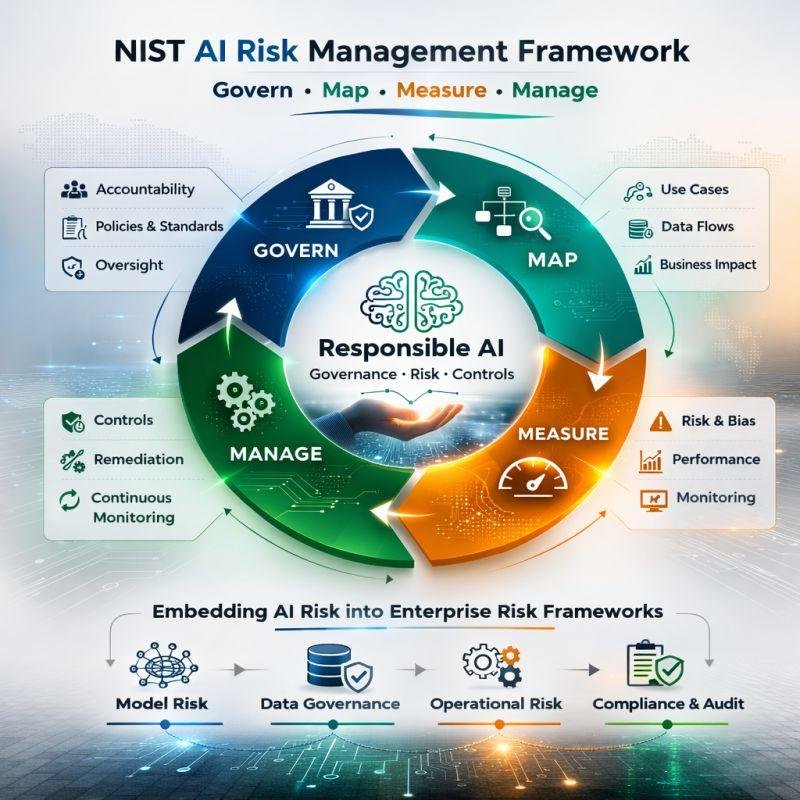
In other words, AI governance defines how the system should operate, while contextual validation helps determine whether a specific AI decision is appropriate for the situation.
Why Context Matters in AI Governance
AI models generally work from the information available to them at the time of processing. If critical context is missing, outdated, irrelevant, or incorrect, even a technically capable model can produce an unsuitable result.
This creates an important distinction between output quality and decision suitability.
An output can be:
- Grammatically clear but factually wrong.
- Factually correct but based on outdated information.
- Reasonable in general but inappropriate for a particular customer.
- Technically valid but prohibited by company policy.
- Helpful as a suggestion but unsafe to execute automatically.
Contextual validation addresses these gaps.
For example, suppose an AI recruiting tool recommends a candidate based on skills and experience. Before that recommendation is used, the organization may need to validate:
- Whether the job description is current.
- Whether the candidate data is complete.
- Whether prohibited or irrelevant factors influenced the process.
- Whether the recommendation follows the organization’s hiring procedures.
- Whether a human review is required before a final decision.
The purpose is not simply to determine whether the model generated a convincing answer. The purpose is to determine whether the answer can be responsibly used in its actual environment.
The Main Components of AI Governance Contextual Validation
A useful governance process usually examines more than the AI model itself. Contextual validation can occur at several stages.
1. Input Validation
The first question is whether the AI is receiving appropriate information.
This can include checking:
- Data completeness.
- Data accuracy.
- Data freshness.
- Source reliability.
- User authorization.
- Sensitive information.
- Required fields or documents.
Consider an AI system that summarizes legal or financial documents. If it receives only half of a contract, the summary might be accurate for the pages it sees but misleading when used to make a decision about the entire agreement.
A contextual validation layer could identify that required sections are missing and prevent the system from presenting its result as a complete analysis.
2. Context Retrieval and Relevance
Modern AI applications often retrieve information from databases, documents, knowledge bases, or other systems.
However, retrieving information is not the same as validating it.
The system may retrieve:
- An outdated policy.
- A document belonging to another customer.
- Information from the wrong business unit.
- Multiple sources with conflicting rules.
Contextual validation can help determine whether retrieved information is relevant to the current request.
For example, an internal AI assistant answering an employee’s question about travel expenses should ideally use the policy that applies to that employee’s location, role, and current policy version rather than selecting a similar but unrelated document.
3. Policy and Rule Validation
AI governance often requires explicit rules that apply independently of what the model recommends.
Examples include:
- Spending limits.
- Approval requirements.
- Data access restrictions.
- Safety requirements.
- Retention rules.
- Regulatory obligations.
- Internal company policies.
A language model might recommend an action based on general reasoning. A governance system can compare that recommendation with predefined rules before allowing the action.
This is particularly important when AI systems move beyond generating text and begin interacting with software, databases, financial systems, or other operational tools.
4. Output Validation
The AI’s final response should also be evaluated.
Depending on the use case, validation may check for:
- Missing information.
- Unsupported claims.
- Policy violations.
- Unsafe instructions.
- Incorrect formatting.
- Actions outside the system’s authority.
- Excessive confidence.
For high-impact decisions, output validation may include deterministic checks, specialist software, human review, or additional model-based evaluation.
The appropriate method depends on the risk. A spelling assistant and an AI system that influences financial approvals should not necessarily use the same validation process.
5. Action Validation
One of the most important questions is whether an AI system should be allowed to act automatically.
An AI may correctly identify a recommended action while still lacking permission to perform it.
For example, an AI agent could determine that a customer is eligible for a refund. The organization may still require:
- A manager’s approval above a certain amount.
- Additional fraud checks.
- Confirmation that the original payment method is valid.
- Human review for unusual cases.
This creates a separation between recommendation and execution.
That separation is a central principle in responsible AI governance.
How AI Governance Contextual Validation Works
A practical workflow can be understood as a sequence of checks.
| Stage | Main Question | Example |
|---|---|---|
| Input | Is the information valid and complete? | Is the customer account correctly identified? |
| Context | Is the AI using the right information? | Is the current refund policy being applied? |
| Rules | Does the request comply with requirements? | Does the amount exceed an approval limit? |
| Output | Is the AI's response acceptable? | Did it make an unsupported claim? |
| Action | Should the AI be allowed to execute? | Is human approval required? |
| Monitoring | What happened after deployment? | Are errors or unusual patterns increasing? |
Not every application needs every layer at the same level of complexity. The governance process should be proportionate to the potential consequences of failure.
A simple internal writing assistant may require relatively lightweight controls. An AI system involved in decisions affecting customers, employees, money, safety, or sensitive information may require more rigorous validation.

A Simple Example of Contextual Validation
Imagine an AI assistant used by a company to answer customer questions about subscriptions.
A customer asks:
“Can I cancel and get my money back?”
The model alone may answer based on general language patterns. A governed system can follow a more reliable process.
Step 1: Identify the customer and account
The system confirms which subscription is being discussed.
Step 2: Retrieve relevant context
It retrieves information such as:
- Subscription plan.
- Purchase date.
- Renewal status.
- Cancellation terms.
- Previous refunds.
Step 3: Validate the information
The system checks whether the retrieved information belongs to the correct customer and whether the policy is current.
Step 4: Generate a response
The AI creates a natural-language answer using the validated context.
Step 5: Check the proposed action
If the customer requests a refund, the system determines whether the refund can be processed automatically or requires human approval.
The AI is still useful for understanding the request and communicating clearly. But important decisions are supported by verified context and explicit controls rather than relying entirely on the model’s reasoning.
Real-World Applications of AI Governance Contextual Validation
Customer Support
AI support systems often need to understand both the customer’s request and the customer’s specific situation.
Contextual validation can help prevent problems such as:
- Giving advice based on the wrong account.
- Using an outdated policy.
- Promising an action the company cannot provide.
- Exposing information to an unauthorized person.
For example, an AI assistant may suggest that a replacement is available, but the system should verify inventory, warranty eligibility, and the customer’s purchase history before making that promise.
Enterprise Knowledge Assistants
Companies increasingly use AI to search internal documents and answer employee questions.
The major challenge is not only retrieving information. The system must retrieve the right information for the right user.
A contextual validation process can consider:
- The user’s permissions.
- Document ownership.
- Information sensitivity.
- Document version.
- Geographic or departmental relevance.
An employee should not receive restricted information simply because an AI system found a relevant-looking document.
Financial Operations
AI can help classify transactions, summarize documents, identify anomalies, and support operational decisions.
However, financial processes often involve clear authorization rules.
For example, an AI system may identify an invoice as legitimate, but payment could still require additional validation based on:
- Payment amount.
- Supplier status.
- Contract terms.
- Approval hierarchy.
- Duplicate invoice checks.
The AI provides intelligence, while governance determines whether the recommendation can move forward.
Healthcare and Other High-Impact Domains
In high-impact environments, missing context can significantly change the meaning of an AI output.
A system may analyze information correctly while lacking important records, recent updates, or case-specific details.
For these applications, contextual validation may include stronger requirements for:
- Data quality.
- Traceability.
- Human oversight.
- Access control.
- Documentation.
- Monitoring.
The exact requirements depend on the jurisdiction, application, and applicable rules, so organizations should verify current legal and regulatory requirements with qualified sources before deployment.
AI Agents and Automated Workflows
AI agents can perform multi-step tasks, such as retrieving information, sending messages, updating records, or triggering workflows.
This increases the importance of action validation.
A useful pattern is to define different levels of authority:
- Read: The AI can retrieve information.
- Recommend: The AI can suggest an action.
- Prepare: The AI can create a draft or proposed transaction.
- Execute with approval: A person confirms the action.
- Execute automatically: The AI acts within clearly defined limits.
This approach reduces the risk of giving an AI system unrestricted access simply because it performed well during testing.
Also Read: Doubao AI
The Benefits of AI Governance Contextual Validation
When implemented well, contextual validation can provide several advantages.
More reliable decisions
The system is less dependent on general model knowledge when specific organizational context is required.
Better policy compliance
Rules can be checked systematically rather than relying on the AI model to remember or correctly interpret every requirement.
Reduced automation risk
Organizations can limit which actions an AI can perform and under what conditions.
Improved traceability
A well-designed system can record:
- What information was used.
- Which rules were applied.
- What the AI recommended.
- Whether a human approved the action.
- What ultimately happened.
This information can help investigate failures and improve the system.
More appropriate use of human oversight
Human review can focus on exceptions, high-risk cases, and uncertain situations rather than requiring people to manually inspect every low-risk AI output.
Limitations and Challenges
AI governance contextual validation is not a guarantee that an AI system will always make the correct decision.
Context can still be wrong
Validation cannot fully solve a problem if the underlying database contains incorrect or outdated information.
A system may faithfully apply the wrong policy because the wrong policy was stored or retrieved.
Rules can become outdated
Business policies and legal requirements change. Governance controls need maintenance.
A validation system that was correct when deployed may become unreliable if its rules are never reviewed.
Complex context is difficult to model
Some decisions involve exceptions, informal knowledge, competing priorities, or information that cannot easily be converted into a simple rule.
Overly rigid validation can also create problems if legitimate exceptions are never considered.
Additional complexity and cost
More validation layers can increase:
- Development time.
- Infrastructure requirements.
- Monitoring needs.
- Maintenance work.
- System latency.
Organizations should balance these costs against the risks of the AI application.
False confidence is possible
A system with many governance controls may appear trustworthy even when important checks are incomplete.
The presence of a validation framework does not eliminate the need for testing, monitoring, and periodic review.
Common Mistakes to Avoid
Several mistakes can weaken an AI governance strategy.
Treating model accuracy as the only metric
A model can perform well on benchmarks and still fail in a real workflow because the required business context was missing.
Assuming retrieved information is automatically trustworthy
Retrieval systems can return outdated, incomplete, or irrelevant documents. Retrieved context should itself be evaluated.
Giving AI agents unnecessary permissions
An AI system should generally have only the access and authority needed for its intended task.
Using human review as a vague safety measure
Simply saying “a human is involved” is not enough. Organizations should define when review occurs, what the reviewer checks, and which decisions require approval.
Validating only before deployment
AI governance should continue after release. Real-world usage can reveal failure modes that testing did not expose.
How to Implement AI Governance Contextual Validation
Organizations can begin with a practical, risk-based process.
1. Define the AI system’s purpose
Be specific about what the system is supposed to do and what it is not allowed to do.
2. Identify the context required for each decision
Ask:
- What information must be available?
- Which sources are authoritative?
- How current must the information be?
- What context would change the decision?
3. Define validation rules
Separate deterministic requirements from AI reasoning.
For example:
- Identity must be verified.
- The account must be active.
- The policy version must be current.
- Transactions above a threshold require approval.
4. Establish authority boundaries
Clearly define whether the AI can:
- Inform.
- Recommend.
- Draft.
- Execute with approval.
- Execute automatically.
5. Handle uncertainty
The system should have a safe response when required context is missing or conflicting.
That may include:
- Asking for more information.
- Escalating to a human.
- Refusing to perform the action.
- Marking the result as uncertain.
6. Log and monitor outcomes
Track errors, exceptions, overrides, and unexpected behavior.
These records can reveal whether validation rules need improvement.
7. Review the system regularly
Policies, data sources, model behavior, and external requirements can change over time. Governance should therefore be treated as an ongoing process rather than a one-time deployment task.
Frequently Asked Questions
What is AI governance contextual validation?
AI governance contextual validation is the process of checking AI inputs, context, outputs, and actions against relevant rules and situational information to determine whether the result is appropriate and safe to use.
Is contextual validation the same as AI testing?
No. AI testing evaluates how a system performs under defined conditions. Contextual validation focuses on whether a specific input, decision, or action is appropriate within its real operational context.
Why isn’t model accuracy enough?
Accuracy does not guarantee that the AI has the correct information, follows the right policy, or has permission to perform an action. A generally correct answer can still be inappropriate for a specific situation.
Does contextual validation require a human reviewer?
Not always. Low-risk decisions may be validated automatically. Higher-risk or unusual cases may require human review depending on the organization’s rules and the potential consequences of an error.
Can AI validate its own outputs?
AI can be used as one layer of evaluation, but relying entirely on a model to judge its own work can create additional risks. Important controls may also require independent rules, trusted data sources, specialized checks, or human oversight.
What is the difference between AI governance and AI governance contextual validation?
AI governance is the broader framework for managing how AI is designed, deployed, monitored, and controlled. AI governance contextual validation focuses specifically on ensuring that AI behavior is evaluated against the relevant situation, data, rules, permissions, and constraints.
What should happen when important context is missing?
The safest response depends on the use case. The system may request additional information, retrieve an authoritative source, escalate the case, or avoid taking action until the required context is available.
Is AI governance contextual validation only necessary for large organizations?
No. Even small organizations can benefit from basic controls, especially when AI handles customer data, sensitive information, financial actions, or automated workflows. The complexity of the validation process should match the risk of the application.
Conclusion
AI governance contextual validation addresses a critical problem in real-world AI: an answer can sound intelligent without being appropriate for the situation in which it is used.
Effective AI governance therefore goes beyond measuring whether a model can generate a correct response. It asks whether the system has the right context, uses reliable information, follows applicable rules, respects authority boundaries, and knows when it should not act.
The strongest approach is usually not to rely on a single validation method. Combining reliable data, contextual checks, explicit rules, output validation, human oversight where necessary, and continuous monitoring can create AI systems that are not only more capable, but more dependable in the environments where their decisions actually matter.


