
Doubao AI is an artificial intelligence product and model family associated with ByteDance’s AI ecosystem. Depending on the context, the name Doubao can refer to a consumer-facing AI assistant as well as a broader collection of AI models and services available through ByteDance’s cloud and AI platform, Volcengine.
That distinction matters. Someone searching for Doubao AI may simply want to know whether it is a chatbot, while a developer may be interested in using Doubao models for an application. The broader Doubao ecosystem now includes capabilities related to language, reasoning, image understanding, speech, video generation, and other AI tasks. Specific models and features can change quickly, so the latest availability should always be verified through official sources.
This article explains what Doubao AI is, how it works at a practical level, what people can use it for, where its limitations are, and how to think about it as both an AI assistant and a family of AI models.
What Is Doubao AI?
At its simplest, Doubao AI is an AI system designed to understand and generate different types of content and responses.
For an everyday user, that may mean interacting with an AI assistant by typing a question, uploading information for analysis, or using voice and other supported features.
For developers and businesses, Doubao can refer to the underlying models that can be integrated into applications and services through ByteDance’s technology ecosystem.
The important point is that Doubao is not necessarily just one model.
AI systems evolve through different model versions and specialized models. A general-purpose language model might handle conversation and writing, while other models may focus on tasks such as:
- Understanding images
- Generating or processing video
- Speech recognition
- Speech synthesis
- Real-time voice interaction
- Coding and agent-related tasks
- Embedding and information retrieval
Volcengine’s official Doubao pages list multiple models and AI capabilities rather than a single universal model.

Doubao AI as an Assistant vs. Doubao as a Model Platform
One source of confusion is that people often use the term “Doubao AI” to describe different things.
The following distinction can make the ecosystem easier to understand:
| Type | What It Means |
|---|---|
| AI assistant | A product that allows people to interact directly with AI |
| Language model | The underlying system that processes and generates language |
| Multimodal model | A model that can work with more than one type of input, such as text and images |
| AI model platform | Infrastructure that allows developers and organizations to access and build with models |
| Specialized AI model | A model designed for a particular task, such as speech, video, or coding |
A user may only see a chat interface. Behind that interface, however, different AI models and systems may be responsible for different tasks.
For example, a request to summarize a document is primarily a language-processing task. Asking an AI to describe an image requires visual understanding. Having a spoken conversation may involve speech recognition, language processing, and speech synthesis working together.
This modular approach is increasingly common in AI systems because one model or component is not always the best tool for every task.
How Does Doubao AI Work?
Doubao AI works using machine learning models that process patterns in data and use those patterns to interpret inputs and generate outputs.
A simplified interaction might look like this:
- You provide an input.
This could be a question, instruction, image, audio clip, or another supported form of content. - The system interprets the input.
The relevant AI model processes the information and identifies the task. - The model generates or selects an output.
Depending on the task, the result might be text, an analysis, speech, generated media, or structured information. - The result is returned to the user or application.
Consider a simple prompt:
“Explain quantum computing to a 12-year-old.”
The AI must identify several things at once. It needs to understand the topic, recognize the requested audience, and adjust the explanation accordingly.
That is different from simply searching for a stored paragraph. Generative AI produces a response based on patterns learned during training and the context provided in the conversation.
However, this does not mean that every answer is automatically correct.
An AI model can generate an answer that sounds convincing while containing mistakes, missing context, or unsupported claims. This is one of the most important limitations to understand when using Doubao AI or any other generative AI system.

What Can You Do With Doubao AI?
The exact features available depend on the product, model, region, and current version, but the Doubao model ecosystem supports a range of AI tasks.
Writing and Text Generation
Doubao AI can potentially help with tasks such as:
- Explaining complex topics
- Summarizing text
- Brainstorming ideas
- Drafting outlines
- Rewriting content
- Translating supported languages
- Creating structured responses
- Assisting with programming-related questions
For example, a student could provide a difficult paragraph and ask:
“Explain this in simple English and list the three most important ideas.”
The value is not just speed. A well-written prompt can tell the AI exactly how the information should be transformed.
Instead of asking:
“Explain machine learning.”
A more useful request might be:
“Explain machine learning for a beginner. Use a real-world example, avoid technical jargon, and keep the answer under 500 words.”
The second prompt gives the AI clearer constraints.
Image and Visual Understanding
Multimodal AI systems can process more than text.
A visual model may be used to analyze images, identify relevant details, answer questions about visual content, or combine visual information with text-based instructions.
For example, imagine uploading a photograph of a damaged product and asking:
“Describe the visible damage and create a short report for customer support.”
The AI could help organize the visible information into a more useful format.
This does not mean the AI should be treated as an infallible visual inspector. In situations involving safety, medicine, law, security, or other high-stakes decisions, human expertise and appropriate verification remain essential.
Volcengine currently describes Doubao models with visual understanding and multimodal capabilities, although specific model names and functionality may change over time.

Speech and Voice
The Doubao ecosystem also includes speech-related models and services.
These can involve:
- Speech recognition
- Text-to-speech
- Real-time voice interaction
- Voice customization or replication features
- Translation-related speech capabilities
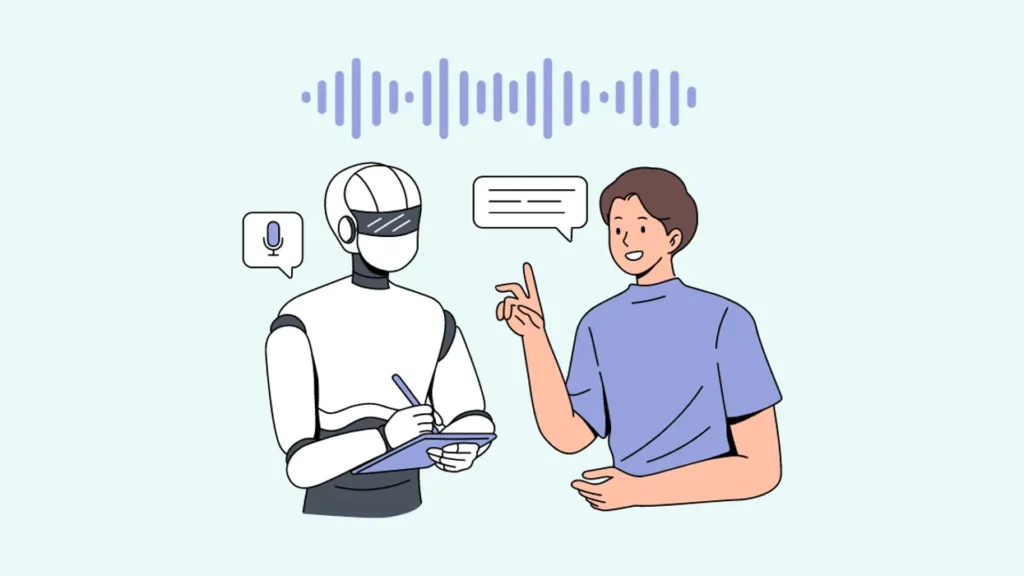
A practical example would be a voice-based customer service application.
The process could work like this:
- A customer speaks into an application.
- Speech recognition converts the audio into text.
- An AI system interprets the request.
- The system generates a response.
- Text-to-speech converts that response into spoken audio.
Volcengine’s official product information describes multiple Doubao speech capabilities, including speech recognition, speech synthesis, real-time voice interaction, and voice-related models.
Video and Creative Media
Doubao also includes models designed for video-related generation and creative tasks.
In a content-production workflow, AI could potentially help turn a written concept into visual material, assist with story development, or generate media from supported inputs.
For example, a marketing team could begin with a short concept:
“A futuristic electric bicycle moving through a neon-lit city at night.”
A video-generation workflow could use that concept as part of the instructions for creating visual content.
The result still needs human review. Generated media may contain visual inconsistencies, misunderstand instructions, or create details that do not fit the intended brand or message.
Official Doubao product pages currently list video-generation capabilities as part of the broader model ecosystem.
How Developers Can Use Doubao AI
Doubao AI is relevant to developers because AI models can be accessed as part of application-building workflows rather than used only through a chat interface.
A developer might integrate a model into an application for tasks such as:
- AI customer support
- Document summarization
- Content classification
- Coding assistance
- Knowledge-base search
- Image analysis
- Voice interfaces
- AI agents
A Simple Example: AI Support Assistant
Imagine an online software company with thousands of support documents.
Instead of asking users to search manually, the company could build a system that:
- Receives the customer’s question.
- Searches relevant documentation.
- Provides the relevant information to an AI model.
- Generates a clear answer based on the retrieved material.
- Allows the customer to ask follow-up questions.
This approach is often more useful than asking a general AI model to answer entirely from its training data because the system can incorporate information from a controlled knowledge source.
However, the quality of the result depends heavily on the documents, retrieval system, prompts, model selection, security controls, and evaluation process.
Also Read: Technology Business Incubator
Real-World Ways Doubao AI Could Be Used
The best way to understand an AI platform is to look at concrete workflows.
1. Turning Long Documents Into Useful Notes
Suppose a researcher has a 50-page report.
Instead of immediately asking the AI for a general summary, they could use a staged approach:
- Ask for the main argument.
- Ask for the important sections.
- Request a list of claims that need verification.
- Ask for definitions of difficult terms.
- Compare the AI’s summary with the original document.
This approach reduces the risk of blindly trusting a single generated answer.
2. Building an Internal Knowledge Assistant
A company could connect approved internal documents to an AI-powered search system.
An employee might ask:
“What is the process for requesting access to the analytics platform?”
The system could retrieve the relevant internal documentation and generate a concise answer.
The advantage is convenience. The risk is that outdated or incorrectly indexed documents can produce incorrect answers. Access controls are also essential because an AI assistant should not expose information to users who are not authorized to see it.
3. Creating a Voice-Based Application
A language-learning application could combine several AI components.
A learner speaks a sentence.
The system could:
- Convert speech into text.
- Analyze pronunciation or the meaning of the sentence.
- Generate feedback.
- Produce a spoken example for comparison.
This is an example of why multimodal AI matters. The application is not relying on text generation alone.
4. Assisting Developers With Software Tasks
A developer could use a coding-focused model to:
- Explain unfamiliar code.
- Suggest functions.
- Identify possible bugs.
- Generate tests.
- Refactor repetitive sections.
But generated code should not automatically be pushed into production.
The developer still needs to check:
- Security issues
- Incorrect assumptions
- Dependency compatibility
- Performance
- Edge cases
- Licensing and organizational requirements
AI can accelerate development, but it does not remove engineering responsibility.
Advantages of Doubao AI
Multiple AI Capabilities
One major advantage of a broad AI ecosystem is the ability to work across different types of tasks. Language, images, voice, video, and other capabilities can potentially be combined in larger applications.
Useful for Both Individuals and Developers
Different users can interact with AI at different levels.
A casual user may only need an assistant for questions and writing. A developer may need API access and model choices for building a product.
Potential for Specialized Workflows
Different models can be selected for different requirements.
A fast, lower-cost model may be more appropriate for simple classification tasks, while a more capable model may be needed for complex reasoning or multimodal work.
Automation Opportunities
AI can reduce repetitive work when used carefully.
Examples include:
- Sorting incoming requests
- Drafting first responses
- Summarizing information
- Extracting structured data
- Supporting internal search
The key word is supporting. Automation should be designed around the consequences of mistakes.
Limitations and Risks of Doubao AI
AI Can Be Wrong
A fluent answer is not the same as a verified answer.
Doubao AI, like other generative AI systems, can misunderstand questions or generate inaccurate information.
Important claims should be checked against reliable primary sources.
Privacy Requires Attention
Users should think carefully before entering:
- Passwords
- Financial information
- Private customer data
- Confidential business documents
- Sensitive personal information
The appropriate privacy and data-handling rules depend on the specific Doubao product or service being used. Before using AI in a professional workflow, review the current official privacy terms, data policies, and enterprise controls for that particular service.
Availability Can Differ by Region and Product
AI products do not always offer the same features everywhere.
Access may depend on factors such as:
- Country or region
- Account type
- Product version
- Developer or enterprise access
- API availability
Before building a workflow around a particular feature, verify that the feature is currently available to your intended users.
Generated Content Still Needs Review
An AI-generated article may contain factual mistakes. AI-generated code may contain security problems. AI-generated images or videos may include unwanted artifacts.
The more serious the consequences of an error, the more important human review becomes.
Common Misconceptions About Doubao AI
“Doubao AI is just a chatbot.”
Not necessarily.
A chatbot can be one way to interact with Doubao, but the broader ecosystem includes multiple models and capabilities for language, vision, speech, video, and developer applications.
“AI always knows the latest information.”
Not automatically.
An AI model’s knowledge and access to current information depend on the specific product, model, tools, and configuration being used. Do not assume that an answer is current unless the system clearly provides and supports current information.
“A more detailed answer must be more accurate.”
False.
AI can produce long, detailed explanations that contain errors. Accuracy must be evaluated separately from writing quality.
“AI can replace expert review.”
In low-risk tasks, AI may handle substantial parts of a workflow. In high-stakes fields, however, expert oversight remains important.
How to Use Doubao AI More Effectively
Better prompts often lead to more useful results.
Try this structure:
Task + context + constraints + desired format
For example:
“Summarize this report for a business manager. Focus on the main risks and opportunities. Do not add information that is not present in the document. Use five bullet points.”
This is more precise than simply saying:
“Summarize this.”
You can also improve results by asking the AI to:
- Explain its assumptions.
- Separate facts from suggestions.
- Use a specific format.
- Identify missing information.
- Compare multiple options.
- State uncertainty where appropriate.
For important work, use AI as part of a verification process rather than as the final authority.
Frequently Asked Questions About Doubao AI
What is Doubao AI?
Doubao AI refers to ByteDance’s broader AI ecosystem, including AI assistant experiences and a family of models and services for tasks such as language processing, visual understanding, speech, and media generation.
Is Doubao AI the same as a chatbot?
No. A chatbot is one possible interface, while the broader Doubao ecosystem includes underlying models and specialized AI capabilities.
Can developers use Doubao AI?
Yes. Doubao models are available within Volcengine’s AI and model platform ecosystem for supported development and business use cases. The currently available models, APIs, pricing, and access requirements should be verified through official documentation because they can change.
Can Doubao AI understand images?
Doubao’s ecosystem includes visual and multimodal models designed to process visual information alongside other types of input.
Does Doubao AI support voice features?
The broader Doubao ecosystem includes speech-related capabilities such as speech recognition, speech synthesis, and real-time voice interaction.
Is Doubao AI always accurate?
No. Like other generative AI systems, it can produce incorrect or misleading information. Important information should be independently verified.
Is Doubao AI free?
Pricing, free access, quotas, and model availability can vary by product and may change over time. Check the current official Doubao or Volcengine pricing information before relying on a particular plan or free allowance.
What is the difference between Doubao AI and a Doubao model?
Doubao AI is a broad term that can describe the overall AI product ecosystem. A Doubao model is a specific underlying AI model designed for particular capabilities or use cases.
Conclusion
Doubao AI is best understood as more than a single chatbot. It is part of a broader AI ecosystem that includes language models, multimodal systems, speech technologies, visual understanding, video generation, and developer-focused AI services.
For everyday users, the practical value of Doubao AI may come from asking questions, generating content, analyzing information, or interacting through supported voice and visual features. For developers, the larger opportunity is using specialized models to build AI-powered applications and automated workflows.
The most important thing to remember is that capability does not guarantee correctness. Use AI to accelerate research, creation, analysis, and repetitive work, but verify important information, protect sensitive data, and keep human judgment involved when mistakes could have serious consequences.
As Doubao AI continues to evolve, specific models and features will change. Checking current official documentation before choosing a model or building a production workflow is the best way to make sure your information is up to date.