AI contextual refinement is the process of improving an artificial intelligence system’s output by giving it better context, evaluating its response, and adjusting the result based on the situation, user intent, or additional information. Instead of treating every request as an isolated instruction, contextual refinement helps an AI system produce an answer that better fits what is actually being asked.
This idea matters because a technically correct AI response can still be unhelpful if it ignores important details. For example, the same question about “writing a product description” could require completely different answers depending on whether the audience is a software engineer, a casual consumer, or an enterprise buyer.
In this guide, you’ll learn what AI contextual refinement means, how the process works, where it is used, how it differs from related concepts such as prompt engineering and retrieval-augmented generation, and what limitations organizations should consider when building contextual AI systems.
What Is AI Contextual Refinement?
At its simplest, AI contextual refinement means using additional context to make an AI-generated result more relevant and useful.
An AI model may initially generate an answer based only on the user’s latest instruction. Contextual refinement adds information that can change how that instruction should be interpreted.
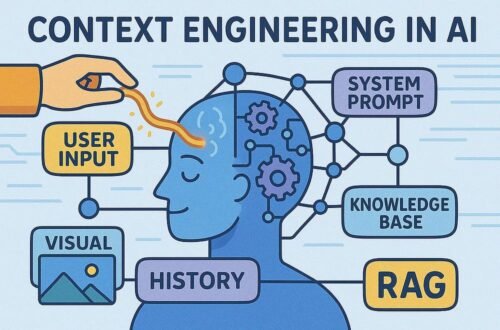
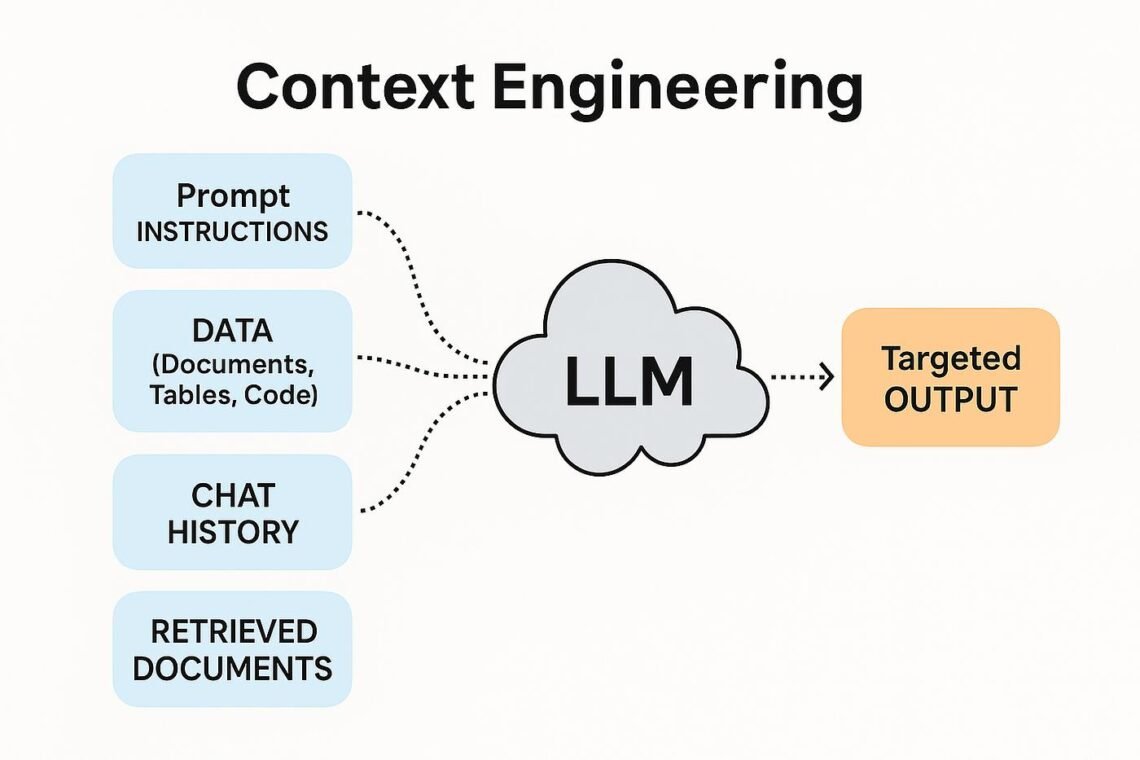
That context might include:
- Previous messages in a conversation
- The user’s stated goal
- Information retrieved from a knowledge base
- A company’s internal documentation
- The intended audience
- Product or business rules
- The current stage of a workflow
- Feedback about an earlier response
- Data supplied by connected applications
- Formatting or safety requirements
Consider a simple example.
A user asks:
“Write an email explaining the delay.”
Without additional context, an AI system does not know what caused the delay, who should receive the message, or what tone is appropriate.
With contextual information such as “the software deployment was delayed because testing found a critical bug, and the recipient is an enterprise customer,” the system can produce a substantially more appropriate response.
The refinement comes from connecting the instruction to the surrounding information.
How Does AI Contextual Refinement Work?
AI contextual refinement is not one specific algorithm. It is better understood as a process or design pattern that can be implemented in different ways.
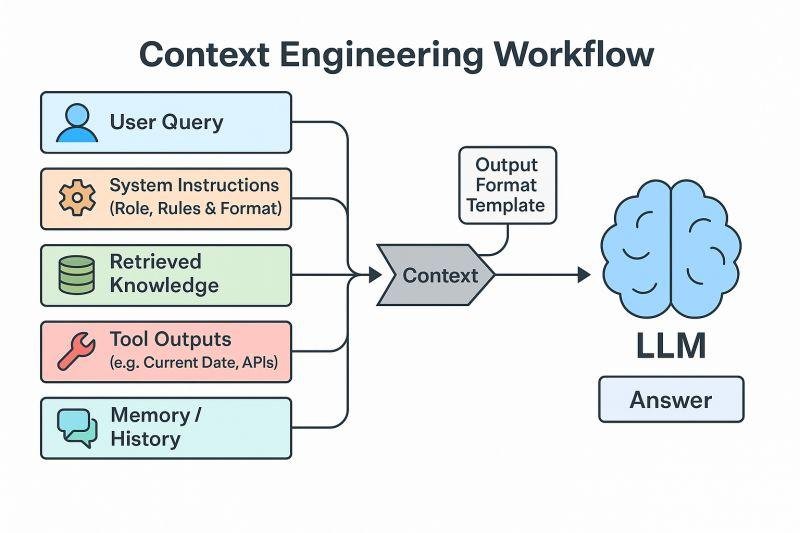
A typical system can follow several stages.
1. Understand the Initial Request
The AI first interprets the user’s instruction.
For example:
“Summarize this report.”
The system needs to determine what “summarize” means in this situation. A short executive summary, a technical summary, and a detailed study guide are different outputs.
2. Gather Relevant Context
The system then identifies information that can affect the answer.
For a business report, relevant context could include:
- The intended audience
- The purpose of the summary
- Company terminology
- Previous discussion
- Important business constraints
The key word is relevant. Adding every available piece of information does not necessarily improve an AI response.
3. Interpret the Context
The AI must determine how the additional information relates to the request.
Suppose a customer asks:
“Can I return this?”
The answer could depend on the company’s return policy, the product category, purchase date, and order status.
Contextual refinement connects the question to those details rather than producing a generic answer about returns.
4. Generate an Initial Response
The AI generates a response using the available instructions and context.
This might already be useful, but the process does not necessarily stop there.
5. Evaluate and Refine
A second stage can check whether the output satisfies the relevant requirements.
For example, the system might evaluate:
- Accuracy
- Relevance
- Completeness
- Tone
- Policy compliance
- Consistency with retrieved information
- Required formatting
If the response fails an important requirement, the system can revise it.
6. Deliver the Refined Result
The final response is then presented to the user or passed to another part of the workflow.
This creates a basic cycle:
Request → Context → Interpretation → Generation → Evaluation → Refinement → Final output
Not every AI application uses every stage, but this general pattern is useful for understanding contextual refinement.
Why Context Matters So Much for AI
Large language models can generate fluent answers without necessarily knowing what information is most important to a particular situation.
Context helps narrow the problem.
Imagine asking an AI:
“What should I do next?”
That question has almost no useful meaning by itself.
Now imagine the AI knows that the user has:
- Completed the first stage of a project
- Received feedback from a manager
- Has two days before the deadline
- Needs to address three unresolved issues
The question becomes much easier to interpret.
This illustrates an important principle:
Better context can improve the relevance of an AI response, but more context is not automatically better.
Irrelevant, outdated, contradictory, or incorrect information can make the output worse.
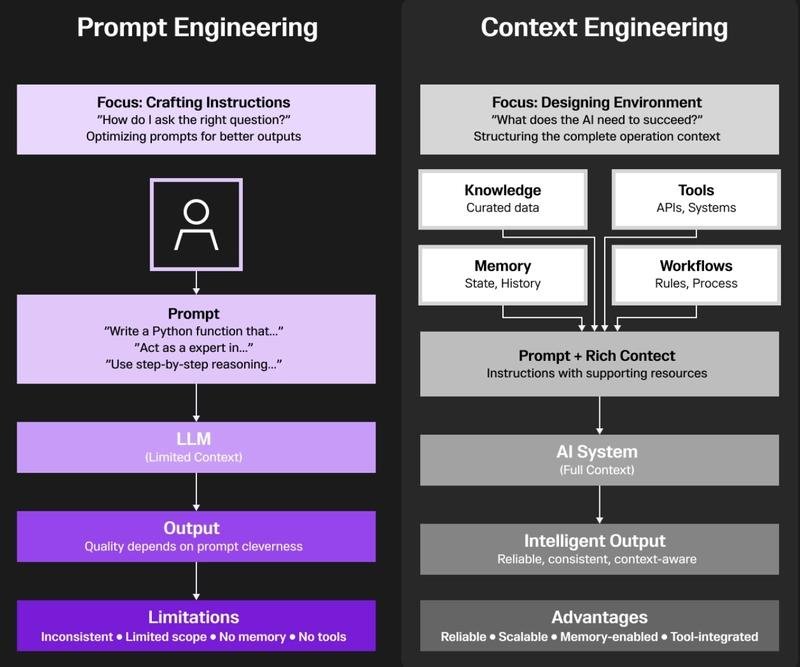
AI Contextual Refinement vs. Prompt Engineering
AI contextual refinement and prompt engineering are related, but they are not the same thing.
Prompt engineering focuses on designing instructions that guide an AI model toward a desired result.
For example:
“Summarize the following report in five bullet points for a non-technical executive audience.”
That is a carefully designed prompt.
Contextual refinement goes further by incorporating information about the situation and potentially improving the output after it has been generated.
For example, an application could automatically provide:
- The user’s previous conversation
- Company terminology
- Relevant documentation
- The user’s preferred output format
- Feedback from previous responses
It could then evaluate and revise the generated answer.
In simple terms:
| Concept | Main purpose |
|---|---|
| Prompt engineering | Improve instructions |
| Contextual AI | Give the model relevant surrounding information |
| AI contextual refinement | Use context and feedback to improve the resulting output |
| RAG | Retrieve external information to provide additional context |
| Fine-tuning | Modify model behavior through additional training |
These approaches can also be combined.
AI Contextual Refinement and RAG
Retrieval-augmented generation, commonly called RAG, is one way of supplying an AI model with additional information.
A RAG system can retrieve relevant documents from a knowledge base and provide them to the model before generating an answer.
For example, an employee asks:
“How many vacation days do I receive?”
Instead of relying entirely on the model’s general knowledge, an enterprise AI assistant could retrieve the company’s current employee policy and use that information when responding.
Contextual refinement can happen before or after this retrieval process.
A system might:
- Understand the employee’s question.
- Identify which policy information is relevant.
- Retrieve the appropriate document.
- Generate an answer.
- Check whether the answer matches the retrieved policy.
- Refine the response if necessary.
This is one reason contextual refinement is useful in knowledge-based AI applications.
Real-World Examples of AI Contextual Refinement
Customer Support
A customer-support AI can use information about a particular conversation rather than responding to every message independently.
Suppose a customer has already explained that:
- Their device stopped working
- They purchased it six months ago
- They already tried restarting it
- A previous support agent provided troubleshooting steps
When the customer asks, “What should I try now?”, a contextual system can avoid repeating the same basic instructions.
The AI can instead continue from the existing conversation.
Software Development
Coding assistants can use contextual information from a project to produce more appropriate suggestions.
Relevant context might include:
- Existing source code
- Project structure
- Configuration files
- Programming language
- Dependencies
- Coding conventions
- Error messages
A generic answer to “How should I fix this function?” may be less useful than one that understands how the function interacts with the rest of the application.
Marketing and Content Creation
An AI writing system can refine content based on a brand’s established requirements.
For example, a company might specify:
- Preferred tone
- Target audience
- Words to avoid
- Product terminology
- Formatting rules
- Brand positioning
The AI can use these constraints to refine an initial draft instead of treating the writing request as a blank-page exercise.
Enterprise Knowledge Assistants
Organizations often have information distributed across documents, databases, policies, and internal systems.
An AI assistant can combine a user’s question with relevant organizational context.
For example, an employee asking about an internal procedure may receive an answer based on the company’s current documentation rather than a generic explanation.
This can be particularly valuable when company-specific information is more important than general world knowledge.
Personalized Learning
An educational AI system can adjust explanations according to a learner’s previous interactions.
If a student already understands basic programming variables but struggles with loops, the system does not need to restart from the beginning every time.
Instead, the AI can refine its explanation based on the learner’s demonstrated understanding.
A Practical AI Contextual Refinement Workflow
Organizations building contextual AI systems can use a structured workflow.
Step 1: Define the Desired Output
Before adding context, determine what a successful response should look like.
Ask:
- What should the AI produce?
- Who will use it?
- What makes an answer useful?
- What information must never be omitted?
Step 2: Identify Relevant Context
Separate useful context from unnecessary information.
Potential sources include:
- Conversation history
- User preferences
- Internal documents
- Databases
- Application state
- Business rules
- Previous feedback
Step 3: Prioritize the Information
Not every piece of context deserves equal weight.
Current information may be more relevant than outdated information. A specific company policy may matter more than a general assumption.
This prioritization becomes increasingly important as applications handle larger amounts of information.
Step 4: Generate the Response
Provide the selected context alongside the appropriate instructions.
The system then generates an initial response.
Step 5: Validate the Result
Use rules, automated checks, retrieval comparisons, or another evaluation process to identify problems.
For example:
- Does the response answer the actual question?
- Does it contradict known information?
- Did it follow the requested format?
- Did it use outdated information?
- Did it expose information that should remain private?
Step 6: Refine Where Necessary
If the response does not meet the requirements, the system can adjust its instructions or context and generate another version.
This does not guarantee correctness, but it can create a more controlled workflow than relying on one generation step.
Also Read: Conversational AI for Customer Service
Benefits of AI Contextual Refinement
More Relevant Responses
The biggest advantage is relevance.
An AI system can adapt its response to the specific situation instead of producing a generic answer.
Better Continuity
Context allows an AI assistant to continue a conversation or workflow without repeatedly asking for information already provided.
Improved Personalization
Different users can receive different responses based on legitimate preferences, roles, goals, or application context.
Greater Usefulness of Enterprise AI
Organizations can connect AI systems to their own documentation and workflows, allowing responses to reflect company-specific information.
Better Error Detection
A refinement stage can identify certain problems before the final answer reaches the user.
However, validation systems themselves need to be designed carefully. A second AI model does not automatically provide a reliable source of truth.
Limitations and Risks
AI contextual refinement is useful, but it does not eliminate the fundamental problems associated with AI systems.
Incorrect Context Can Produce Incorrect Answers
If the information supplied to the system is wrong, the resulting answer can also be wrong.
For example, an AI connected to an outdated policy database may confidently provide obsolete information.
Too Much Context Can Become a Problem
Adding large amounts of irrelevant information can make it harder for the system to identify what actually matters.
Good contextual systems therefore need mechanisms for selecting and prioritizing information.
Context Can Conflict
Different sources may provide contradictory information.
A current policy might conflict with an older document. A user’s statement might conflict with information stored in an application.
The system needs a way to determine which source should take priority.
Privacy Concerns
Context may contain sensitive business information, personal data, customer records, or confidential documents.
Organizations need appropriate access controls and data-handling policies when building contextual AI applications.
Higher Complexity and Cost
Retrieval systems, evaluation stages, databases, monitoring, and additional model calls can make an AI application more complicated and potentially more expensive than a simple prompt-and-response system.
Refinement Does Not Guarantee Truth
Perhaps the most important limitation is that refinement is not the same as verification.
An AI system can produce a more polished and contextually appropriate answer that is still incorrect.
For high-stakes decisions, important claims should be checked against authoritative sources and appropriate human review.
Common Misconceptions About AI Contextual Refinement
“More Context Always Produces Better AI”
Not necessarily.
Relevant context can improve an answer, while irrelevant or contradictory context can reduce its quality.
The objective should be useful context, not maximum context.
“Contextual Refinement Is the Same as Training the AI”
No.
Context can be supplied to a model at the time it is being used. Training or fine-tuning changes model behavior through additional training processes.
These are different mechanisms.
“A Refined Answer Must Be More Accurate”
Refinement can improve relevance, structure, and consistency, but it does not automatically make an answer factually correct.
The quality of the underlying context and validation process still matters.
“Context Means Only Conversation History”
Conversation history is one type of context, but contextual AI can use many other sources.
Documents, databases, application state, user instructions, business rules, and retrieved knowledge can all provide context.
How to Build Better Contextual AI Systems
A useful contextual AI system should focus on a few principles.
Start with the task. Determine what information is actually needed to complete it.
Use authoritative sources. When accuracy matters, prioritize trusted and current information.
Keep context relevant. Avoid supplying information simply because it is available.
Track freshness. Some information becomes outdated quickly, particularly policies, prices, product information, and technical documentation.
Control access. The AI should only receive information the user and application are authorized to access.
Evaluate outputs. Measure whether responses actually satisfy the intended task instead of assuming that fluent text represents success.
Design for uncertainty. When context is incomplete or contradictory, the system should be able to acknowledge uncertainty rather than confidently guessing.
Frequently Asked Questions
What is AI contextual refinement?
AI contextual refinement is the process of improving an AI response by using relevant contextual information, evaluating the generated result, and adjusting it when necessary. The goal is to make the output more appropriate for the specific situation.
Is AI contextual refinement the same as prompt engineering?
No. Prompt engineering primarily focuses on creating effective instructions for an AI model. Contextual refinement can include prompt design, but it also involves supplying relevant context, evaluating outputs, and refining responses based on the situation.
How does contextual refinement improve AI responses?
It can help an AI understand the user’s intent, maintain conversation continuity, apply organization-specific information, follow relevant constraints, and avoid unnecessary repetition.
Can RAG be used for AI contextual refinement?
Yes. RAG can retrieve relevant information from external sources and provide that information as context to an AI model. A refinement process can then use that retrieved information to improve or validate the generated response.
Does AI contextual refinement prevent hallucinations?
It can reduce some errors by providing reliable information and adding validation steps, but it cannot guarantee that hallucinations will disappear. The quality, freshness, and relevance of the context remain important.
Is contextual refinement useful for small AI applications?
Yes. It does not have to involve a complicated enterprise architecture. Even a simple application can use conversation history, user requirements, or a small knowledge base to make responses more relevant.
What is the biggest challenge with contextual AI?
One of the biggest challenges is deciding which context is relevant and trustworthy. A system that receives incorrect, outdated, excessive, or conflicting information may produce a worse answer rather than a better one.
Conclusion
AI contextual refinement is fundamentally about giving AI systems a better understanding of the situation surrounding a request and using that understanding to improve the final result.
The process can involve conversation history, retrieved information, user requirements, application data, business rules, and output evaluation. When implemented well, it can make AI assistants more relevant, consistent, personalized, and useful across areas such as customer support, software development, enterprise knowledge, content creation, and education.
The important takeaway is that context quality matters more than context quantity. A well-designed system does not simply feed an AI model as much information as possible. It identifies the information that matters, considers its reliability and freshness, protects sensitive data, and evaluates whether the resulting answer actually meets the user’s needs.
As AI applications become more connected to real-world information and workflows, contextual refinement is likely to remain an important part of building systems that can respond intelligently to specific situations rather than simply generating plausible text.