
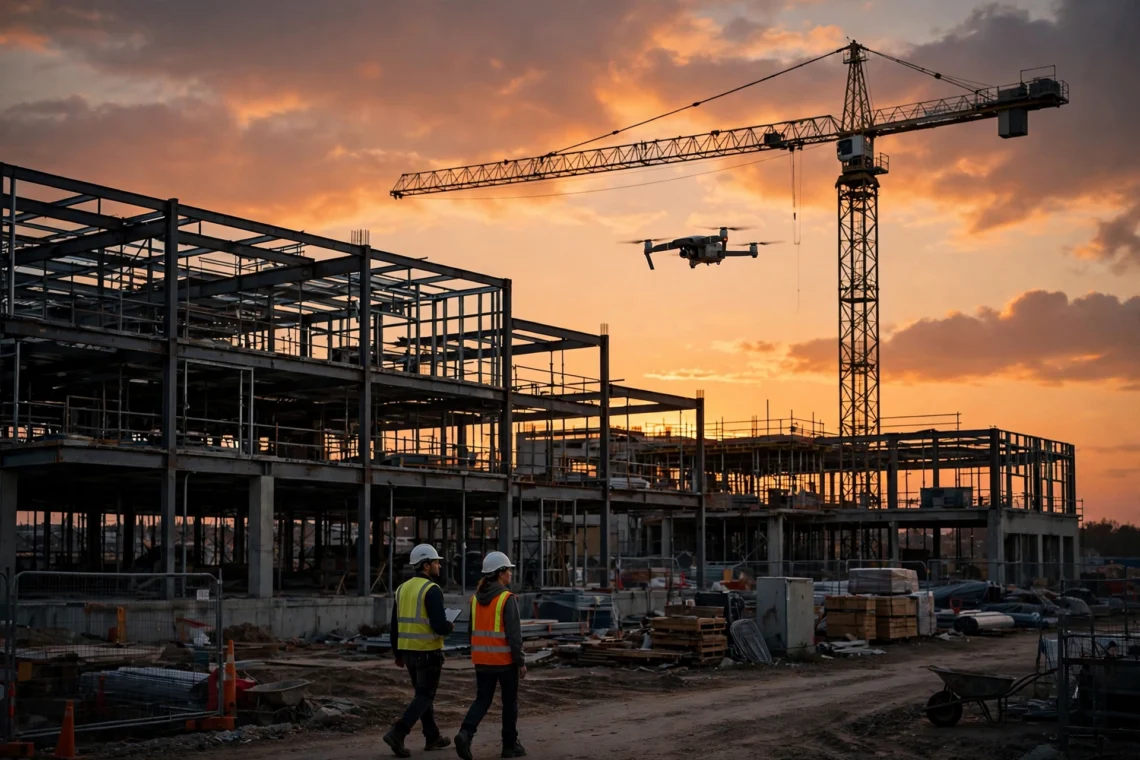
A building site at 6am used to run on paper drawings, whiteboards and the site manager’s memory. Today the same site can be watched by a drone, measured by a laser scanner, scheduled by software that has read a thousand past projects, and checked for safety risks by a camera that never gets tired. That is ai in construction working the way it is meant to: quietly, in the background, removing friction from building.
Construction has always been a business of judgement under pressure. A good estimator knows which bid will actually make money. A good foreman spots a problem in the steelwork before it becomes a delay. A good project manager keeps twenty subcontractors moving in the right order. What has changed is that software can now do some of that noticing at a scale no team can match, reading thousands of drawings, photos, schedules and sensor readings and turning them into decisions in hours instead of weeks.
This guide explains ai in construction in plain language. You will learn what it actually means beyond the marketing, the seven most useful ways builders are putting it to work in 2026, the benefits owners and crews genuinely see, the problems that catch firms out, and a practical five-step plan for starting small without a huge budget or a technology team.
What Is AI in Construction?
Ai in construction means using artificial intelligence — machine learning, computer vision, natural language processing and generative AI — to plan, build and manage construction projects better. It covers everything from the first sketch of a design to the day the keys are handed over, and the work that happens behind the scenes in between: estimating, scheduling, safety, quality, budgets and paperwork.
The simplest way to think about ai in construction is in three layers. The first layer is design and planning AI: tools that test design options, check drawings against building codes and build schedules from past project data. The second layer is site AI: drones, cameras and sensors that watch what is actually happening on the jobsite and flag problems early. The third layer is office AI: systems that read contracts, draft reports, chase documents and forecast costs from the data a firm already holds.
Most builders do not use all three layers at once, and they do not need to. A small contractor might start with a single tool that turns site photos into progress reports, while a large firm might run all three layers across dozens of projects. The technology is the same; only the scale changes.
What makes ai in construction different from the software builders have used for years is that it handles judgement, not just record-keeping. An old project management system could store the schedule. An AI system can read the schedule, notice that the electrical work always slips when the weather turns, and warn the project manager two weeks before it happens. One stores information; the other learns from it.
The shift is happening fast. Grand View Research projects the global market for ai in construction will reach $16.96 billion by 2030, and industry research summarised by Fieldwire suggests AI could cut project costs by 20% by 2030 and lift construction productivity by 31%. Yet adoption is still low: only 12% of construction workers regularly use AI in specific processes, according to RICS research cited by Fieldwire. The question for most firms is no longer whether to use ai in construction, but where to start.
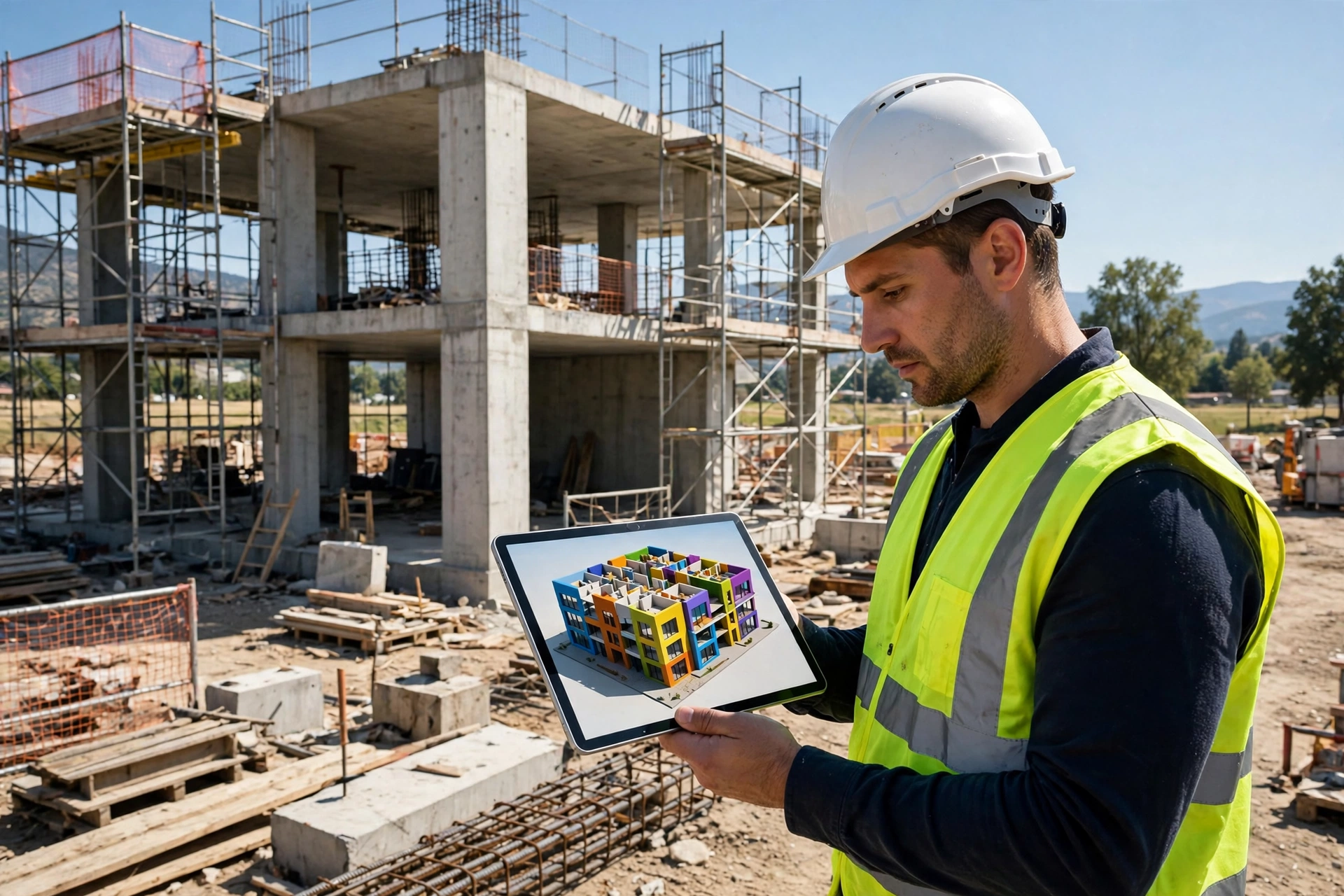
7 Powerful Ways Builders Are Using AI in 2026
The seven uses below are the ones delivering real results for builders right now. Each one solves a specific, everyday problem, and each one is already running on real jobsites rather than sitting in a research lab.
1. Smarter Design and Generative Planning
The first place most firms meet ai in construction is at the drawing board. Generative design tools can test thousands of design options against parameters like structural load, energy efficiency, site conditions, budget and material constraints, and return the handful that actually work. An architect who once spent a week testing three layouts can now review dozens in an afternoon.
This matters because the most expensive mistakes in construction are made early. A design conflict found on paper costs almost nothing to fix; the same conflict found after the concrete is poured can cost weeks. AI in construction catches those conflicts while they are still cheap, by checking the digital model against building codes, clash rules and the lessons of past projects.
For firms using ai in construction, the same idea works on the documents around the design. AI tools can read a specification, pull out the requirements that matter for each trade, and flag the clauses that contradict each other — the kind of detail that used to surface only when two subcontractors disagreed on site.
2. Scheduling That Adjusts Itself
A construction schedule is a promise made about the future, and the future rarely cooperates. Weather, late deliveries, labour shortages and design changes all push dates around, and a schedule that is not updated constantly becomes fiction within a week.
This is where ai in construction earns its keep most directly. Schedule optimisers can:
- Test thousands of sequences: work out the best order for teams, trades and material deliveries instead of relying on one person’s best guess.
- Learn from past projects: analyse data from similar jobs to predict which activities usually slip, and by how much.
- Re-plan automatically: suggest a revised sequence when a delivery is late or a crew is short, instead of waiting for the weekly planning meeting.
- Spot the critical path: warn when a small delay on one task threatens the whole completion date.
A project that once re-planned its schedule once a week can now adjust it daily, automatically, with a person approving the strategy rather than doing the arithmetic. Research summarised by Fieldwire suggests AI adoption can shorten project delivery timelines by 10–25%, which is why scheduling is often the first place a firm’s investment in ai in construction pays for itself.
3. Safety Monitoring That Never Blinks
Construction remains one of the most dangerous industries to work in, and most accidents come from hazards that were visible before they hurt someone: a missing guardrail, a worker without a helmet, a person standing too close to a moving machine.
AI in construction is changing that. Computer vision cameras on site can spot safety risks in real time — missing personal protective equipment, unsafe proximity to heavy machinery, an unguarded edge — and alert a supervisor within seconds. Drone imagery can be analysed by machine-learning systems to detect the same hazards from above, covering ground a safety walk would take hours to reach.
The numbers behind this use of ai in construction are striking. Case studies in Italy, Spain and France showed that AI safety solutions can reduce workplace accidents by 35%. No camera replaces a good safety culture, and a system that flags everything becomes noise that crews learn to ignore. But a system that catches the one hazard a tired supervisor missed on a Friday afternoon is worth more than any report.
4. Drones, Scans and Quality Control
Quality control used to mean walking the site with a clipboard and a trained eye. It still does — but now the clipboard has help. In ai in construction, drone photos, laser scans and 3D models are compared against the design specification automatically, and anything that does not match is flagged for a human to check.
This works because the comparison is relentless. A laser scan can measure a concrete pour to the millimetre and notice a wall that is two centimetres out of position. A drone flight can photograph an entire roof in twenty minutes and find the section where the insulation is missing. A 3D model can show whether the ductwork installed on level three matches the ductwork drawn on level three, before the ceiling goes up and hides it.
Industry research summarised by Fieldwire puts AI-driven quality control among the clearest wins in ai in construction, with AI quality checks able to reduce construction rework by 25%. Rework is pure waste — materials, labour and time spent doing the same job twice — so catching defects while they are still cheap to fix is one of the fastest returns a firm can get.
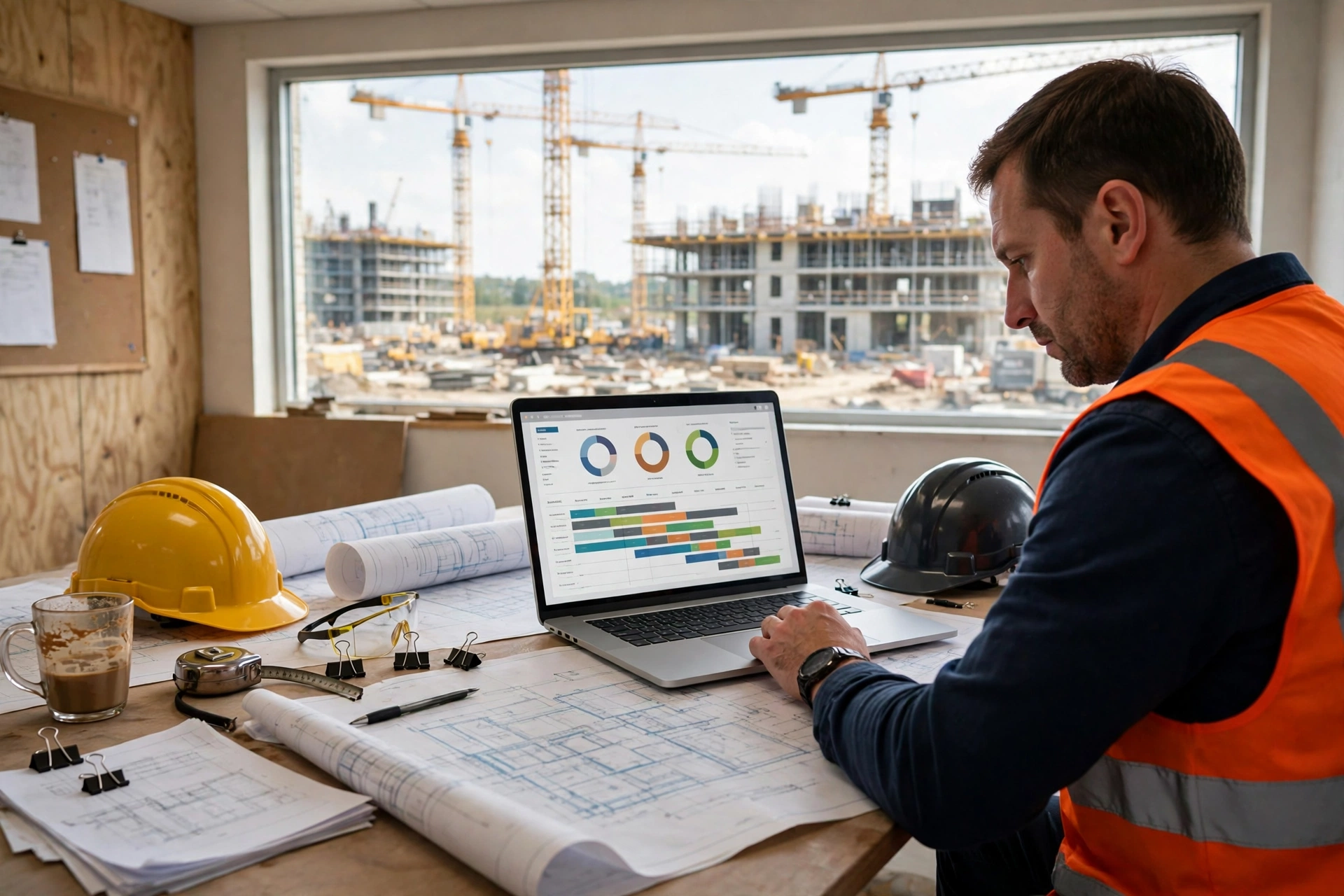
5. Estimating and Cost Control
Estimating is where construction firms win or lose money, and it has always depended on experience: knowing what a job will really cost, not what the drawings suggest. Ai in construction is making that experience available to every estimator, not just the veteran.
AI estimating tools can scan blueprints and building information modelling files, automatically measure materials and square footage, and suggest pricing based on the firm’s own past bids. Instead of manually clicking through drawings for hours, an estimator can get an automated takeoff in minutes and spend the saved time on the judgement calls that actually need a person: which risks to price in, which supplier to trust, where the margin really sits.
Cost control continues after the bid is won. AI in construction systems track spending against the budget in real time, flag cost overruns while there is still time to act, and forecast cash flow from the payment schedule. A small firm that once discovered a budget problem at month-end can now see it the week it starts.
6. Automated Reporting and Paperwork
Ask any site manager what eats their week and the answer is rarely building. It is paperwork: daily logs, progress reports, requests for information, submittals, change orders, safety forms, photo records. Ai in construction is cutting that burden without cutting the record-keeping that protects everyone.
AI tools can now pull field data — photos, notes, weather updates — from jobsite management software and turn it into structured summaries automatically. A daily report that took an hour to write can be drafted in minutes, with the site manager checking and correcting it rather than writing it from scratch. Requests for information can be triaged and routed to the right person, and contract documents can be scanned to flag unusual clauses or missing insurance requirements before anyone signs.
This matters because paperwork is where small delays become big ones. A submittal that sits unread for a week holds up the material order, which holds up the crew, which holds up the next trade. When ai in construction moves documents faster, the whole project moves faster.
7. Smarter Equipment and Materials Management
The last use is the least glamorous and one of the most valuable: knowing where things are and when they will break. Ai in construction helps firms manage the machines and materials that make up a large share of every project’s cost.
Predictive maintenance reads data from equipment sensors — vibration, temperature, fuel use, operating hours — and flags a machine for service before it fails on site. A repair planned for a quiet day costs far less than a breakdown that stops a whole crew, and it never strands a crane halfway through a lift.
Materials management works the same way. AI in construction can forecast what a project will need and when, track deliveries against the schedule, and warn when a material is likely to run short. On a large project, that is the difference between a crew working and a crew waiting — and waiting crews are the most expensive thing on any jobsite.
Also Read: AI in Hospitality: 7 Powerful Ways Hotels Are Using AI in 2026
AI in Construction at a Glance
The table below summarises the seven uses, what each one does, and who benefits most from it.
| Use case | What it does | Who benefits most |
|---|---|---|
| Smarter design and planning | Tests thousands of design options and catches clashes early | Architects and design teams |
| Self-adjusting scheduling | Re-plans sequences from past project data | Project managers and planners |
| Safety monitoring | Spots hazards in real time with cameras and drones | Site crews and safety managers |
| Drones, scans and quality control | Compares as-built work against the design automatically | Quality teams and owners |
| Estimating and cost control | Automates takeoffs and tracks budgets in real time | Estimators and finance teams |
| Automated reporting | Turns field data into reports and routes documents | Site managers and administrators |
| Equipment and materials | Predicts breakdowns and forecasts material needs | Operations and procurement teams |
The Benefits Builders Actually See
The benefits of ai in construction fall into three groups, and firms feel them in a clear order. First comes time: the hours saved when routine reporting, document handling and schedule updates are handled automatically. A site manager who no longer spends the evening writing the daily log can spend it walking the site and solving the problems that actually need a person.
Second comes money. Automated estimating wins more of the right jobs, predictive maintenance avoids expensive emergency repairs, and quality checks catch defects before they become rework. Industry research summarised by Fieldwire suggests ai in construction could cut project costs by 20% by 2030 and lift productivity by 31% — figures that explain why finance directors are paying attention even when site teams are sceptical.
Third comes safety and quality, which are really the same benefit seen from two sides. Fewer accidents mean fewer stopped jobs, fewer claims and crews that go home whole. Less rework means less waste, fewer arguments about who pays, and buildings that match what was drawn. For firms working towards sustainability targets, the data these systems produce — exactly how much material, energy and waste each project involves — turns a vague promise into a number they can report honestly.
The Challenges Builders Must Handle
None of this is free of problems, and ai in construction has real ones. The first is data: AI works by finding patterns in data, and many construction firms keep theirs in a dozen different systems, or on paper, or in one person’s head. A model trained on messy, incomplete records will produce confident-sounding answers that are wrong, and on a building site a wrong answer can be dangerous.
The second is people. Construction has a widening skills gap: 55% of construction leaders cite the lack of skilled talent as a barrier to growth, according to Autodesk’s 2025 State of Design & Make report, and 46% say AI skills will be a top priority when hiring in the next few years. Technology that nobody on the team understands becomes shelfware, however good the demo looked.
The third is trust. The same Autodesk survey found that only 68% of construction leaders now believe AI will enhance the industry, down from 80% in 2024, as firms meet the real difficulties of implementation. That cooling is healthy: it means ai in construction is leaving the hype phase and entering the phase where value has to be proven on real projects. Firms should treat every vendor claim the same way they treat a subcontractor’s promise — ask for the evidence, run a small pilot, and measure the result before committing.
The fourth is cost and complexity. AI tools need licences, training, clean data and someone to own them. A small contractor that buys five tools at once will use none of them well. The firms that get value from ai in construction start with one problem, one tool and one project, and expand only when the first pilot has paid for itself.
How to Start With AI in Construction: 5 Practical Steps
Starting small is the whole secret. The five steps below work whether you are a two-person contractor or a firm running twenty sites.
Step 1: Pick one painful, repetitive job
Do not start with a grand digital strategy. Start with the job everyone complains about: daily reporting, takeoffs, submittal tracking, or safety walks. If a task eats hours every week and follows the same pattern each time, it is a good first candidate for ai in construction. If it needs judgement and experience, keep it human for now.
Step 2: Digitise the workflow first
AI cannot help a process that lives on paper and in people’s heads. Before buying any tool, move the chosen workflow into one digital system: one place for site photos, one place for the schedule, one place for documents. This step alone usually saves time, and it is the foundation everything else in ai in construction is built on.
Step 3: Run one pilot on one live project
Pick a single project, a single tool and a clear measure of success: hours saved per week, defects caught, days shaved off the schedule. Run it for a month and compare honestly against how the same job ran before. A pilot that fails cheaply teaches more than a rollout that fails expensively.
Step 4: Train the people who will actually use it
A tool nobody understands is a tool nobody uses. Train the site managers and engineers who will live with it, not just the head office. Show them what it does, what it cannot do, and how to check its answers. The firms that succeed with ai in construction are the ones where the crew trusts the tool because they helped choose it.
Step 5: Measure, then scale what worked
If the pilot saved time or money, roll the tool out to the next project — and only the next one. If it did not, find out why before spending more: was the data bad, the training thin, or the problem wrong? Scale the wins, fix the losses, and keep the rest of the business running the way it already works.
Frequently Asked Questions
What is ai in construction in simple terms?
Ai in construction is the use of artificial intelligence to help plan, build and manage construction projects. It includes tools that test design options, schedule work, watch sites with cameras and drones, read documents, forecast costs and flag safety risks — all by learning from the data a project produces.
How is AI used in construction today?
AI in construction is used across the whole project lifecycle: generative design and clash detection before building starts, scheduling and cost forecasting during planning, drone surveys and computer vision safety checks on site, and automated reporting and document handling in the office. The most common uses are the repetitive jobs that used to eat hours of skilled people’s time.
Does ai in construction replace construction workers?
No. Ai in construction replaces repetitive tasks, not skilled people. It can measure a drawing, draft a report or flag a hazard, but it cannot pour concrete, judge a weld, negotiate with a subcontractor or take responsibility for a decision. The firms getting the most from it use AI to free their people for the work that needs experience and judgement.
How much does ai in construction cost?
Costs vary widely, from a few hundred dollars a month for a single reporting or estimating tool to large enterprise platforms that run into six figures. Most firms start small: one tool, one project, one clear measure of success. The honest answer is that ai in construction pays for itself only when it is aimed at a real, expensive problem — start with the problem, not the purchase.
What are the main risks of using AI in construction?
The main risks are bad data producing confident wrong answers, teams that do not trust or understand the tool, and buying too much technology before the basics are digital. There is also the risk of over-relying on a system: an AI schedule is a forecast, not a fact, and a safety camera is a second pair of eyes, not a replacement for one. Pilot small, check the answers, and keep a person responsible for every decision.
Conclusion
Ai in construction is no longer a promise about the future. It is already on jobsites, in design offices and in estimators’ laptops, doing the repetitive work that used to eat skilled people’s weeks: measuring drawings, drafting reports, watching for hazards, re-planning schedules and catching defects while they are still cheap to fix. The market is growing fast, the tools are getting better every year, and the firms that start now will have the experience when the technology becomes standard.
But the technology is not the point. The point is what it gives back: time for site managers to walk the site instead of writing about it, money saved by catching mistakes early, and crews that go home safe. The firms that get those returns are not the ones that buy the most tools. They are the ones that pick one real problem, digitise the workflow around it, pilot one tool on one live project, train the people who will use it, and measure the result honestly.
Start there. Pick the job that wastes the most hours on your next project, and let ai in construction take the repetitive half of it. The building will still need people — it always will — but those people will spend their time building, not pushing paper.