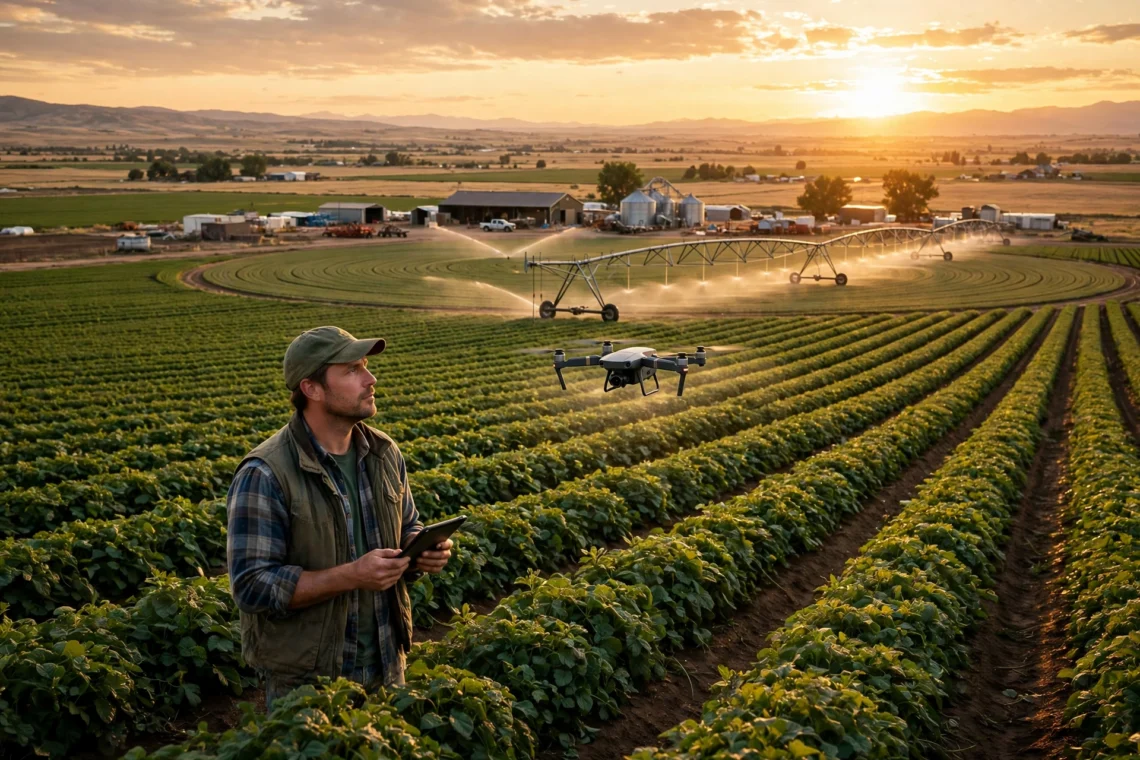
A farmer used to walk every row of a field to know what was wrong with it. A sick plant here, a dry patch there, a fence line where the weeds had taken over — all of it found on foot, with eyes and experience. Today that same farmer can watch a drone fly the whole field before breakfast, get a map of exactly which plants are stressed, and send a sprayer that treats only the weeds it sees. That is ai in agriculture working the way it is meant to: quietly, in the background, turning observation into action.
Farming has always been a business of judgement under uncertainty. A good grower knows which field will yield well and which one will struggle. A good stockman notices a cow going off its feed a day before anyone else. A good farm manager keeps seed, water, labour and machinery in balance across a season that never repeats itself exactly. What has changed is that software can now do some of that noticing at a scale no team can match, reading thousands of images, sensor readings and weather records and turning them into decisions in minutes instead of weeks.
This guide explains ai in agriculture in plain language. You will learn what it actually means beyond the marketing, the seven most useful ways farmers are putting it to work in 2026, the benefits growers and livestock producers genuinely see, the problems that catch farms out, and a practical five-step plan for starting small without a huge budget or a technology team.
What Is AI in Agriculture?
Ai in agriculture means using artificial intelligence — machine learning, computer vision, natural language processing and generative AI — to grow food better. It covers everything from the first soil reading of the season to the day the harvest is sold, and the work that happens behind the scenes in between: planting, watering, feeding, protecting, monitoring and planning.
The simplest way to think about ai in agriculture is in four capabilities that work together. First the system perceives: cameras, drones, satellites and sensors watch the crop, the animals and the soil. Then it predicts: models forecast disease, yield, weather risk and market timing from what they have seen. Then it communicates: the findings reach the farmer as a map, an alert or a plain-language answer. And finally it acts: a sprayer, an irrigation valve or a feeding system carries out the decision, usually with a person supervising. A 2026 synthesis of peer-reviewed research describes exactly this sequence — from sensing to action — as the core pattern of ai in agriculture.
Most farms do not use all four capabilities at once, and they do not need to. A small vegetable grower might start with a single phone app that diagnoses plant disease from a photo, while a large arable farm might run drones, soil sensors and autonomous machinery across thousands of acres. The technology is the same; only the scale changes.
What makes ai in agriculture different from the farm software growers have used for years is that it handles judgement, not just record-keeping. An old farm management system could store the rainfall. An AI system can read the rainfall, the soil moisture, the growth stage of the crop and the forecast, and tell the farmer which field to water tonight and which one can wait. One stores information; the other learns from it.
The shift is happening fast, and the pressure behind it is real. Global food demand is projected to rise by up to 56% by 2050, according to research in Nature cited by the Cloud Security Alliance — more mouths to feed from roughly the same amount of farmland. At the same time, farms face labour shortages, unpredictable weather and rising input costs. Ai in agriculture is not a gadget for its own sake. It is how a farm produces more from the same land, with fewer chemicals, less water and fewer wasted hours.
7 Powerful Ways Farmers Are Using AI in 2026
The seven uses below are the ones delivering real results for farmers right now. Each one solves a specific, everyday problem, and each one is already running on real farms rather than sitting in a research lab.
1. Spotting Disease and Pests Before They Spread
The first place most farms meet ai in agriculture is in the crop itself. A disease caught on day three costs a fraction of a disease caught on day thirty, when it has already spread across the field. The problem is that a person cannot look at every leaf of every plant, every day.
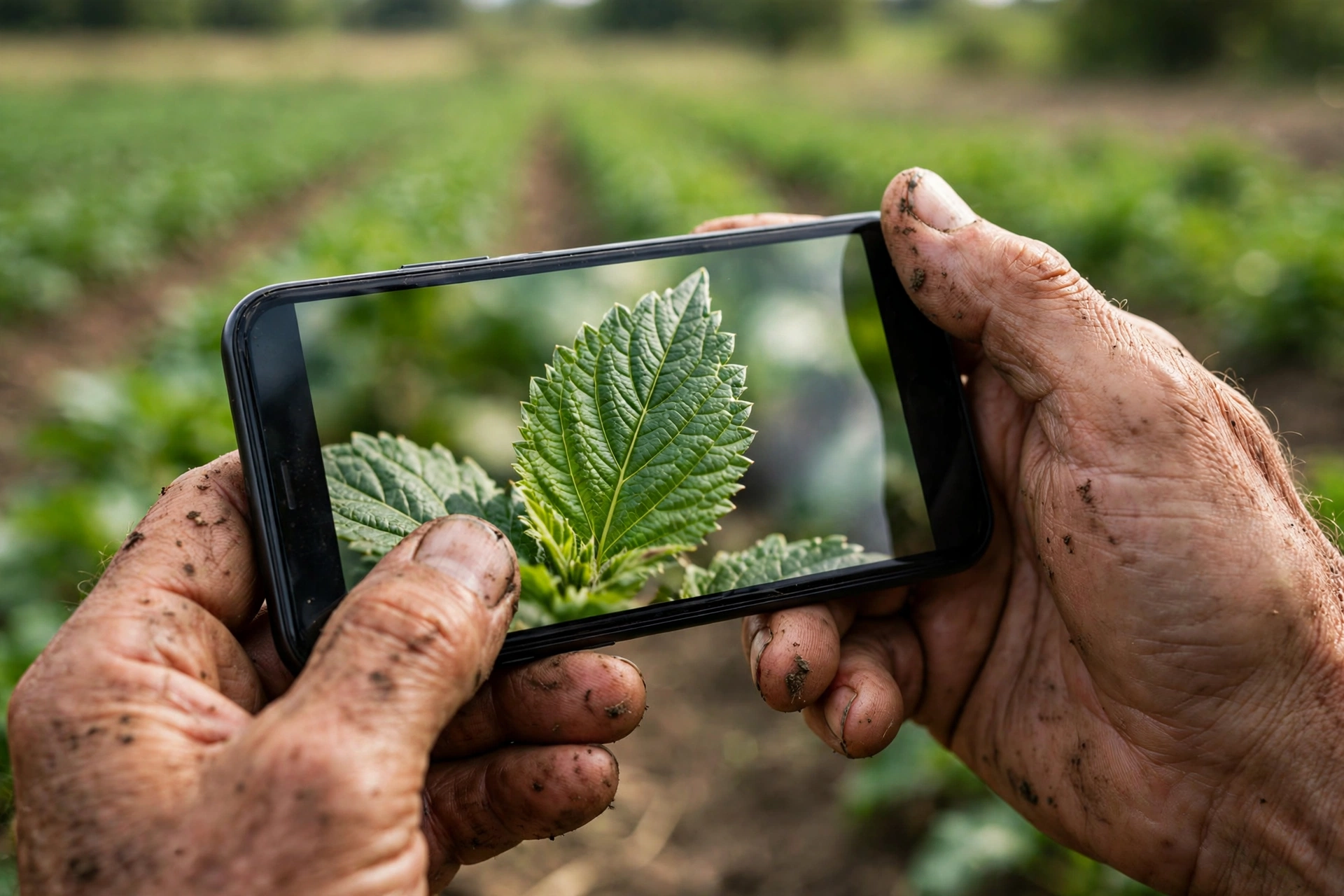
AI in agriculture changes that. Computer vision models trained on thousands of labelled images can recognise the early signs of disease, pest damage and nutrient deficiency from a phone photo or a drone pass. A farmer photographs a suspicious leaf, and the app names the likely problem and suggests what to do. Apps such as Plantix and PlantVillage Nuru already do this from an ordinary smartphone, which is why this is often the cheapest entry point into ai in agriculture for a small farm.
The accuracy is now good enough to trust for routine checks. AI models can identify apple scab with 95% accuracy, according to research summarised by the Cloud Security Alliance, and similar models cover wheat rust, tomato blight and dozens of other common problems. Drone and satellite imagery extends the same idea to whole fields: high-resolution images from services such as Taranis let a grower zoom in with millimetre precision and see stress in the crop before it is visible from the ground.
Pest monitoring works the same way. AI-powered traps such as Trapview use pheromones and cameras to count and classify insects, so a grower knows when a pest population is about to cross the threshold for spraying — and when it is safe to wait. Instead of spraying on a calendar date, the farm sprays on evidence. That is the whole logic of ai in agriculture in one sentence: treat the problem where it is, when it is there, and nowhere else.
2. Spraying Only the Weeds
Weeds steal water, nutrients and light from crops, and the traditional answer has been to spray the whole field. It works, but it wastes chemical, costs money and puts herbicide on plants that never needed it. Ai in agriculture offers a sharper answer: spray only the weed.
The best-known example is John Deere’s See & Spray system, which uses cameras and machine learning to tell crop from weed as the sprayer moves through the field at normal speed, and fires the nozzle only where a weed is detected. Reporting by Built In puts the herbicide saving at more than 50%, and the principle matters more than the exact number: the unit of management shrinks from the whole field to the individual plant. A cotton producer spraying a 100-acre field no longer treats every acre the same — the system makes millions of plant-level decisions as it crosses the field, according to the Council for Agricultural Science and Technology’s 2026 brief.
Laser weeding goes a step further and removes the chemical altogether. Systems from Carbon Robotics identify individual weeds and destroy them with a laser, while companies such as Naïo Technologies build autonomous weeding robots for vegetable rows. One precision applicator, Verdant Robotics’ Sharpshooter, claims to cut chemical use by 99% and labour costs by 85% — a manufacturer’s claim rather than an independent result, and worth treating as such, but it shows the direction of travel.
For farms using ai in agriculture, targeted spraying is often the first use that pays for itself in a single season. Chemical is one of the largest variable costs on a crop farm, and cutting it in half without losing yield is a return any grower can measure. It also answers the question neighbours and buyers increasingly ask: why spray what does not need spraying?
3. Watering and Feeding Exactly What the Crop Needs
Water is the most precious input on most farms, and the most wasted. A field watered on a fixed schedule gets too much on cool days and too little on hot ones. Ai in agriculture replaces the schedule with measurement.
Soil sensors from companies such as CropX sit underground and report moisture, temperature and nutrient levels in real time. AI models combine those readings with weather forecasts, the growth stage of the crop and the soil type of each zone, and tell the irrigation system how much water to apply and where. The result is water applied only where the soil is actually dry, in the amount the plants can actually use.
Variable rate technology extends the same logic to fertiliser and seed. Instead of one rate for the whole field, the spreader varies the rate as it moves, guided by maps built from soil samples, yield history and satellite imagery. The rich corner of the field gets less fertiliser because it does not need more; the poor patch gets more because it does. Ai in agriculture turns a field from one average into dozens of small decisions, each one matched to the ground beneath it.
This matters most where water is scarce or expensive, but it pays everywhere. Over-watering leaches fertiliser past the roots and into waterways. Under-watering stresses the crop at the moment it is setting yield. A system that waters precisely is not just saving a resource — it is protecting the harvest. For a farm running ai in agriculture, irrigation is usually the second investment after disease detection, because the savings show up on the very next water bill.
4. Watching Over Livestock Day and Night
Crops stay where they are planted. Animals do not. A cow that is going lame, a pig developing a cough, a ewe about to lamb — each one needs noticing, and noticing takes a person walking the shed at the right moment. Ai in agriculture gives the farm eyes that never sleep.
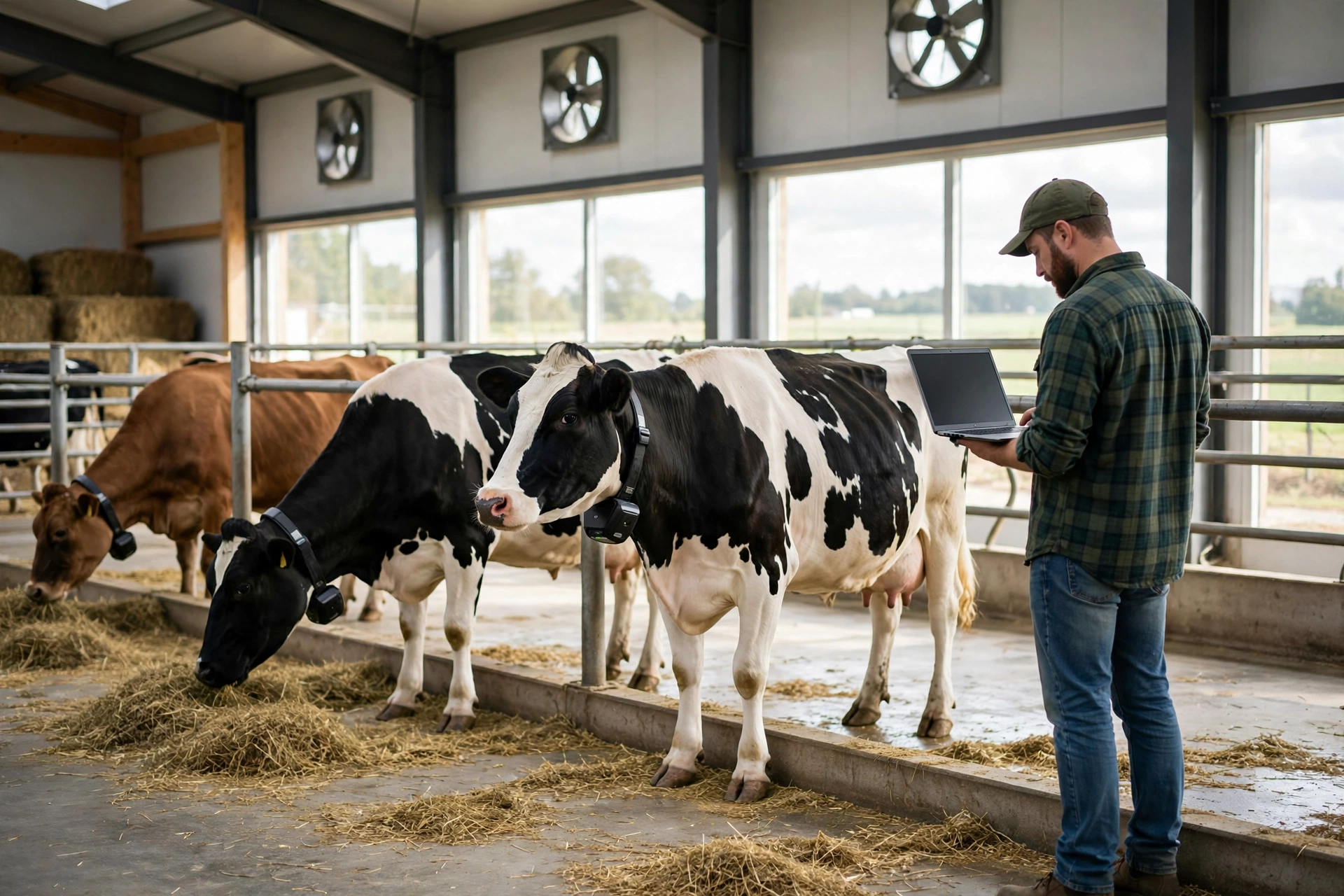
Computer vision cameras and wearable sensors monitor livestock continuously. Collars and ear tags track movement, feeding, rumination and temperature; cameras watch gait and behaviour; microphones listen for coughs. The AI learns what normal looks like for each animal, and flags the one that has quietly changed. A dairy farmer using a system such as CattleEye gets a remote assessment of each cow’s movement and health without walking the shed, and can check the animal that matters instead of checking all of them.
The swine example shows how early the warning can come. In a commercial pig facility, acoustic sensors coupled with AI models can analyse thousands of coughs a day and detect the subtle changes associated with respiratory disease days before workers would recognise obvious symptoms, according to the Council for Agricultural Science and Technology. Earlier treatment means a smaller outbreak, less medicine used overall, and fewer animals lost.
Feeding is part of the same picture. Automated feeding systems adjust rations to each animal’s needs, and AI models predict which animals are ready for breeding from behaviour changes that are easy to miss. Ai in agriculture does not replace the stockman’s eye — it points that eye at the right animal at the right time. On a livestock farm, that is the difference between reacting to a problem and preventing one.
5. Predicting Yields and Timing the Harvest
Every farm decision is a bet on the future: how much to plant, when to harvest, how much storage to book, when to sell. Ai in agriculture makes those bets better informed by turning the farm’s own history into a forecast.
Yield prediction models combine satellite imagery, weather data, soil maps and past harvest records to estimate what each field will produce, weeks before harvest. The estimate improves as the season goes on: early in the year it is a rough guide, and by late summer it is accurate enough to plan labour, transport and storage around. A grower who knows the yield within a few percent can book the right number of trucks and the right amount of cold storage, instead of guessing and paying for both.
Harvest timing is where the forecast earns its keep. Pick too early and the crop is underweight; pick too late and quality falls. AI systems assess ripeness from images and sensor data — sugar content in grapes, dry matter in potatoes, colour and firmness in fruit — and tell the grower which block to pick first. Robotic harvesters are beginning to do the same job plant by plant, judging each fruit’s maturity in real time before deciding whether to pick it.
The same forecasting helps on the selling side. When ai in agriculture predicts the harvest accurately, the farm can forward-sell with confidence, negotiate storage, and avoid the end-of-season glut that pushes prices down. Farming will always involve weather and luck, but a farm that can see its own harvest coming is a farm that can plan around it instead of reacting to it.
6. Machines That Drive Themselves
The tractor that drives itself is the most visible face of ai in agriculture, and it is no longer a concept vehicle at a trade show. GPS-guided tractors have steered straight lines for years; the new step is machines that perceive their surroundings and make decisions as they work.
Autonomous tractors and harvesters use cameras, lidar and machine learning to navigate the field, avoid obstacles, and adjust to conditions in real time. A driverless tractor can work through the night during the short harvest window, when every hour counts. A robotic weeder can move down a vegetable row distinguishing crop from weed at a speed no human crew could match. And because the machine knows exactly where it has been, it never overlaps a pass or misses a strip — which saves fuel, seed and chemical on every acre.
The most demanding version of this is what researchers call physical AI: intelligent systems that perceive, reason and act in an open, changing environment. Picking a marketable peach, as the Council for Agricultural Science and Technology puts it, requires more than recognising where the fruit is. The system must estimate ripeness, decide whether the fruit can be reached without damaging nearby branches, plan a path that avoids collisions, adjust its grip as the fruit moves, and respond if wind or branch motion changes unexpectedly. Agriculture is one of the hardest proving grounds for this kind of AI, because nothing in a field stands still.
For most farms, full autonomy is still a few seasons away, and the sensible step today is supervised autonomy: the machine does the driving and the repetitive work, while a person watches, checks and takes over when conditions change. Ai in agriculture is at its best here — not removing the farmer, but letting one farmer cover far more ground, more safely, than before.
7. Running the Whole Farm From One Dashboard
The six uses above produce something a farm has never had before: a complete, current picture of the whole operation. Ai in agriculture pulls that picture together into one place, where the farmer can see it and act on it.
A modern farm dashboard combines the drone maps, the soil sensors, the weather forecast, the livestock alerts, the machinery locations and the market prices. Generative AI has made this far more usable, because the farmer can now ask the system a question in plain language — “which fields need water this week?” or “why is the wheat in the north field behind schedule?” — instead of learning a new piece of software. Decision support is becoming a routine feature of farm management rather than a specialist capability, and that change matters most for smaller farms that never had an agronomist on staff.
Beyond the farm gate, the same intelligence reaches into the supply chain. AI grading systems in packing facilities now inspect every piece of fruit individually instead of sampling a few. In one example described by the Council for Agricultural Science and Technology, a packing facility processing hundreds of thousands of apples a day uses AI to evaluate every individual apple in milliseconds for size, colour, bruising and defects — and in some systems, internal quality too. Each apple goes to the highest-value market it qualifies for, and defective fruit is removed before it reaches a customer. Quality control changes from sampling to comprehensive inspection.
This is the quiet revolution in ai in agriculture: not one clever machine, but the connection between all of them. The drone, the sensor, the sprayer, the barn camera and the packing line all feed the same picture, and the farmer makes decisions with information that used to take a season to gather. The farm becomes, in effect, a system that can see itself.
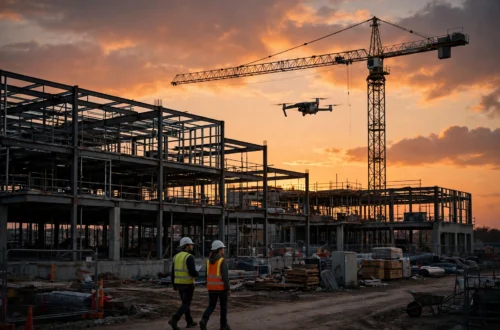
Also Read: AI in Construction: 7 Powerful Ways Builders Are Using AI in 2026
AI in Agriculture at a Glance
The table below summarises the seven uses, what each one does, and who benefits most from it.
| Use | What it does | Who benefits most |
|---|---|---|
| Disease and pest detection | Spots problems from photos and drone imagery days earlier | Crop growers of all sizes |
| Targeted spraying and weeding | Treats only the weeds it sees, or removes them with lasers | Arable and vegetable farms |
| Smart irrigation and feeding | Waters and fertilises each zone by measured need | Farms where water or fertiliser is costly |
| Livestock monitoring | Watches health, behaviour and feeding around the clock | Dairy, pig and poultry producers |
| Yield prediction | Forecasts harvest size and timing for planning and sales | Any farm that stores or forward-sells |
| Autonomous machinery | Drives, weeds and harvests with minimal supervision | Large farms and labour-short regions |
| Whole-farm dashboard | Connects every system into one current picture | Farms juggling crops, animals and markets |
The Benefits Farmers Actually See
The benefits of ai in agriculture are practical rather than dramatic, and that is why they last. The first is lower input costs. Targeted spraying, variable-rate fertiliser and precise irrigation all cut the amount of chemical, fertiliser and water a farm buys. On a crop farm, those three items are a large share of the annual spend, so even a modest percentage saving shows up clearly in the accounts.
The second is higher and more reliable yields. Disease caught early, water delivered on time and harvests timed to ripeness all protect the crop at the moments that decide its size and quality. Ai in agriculture does not make a bad season good, but it stops small problems from becoming big losses, and over a run of seasons that consistency is worth more than one spectacular year.
The third is time. A drone can survey in an hour what used to take a day on foot. A phone app can diagnose a leaf in seconds. An autonomous tractor can work the night shift during harvest. The hours saved are not leisure — they go back into the jobs that still need a person, such as walking the stock, talking to buyers and planning the next season.
The fourth is less waste and a lighter footprint. Less chemical on the field means less run-off into waterways. Less water pumped means less energy used. Fruit graded properly means less food thrown away. For farms selling to supermarkets and processors that now ask about sustainability, ai in agriculture also produces the records that prove the claim: when it was sprayed, how much water was used, what the soil readings were. The data that runs the farm is the same data that answers the buyer’s questions.
The Challenges Farmers Must Handle
Ai in agriculture is not a simple purchase, and the farms that struggle with it usually struggle for the same few reasons. The first is cost. Drones, sensors, autonomous machinery and software subscriptions add up, and the return is not always immediate. A large arable farm can spread the cost across thousands of acres; a small farm cannot. That gap is real, and it is why the cheapest entry points — a phone app, a single soil sensor, a shared drone service — matter so much.
The second is connectivity. Many of the systems above assume a reliable internet connection, and many farms do not have one. A sensor that cannot send its readings is a paperweight, and a dashboard that will not load in the field is useless. Offline-first tools and machinery that process data on the device itself are closing this gap, but any farm buying into ai in agriculture should check what actually works on its own land before signing a contract.
The third is data quality. An AI model is only as good as the data it was trained on, and farm data is messy: different crops, different soils, different climates, different seasons. A disease model trained on one region’s wheat may misread another region’s. The research is clear on this point — data quality, human expertise and trust remain essential, and successful adoption needs attention to validation, transparency and responsible governance, as the Council for Agricultural Science and Technology’s 2026 policy brief explains. A farm should treat any AI recommendation as advice to check, not an order to follow blindly.
The fourth is skills. The technology is getting easier to use, but someone on the farm still needs to understand what the system is doing, when to trust it and when to override it. That is a training question, not a technology question, and farms that invest in it get far more from the same tools. Finally there is the question of who owns the farm’s data — the readings from its soil, its animals and its machines. Before adopting a platform, a farm should know where its data goes, who else can see it, and whether it can take it elsewhere. Ai in agriculture works best when the farmer stays in control of the information the farm generates.
How to Start With AI in Agriculture: 5 Practical Steps
Starting with ai in agriculture does not mean buying a driverless tractor. It means picking one problem, solving it cheaply, and learning from the result before spending more.
Step 1: Pick one expensive problem. Look at last season’s accounts and find the cost that hurt most — chemical, water, labour, animal health, wasted harvest. The best first project is the one with a number attached to it, because then you will know whether it worked. “Spray less” is a wish; “cut herbicide spend by a third” is a test.
Step 2: Start with the phone in your pocket. Download a plant disease app and use it for a month. Photograph every suspicious leaf. Compare its answers with what you see in the field. This costs almost nothing, teaches you how AI sees your crop, and builds the habit of checking the system before trusting it.
Step 3: Add one sensor, not twenty. Put soil moisture sensors in one field, or a camera in one shed, and run them for a full season alongside your normal routine. One field of good data teaches more than a whole farm of sensors nobody looks at. At the end of the season, ask a simple question: did the sensor change a decision?
Step 4: Connect the data before buying more tools. A drone map, a soil reading and a weather forecast are each useful alone and far more useful together. Choose tools that share data with each other, and keep a simple record of what each one told you and what you did about it. The farms that get the most from ai in agriculture are usually the ones with the tidiest records, not the newest machines.
Step 5: Scale what paid, drop what did not. If targeted spraying saved money, extend it to the next field. If the livestock alerts caught two sick animals early, add sensors to the rest of the herd. If a tool did not change a decision all season, cancel it. Ai in agriculture rewards farms that measure results and repeat what works — and punishes farms that buy everything at once and measure nothing.
Frequently Asked Questions
What is ai in agriculture in simple terms?
Ai in agriculture is the use of artificial intelligence to help farms grow food better. Cameras, drones, sensors and software watch crops, animals, soil and weather, and turn what they see into advice or action — such as spraying only the weeds, watering only the dry soil, or warning that an animal is falling ill. It is farm technology that makes judgements, not just records.
Is ai in agriculture only for large farms?
No, and the cheapest tools are often the most useful for small farms. A plant disease app on a phone costs little or nothing, and a single soil sensor can guide watering on a small holding. Large farms benefit most from autonomous machinery, which needs scale to pay for itself, but the entry point for ai in agriculture is a phone, not a driverless tractor.
How much does ai in agriculture cost?
It ranges from free phone apps to six-figure autonomous machines. A realistic starting budget is a disease diagnosis app plus one or two soil sensors, which most farms can try for a small sum. The right question is not the price of the tool but the payback: targeted spraying, for example, can cut herbicide use by more than half, which repays the investment within a season on many farms.
Does ai in agriculture replace farm workers?
It changes their work rather than removing it. The technology takes over repetitive observation — walking every row, watching every animal, checking every leaf — and leaves people the jobs that need judgement: deciding what to do about a problem, caring for animals, and running the business. Farms using ai in agriculture still need skilled people; they need them doing higher-value work.
Can ai in agriculture work without good internet?
Some of it can. Phone apps that diagnose a leaf work offline once downloaded, and newer machinery processes images on the device itself instead of sending them to the cloud. But dashboards, live alerts and drone maps do need connectivity, so a farm with poor signal should ask any supplier exactly what works offline before buying.
What is the biggest risk of ai in agriculture?
Trusting it blindly. An AI recommendation is only as good as its training data, and farm conditions vary enormously by crop, soil and climate. The safest approach is to treat every recommendation as advice to check against your own knowledge of the farm, especially in the first season. A model that is right nine times out of ten is still wrong once — and on a farm, that once can be expensive.
Conclusion
Ai in agriculture is not about replacing farmers with robots. It is about giving a farmer better information, earlier, and letting machines do the repetitive work that used to eat the day. A drone that spots disease before it spreads, a sprayer that treats only the weeds, a sensor that waters only the dry ground, a camera that notices the cow going lame — each one is a small change, and together they add up to a farm that wastes less, grows more and knows itself better.
The farms that benefit most are not the ones that buy the most technology. They are the ones that start with one real problem, measure whether the fix worked, and build from there. A phone app this season, a sensor next season, a targeted sprayer the season after — that is how ai in agriculture actually arrives on a farm, one proven step at a time.
Global food demand will keep rising, and the land available to meet it will not. The farms that thrive in 2026 and beyond will be the ones that treat information as carefully as they treat seed, water and soil. Ai in agriculture is simply the newest way to do that — and for the first time, it is cheap enough, simple enough and proven enough for almost any farm to start.