Technology research becomes more difficult when a search term appears to describe both a website and a broader business concept. Droven.io enterprise tech innovation is one example. Droven.io presents itself as an editorial technology platform covering artificial intelligence, emerging technology, software development, startups, robotics, and modern business.
The important distinction is that Droven.io is primarily a technology information and knowledge platform, not an enterprise software product that businesses install and deploy. Its value for an enterprise reader is therefore different from that of an automation platform, cloud provider, or enterprise SaaS application.
This guide explains what Droven.io covers, what enterprise tech innovation actually means, how businesses can use technology research effectively, and what readers should verify before making technology, security, or purchasing decisions.
What Is Droven.io Enterprise Tech Innovation?
The phrase Droven.io enterprise tech innovation is best understood as the intersection of two ideas: Droven.io’s technology-focused content and the wider subject of innovation in enterprise technology.
Droven.io describes itself as an editorial platform focused on artificial intelligence, emerging technologies, innovative startups, and business strategies connected with technology. Its listed areas include AI News, AI Tools, Machine Learning, Generative AI, Robotics, Startups, Development, and Future Tech.
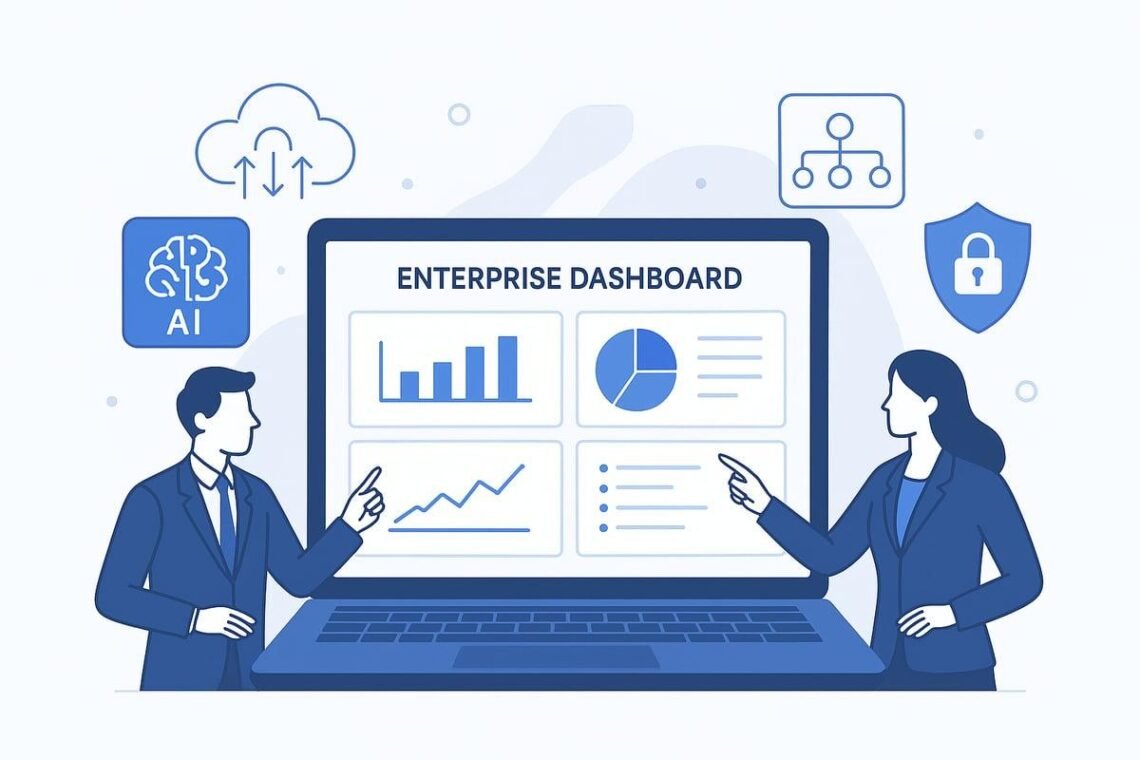
Enterprise tech innovation, meanwhile, refers to the practical process of using technology to improve how an organization operates, makes decisions, serves customers, manages information, or develops products.
That can involve:
- Artificial intelligence and machine learning
- Generative AI
- Workflow automation
- Cloud computing
- Data analytics
- Cybersecurity
- Software development
- Robotics
- Digital transformation
- Enterprise data platforms
The key point is that enterprise tech innovation is not simply about buying the newest technology. A useful innovation solves a real business problem while fitting the organization’s technical, financial, security, and operational requirements.
Is Droven.io an Enterprise Software Product?
No clear evidence on the public site indicates that Droven.io itself is a conventional enterprise software product.
A software platform normally provides some combination of a product interface, accounts, technical documentation, deployment options, APIs, integrations, pricing, or other mechanisms through which customers operate the technology.
Droven.io instead presents itself as a publication and knowledge resource. Its homepage emphasizes technology articles, categories, and educational material rather than a deployable enterprise application.
This distinction prevents a common misunderstanding.
Reading about AI automation on a technology website is not the same as purchasing an AI automation system. An article can help a business understand a technology category, but implementation still requires evaluating actual vendors, infrastructure, integration requirements, security controls, and costs.
What Does Enterprise Tech Innovation Actually Mean?
Enterprise technology innovation starts with a business problem rather than a technology trend.
Suppose a company has thousands of customer-support requests every month. The company might investigate an AI assistant to classify incoming requests and route them to the appropriate team.
The technology is only one part of the project.
The organization also needs to determine:
- What information the system can access.
- Which tasks can safely be automated.
- When a human must review an AI-generated result.
- How customer data will be protected.
- How the system will connect with existing software.
- How performance will be measured.
- What happens when the technology produces an incorrect result.
This is why enterprise innovation is different from experimenting with a consumer application.
A useful enterprise technology project connects technology, workflow, people, data, security, and measurable business objectives.
The Technologies Behind Enterprise Innovation
Artificial Intelligence
AI can support businesses in areas such as document analysis, customer service, forecasting, recommendations, search, classification, and knowledge management.
Generative AI adds capabilities such as producing text, summarizing documents, generating software code, analyzing information, and interacting with users through natural language.
However, businesses should not assume that every AI task should be fully automated. Some processes require human review because an incorrect answer could create financial, legal, operational, or reputational consequences.
Automation
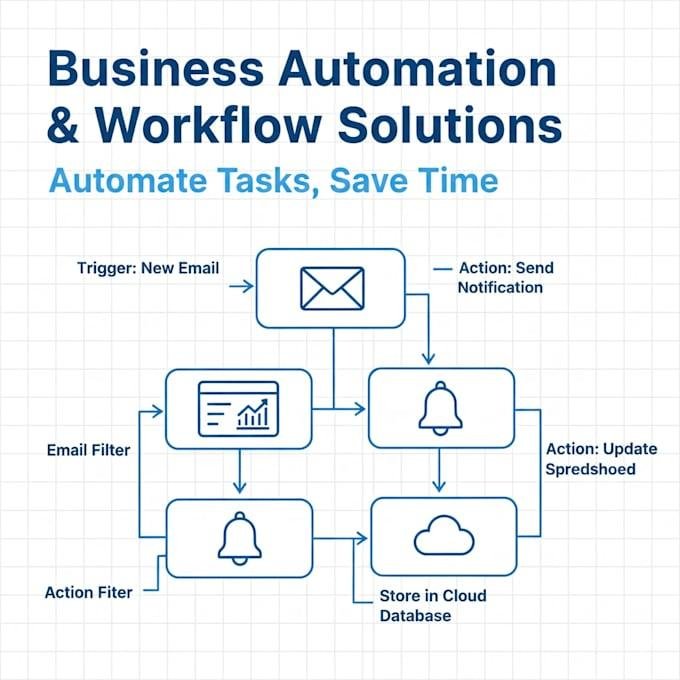
Automation allows software to perform repetitive steps according to defined rules or conditions.
For example, a company could automate a workflow in which:
- A customer submits a form.
- The system validates the information.
- The request is added to a business application.
- A notification is sent to the appropriate employee.
- The transaction is recorded.
AI can make some automation systems more flexible, but traditional rule-based automation remains useful when processes are predictable.
Cloud Computing
Cloud infrastructure gives organizations access to computing, storage, databases, networking, and other services without necessarily operating all of the underlying physical infrastructure themselves.
For enterprises, cloud technology can support application development, data processing, backup systems, analytics, and AI workloads.
Cloud adoption still requires careful consideration of access controls, costs, architecture, data location, availability, and regulatory requirements.

Data Analytics
Technology becomes much more useful when organizations can turn operational data into reliable information.
Analytics can help companies identify patterns in sales, customer behavior, inventory, operations, or financial activity.
AI may be used on top of those data systems, but poor-quality or poorly governed data can undermine the results.
Cybersecurity
Innovation without security can create new problems.
A company introducing AI, cloud services, APIs, connected devices, or automated workflows also creates new points that need protection.
Security considerations can include:
- Identity and access management
- Data protection
- Network security
- Application security
- Monitoring and logging
- Vendor security
- Incident response
- Privacy controls
Security therefore needs to be considered during technology planning rather than added after deployment.
How Droven.io Can Fit Into Technology Research
A technology publication can be useful at the beginning of an enterprise technology project.
Imagine that an operations manager hears about generative AI but does not understand the difference between an AI chatbot, an AI agent, workflow automation, and a conventional software application.
An introductory technology resource can help establish the basic vocabulary.
A sensible research process looks like this:
1. Define the business problem
Do not start with “We need AI.”
Start with a specific problem such as:
Customer-service employees spend too much time manually categorizing incoming requests.
2. Investigate possible technologies
Research whether AI classification, rules-based automation, search technology, or another approach is appropriate.
This is where technology articles and explainers can be useful.
3. Identify actual solutions
Once the organization understands the category, it can investigate specific vendors and products.
4. Validate technical claims
Check official documentation, security information, product specifications, pricing, integration documentation, and independent evidence.
5. Run a limited pilot
A small test can reveal problems that are invisible during theoretical research.
6. Measure the result
The organization should determine whether the technology actually improved the original problem.
This approach is more reliable than adopting a tool simply because it is associated with a popular technology trend.
Real-World Examples of Enterprise Tech Innovation
AI-assisted customer support
A large company may receive thousands of support requests through email, chat, and web forms.
An AI system could classify messages, identify their subject, retrieve relevant information, and suggest a response to an employee.
The important innovation is not simply the chatbot. The real system connects AI with the company’s existing support workflow.
Automated document processing
An insurance or financial organization may process large numbers of forms and documents.
Software can extract relevant information from documents and send the results into an internal workflow. More advanced systems may use AI to handle documents that are less predictable than conventional forms.
Human review can remain part of the process when accuracy requirements are high.
Predictive maintenance
A manufacturer can collect information from equipment and analyze patterns that may indicate potential failures.
The goal is not merely to collect sensor data. The business value comes from turning that data into an operational decision, such as scheduling maintenance before an equipment failure interrupts production.
Enterprise knowledge systems
Employees often spend significant time searching for internal information.
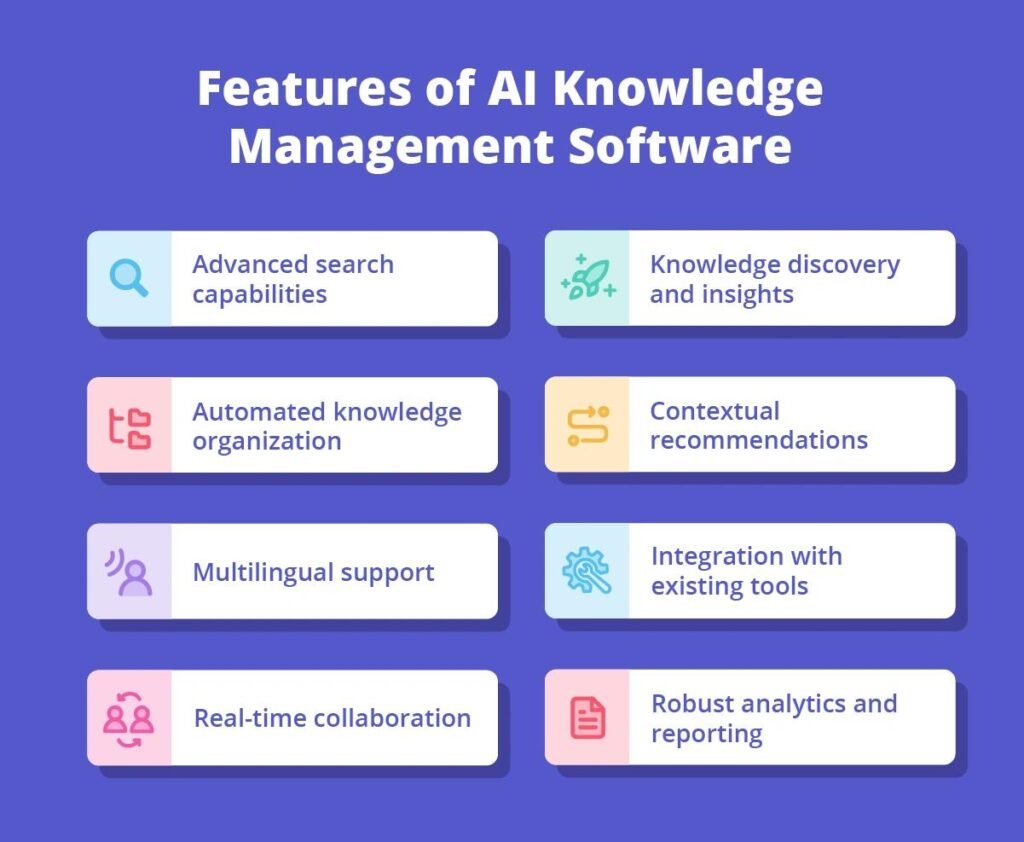
An organization can build a search or AI-assisted knowledge system that helps employees find policies, documentation, procedures, or other approved information.
The quality of such a system depends heavily on the underlying documents, permissions, search architecture, and governance.
Also Read: AI Model Deployment Challenges Production
Benefits of Enterprise Technology Innovation
When implemented properly, technology innovation can provide several advantages.
Greater operational efficiency
Automation can reduce repetitive manual work and allow employees to concentrate on tasks that require judgment or communication.
Better access to information
Search, analytics, and AI systems can make large quantities of business information easier to use.
Faster decision-making
Well-designed data systems can provide employees and managers with information closer to the point where decisions are made.
Improved customer experiences
Digital systems can make services faster and more consistent when they are designed around genuine customer needs.
Greater scalability
Software automation can allow organizations to handle increasing workloads without increasing every manual step at the same rate.
These benefits are possibilities, not guarantees. The outcome depends on implementation quality and whether the technology addresses the right problem.
Limitations and Risks
Enterprise technology innovation also has significant limitations.
Technology can solve the wrong problem
A company can spend heavily on an impressive system without addressing the actual bottleneck in its operation.
AI can produce incorrect results
Generative AI systems can produce convincing but inaccurate information. High-impact workflows therefore need appropriate validation and human oversight.
Integration can be difficult
A new system rarely operates in isolation. It may need to connect with databases, enterprise applications, identity systems, APIs, or older infrastructure.
Costs extend beyond the software
The purchase price is only one part of the total cost.
Organizations may also need to budget for integration, migration, training, monitoring, security, maintenance, and ongoing usage.
Privacy and security matter
Sending sensitive business or customer information to an external service can introduce security and privacy considerations. Organizations should understand how information is processed, stored, accessed, and protected before using a service with sensitive data.
Innovation can create operational complexity
Adding multiple disconnected tools can make an organization’s technology environment harder to manage.
More software does not automatically mean more innovation.
How to Evaluate Technology Information From Droven.io
Droven.io can be useful for discovering technology concepts and understanding emerging areas, but readers should distinguish education from verification.
When an article discusses a product, company, technical capability, market claim, security feature, or current trend, verify important details through appropriate primary sources.
A practical verification checklist includes:
- Is the claim supported by the technology provider’s documentation?
- Is the product or feature currently available?
- Are the stated capabilities documented?
- Does the solution integrate with your existing systems?
- What data does it require?
- What security controls are available?
- What are the actual costs?
- Is the information current?
- Does independent evidence support important performance claims?
This is particularly important for enterprise purchases because a technology decision can affect budgets, employees, customers, data, and existing infrastructure.
Common Misconceptions About Droven.io Enterprise Tech Innovation
“Enterprise tech innovation means using AI everywhere”
It does not.
AI is one component of modern enterprise technology. Sometimes a simple database, automation rule, search system, or software improvement is a better solution.
“Droven.io is an enterprise automation platform”
The public Droven.io website presents itself as an editorial technology platform, not as a conventional enterprise automation product.
“Reading about a technology is enough to evaluate it”
It is a starting point, not a complete evaluation.
Technical documentation, security reviews, pricing, integration requirements, testing, and organizational requirements still need to be considered.
“Newer technology is automatically better”
New technology can be useful, but maturity and suitability matter.
A stable, simple system that solves a business problem may be preferable to a sophisticated technology that introduces unnecessary complexity.
Frequently Asked Questions
What is Droven.io enterprise tech innovation?
Droven.io enterprise tech innovation refers to the relationship between Droven.io’s technology-focused content and the broader field of enterprise technology innovation. Droven.io currently presents itself as an editorial platform covering AI, emerging technology, software development, startups, robotics, and related subjects.
Is Droven.io an enterprise software company?
Droven.io’s public website presents it as a technology and AI content platform rather than a conventional enterprise software product. Readers should not assume that articles about a technology mean Droven.io itself provides that technology.
What topics does Droven.io cover?
Its public categories include AI News, AI Tools, Machine Learning, Generative AI, Robotics, Startups, Development, and Future Tech. It also highlights topics such as automation, deep learning, neural networks, computer vision, and AI ethics.
Can businesses use Droven.io for technology research?
Yes. A technology publication can be useful for learning terminology, discovering emerging technologies, and understanding possible applications. Important purchasing, security, compliance, and implementation decisions should still be validated using current primary and independent sources.
What does enterprise tech innovation include?
It can include AI, automation, cloud computing, data analytics, cybersecurity, software development, robotics, and digital transformation. The exact technology depends on the organization’s business problem.
Is AI necessary for enterprise innovation?
No. AI is useful for some problems but unnecessary for others. Organizations should first identify the desired outcome and then select the technology that solves the problem efficiently and safely.
What should a company consider before adopting new enterprise technology?
It should consider the business case, integration requirements, data, security, privacy, reliability, scalability, total cost, employee impact, vendor capabilities, and how success will be measured.
Should information from technology websites be independently verified?
Yes, especially when the information affects a business purchase or technical decision. Product capabilities, pricing, security policies, availability, and regulatory requirements can change and should be checked against current authoritative sources.
Conclusion
Droven.io enterprise tech innovation is best understood by separating the Droven.io platform from the broader concept of enterprise technology innovation. Droven.io presents itself as an editorial technology resource covering AI, emerging technology, software development, startups, robotics, and future technology.
Enterprise tech innovation itself is much broader. It is the process of applying technology to meaningful business problems while considering integration, data, security, cost, people, and long-term maintainability.
For readers researching AI and enterprise technology, Droven.io can serve as an entry point for learning about unfamiliar concepts and discovering areas worth investigating. But the strongest technology decisions go further: they connect a clearly defined business problem with an appropriate solution and verify important claims before implementation.
The most useful question is therefore not “What is the newest technology?” but “What problem are we trying to solve, and what is the simplest reliable technology that can solve it?”