
AI projects can fail even when the underlying model is technically impressive. A system may achieve strong results during development but provide little value once it is deployed. It may use poor-quality data, solve the wrong problem, or become difficult to maintain when real-world conditions change.
That is why the question “which approach is necessary for AI projects” is more important than simply asking which algorithm or AI model to use. Successful AI development requires a structured, problem-focused approach that connects business goals, data, experimentation, deployment, and continuous improvement.
The necessary approach is generally an iterative, data-driven, and problem-centered approach. Instead of starting with a model and searching for a use case, teams should begin by clearly defining the problem, determining whether AI is actually appropriate, preparing relevant data, testing solutions, deploying carefully, and monitoring results over time.
This article explains how that approach works, why it matters, where AI projects commonly go wrong, and how to apply it in practical situations.
Which Approach Is Necessary for AI Projects?
The best answer to which approach is necessary for AI projects is not simply “use machine learning” or “follow an AI development lifecycle.”
AI projects need a structured and iterative approach that begins with the problem rather than the technology.
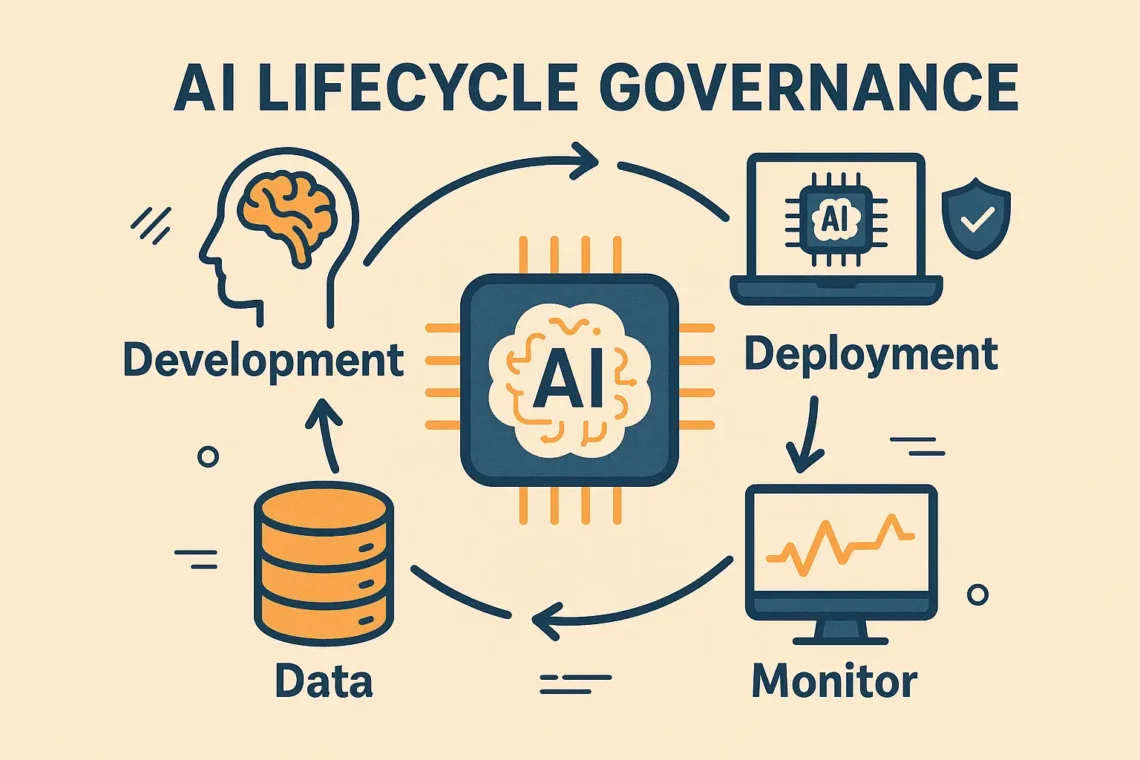
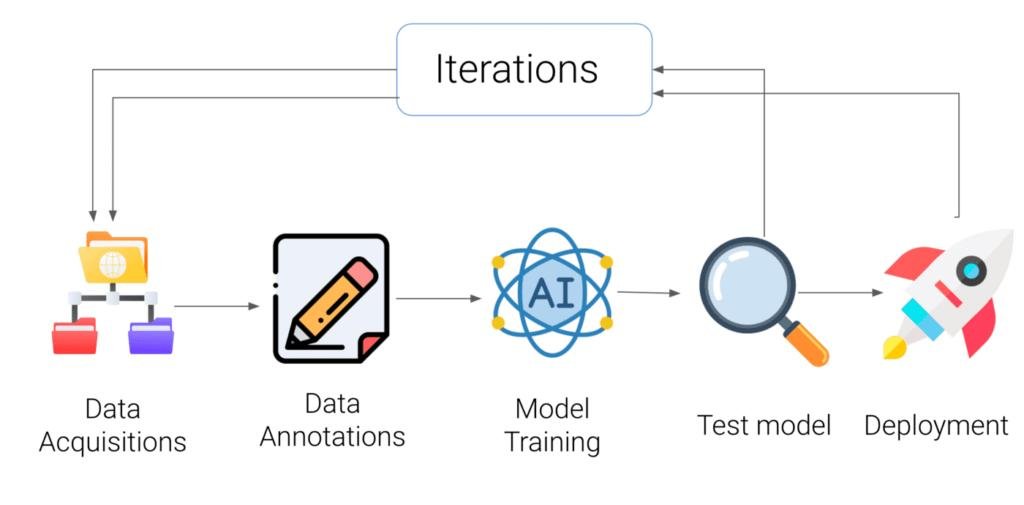
A practical AI project usually follows this cycle:
- Define the real problem.
- Identify measurable success criteria.
- Determine whether AI is the right solution.
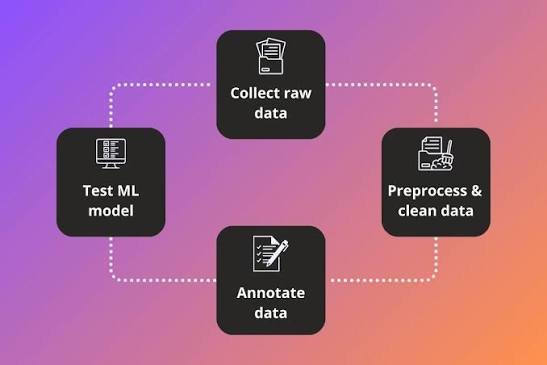
- Collect and understand relevant data.
- Prepare and validate the data.
- Build a simple baseline.
- Develop and evaluate AI models.
- Test the system in realistic conditions.
- Deploy carefully.
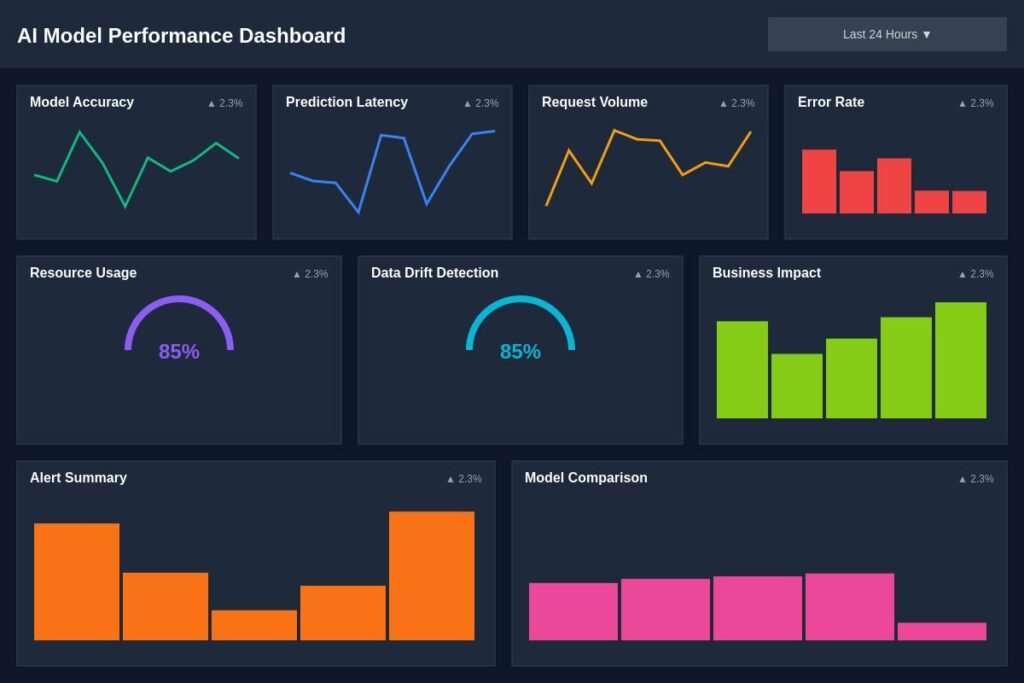
- Monitor, improve, and maintain the system.
The process is iterative because teams often discover new information during development. For example, they may find that the available data does not support the original goal. They may need to redefine the problem, collect different data, or choose a simpler solution.
AI development is therefore not a straight line from “idea” to “finished model.”
Start With the Problem, Not the AI Model
One of the most common mistakes in AI projects is beginning with a technology choice.
A team might decide:
“We should use a large language model.”
Or:
“We need a machine learning system.”
Those decisions may be premature.
A better starting point is to ask:
- What problem are we trying to solve?
- Who experiences this problem?
- What decision or task should be improved?
- How is the task handled today?
- What would success look like?
- Can the result be measured?
- Is AI actually necessary?
Consider a customer support team that receives thousands of messages.
The real problem might be that agents spend too much time reading messages and sending them to the correct department. An AI system could potentially classify incoming requests and suggest the correct category.
That is much clearer than simply saying, “We want to use AI for customer support.”
A well-defined problem helps determine:
- The type of data required
- The appropriate AI technique
- The people affected by the system
- The risks involved
- How performance should be measured
Not Every Problem Needs AI
Sometimes a rule-based system, database query, search tool, or traditional software solution is more appropriate.
For example, if an invoice must always be sent to the finance department when a specific account code appears, a simple rule may be more reliable and easier to maintain than an AI model.
AI is most useful when a task involves patterns, predictions, classification, generation, perception, or complex relationships that are difficult to express with fixed rules.
The goal should be to solve the problem effectively, not to use AI simply because AI is available.
Define Success Before Building the System
An AI project needs clear success criteria.
Without them, a team may spend months improving a model without knowing whether those improvements create real value.
Success can be measured in several ways depending on the project.
For a fraud detection system, relevant measures might include:
- How many suspicious transactions are correctly identified
- How many legitimate transactions are incorrectly flagged
- How quickly suspicious activity is detected
For a document-processing system, the team might measure:
- Accuracy of extracted information
- Number of documents requiring human review
- Processing time
- Error rates after deployment
For a recommendation system, the important question may not only be whether predictions are mathematically accurate. The team may also need to measure whether recommendations help users find relevant products or content.
This distinction matters because model performance and project success are not always the same thing.
A model can achieve strong results on a technical evaluation and still fail to improve the actual workflow.
Data Is a Core Part of the AI Project
AI systems depend heavily on the data used to build and evaluate them.
A sophisticated model cannot automatically fix irrelevant, incomplete, biased, inconsistent, or incorrectly labeled data.
Before training a model, teams should understand:
- Where the data comes from
- What the data represents
- Whether it is relevant to the problem
- Whether important groups or situations are missing
- Whether labels are accurate
- Whether personal or sensitive information is involved
- Whether the data can legally and ethically be used
Data Quality Matters More Than Data Volume Alone
More data is not automatically better.
Imagine a company building an AI system to classify product reviews as positive or negative. Millions of poorly labeled reviews may be less useful than a smaller dataset that has been carefully reviewed and accurately labeled.
Teams should also consider whether training data reflects the conditions the system will encounter after deployment.
For example, a model trained only on clear, high-quality photographs may perform poorly when users upload blurry or poorly lit images.
This is often called a data distribution problem: the conditions during real-world use may differ from the conditions represented in the development data.
Build a Baseline Before Building a Complex AI System
A strong AI project should establish a baseline.
A baseline is a simple method used to understand the minimum level of performance a more advanced system should beat.
The baseline might be:
- A manual process
- A simple set of rules
- A basic statistical model
- A straightforward machine learning model
Suppose a company wants AI to predict whether customers are likely to cancel a subscription.
Before building a complex model, the team could compare it with a simple baseline based on factors such as recent account activity.
If the complex model does not produce a meaningful improvement, its additional complexity may not be justified.
Baselines help teams avoid an important mistake: assuming that a more advanced model is automatically a better solution.
Use an Iterative Approach Instead of Expecting a Perfect First Version
AI development usually involves experimentation.
A team may:
- Define a problem.
- Prepare an initial dataset.
- Train a simple model.
- Evaluate the results.
- Identify weaknesses.
- Improve the data or approach.
- Test again.
This cycle may happen multiple times.
For example, an AI system designed to categorize news articles may initially confuse closely related topics. Investigation may reveal that the problem is not the model architecture but inconsistent category definitions in the training data.
The solution may therefore involve improving the labeling process rather than replacing the model.
This is why iteration is essential. AI projects require teams to learn from results and adjust their assumptions.
How to Choose the Right Technical Approach
Once the problem and data are understood, the team can decide which technical approach is appropriate.
Different problems may require different methods.
| Problem | Possible Approach |
|---|---|
| Predicting a numerical value | Regression or another predictive method |
| Sorting items into categories | Classification |
| Finding unusual activity | Anomaly detection |
| Grouping similar items | Clustering |
| Understanding or generating text | Natural language processing or generative AI |
| Recognizing objects in images | Computer vision |
| Recommending relevant items | Recommendation systems |
| Automating a fixed decision | Rules or traditional software |
The important point is that the technology should follow the problem.
A generative AI model is not automatically the correct solution for every task involving text. A traditional classifier, search system, or rule-based workflow may sometimes be more suitable.
Choose Simplicity When It Is Sufficient
Complex systems can introduce additional costs and challenges.
They may require:
- More computing resources
- More data
- More specialized expertise
- Longer development time
- More difficult monitoring
- Greater maintenance effort
The best system is often the simplest approach that meets the project’s requirements reliably.
Evaluate AI in Conditions That Resemble Real Use
Testing an AI system only during development is not enough.
The evaluation process should consider the conditions the system will face after deployment.
Important questions include:
- Does the test data resemble real-world data?
- Are important user groups represented?
- What types of mistakes does the system make?
- How serious are those mistakes?
- Can a human review uncertain results?
- Does performance change over time?
Accuracy alone may also be misleading.
Imagine a medical or safety-related application where one type of mistake is much more serious than another. A single accuracy score may not adequately describe the system’s risk.
The evaluation process should therefore match the consequences of the AI system’s decisions.
Real-World Examples of the Necessary AI Project Approach
1. Customer Support Message Classification
A company receives customer messages through email and chat.
The problem is not simply “build an AI chatbot.” The actual objective may be to reduce the time required to route messages.
A structured approach could look like this:
- Analyze existing messages.
- Define categories such as billing, technical support, and account access.
- Check whether historical messages can be reliably labeled.
- Create a simple baseline.
- Train and test a classification system.
- Allow employees to review uncertain classifications.
- Monitor errors after deployment.
The human review step may be especially important when incorrect routing could cause delays or customer frustration.
2. Predictive Equipment Maintenance
A manufacturing organization may want to predict equipment failures.
The team would first need to determine what data is available, such as:
- Sensor readings
- Maintenance records
- Operating conditions
- Previous failures
The system must also define what counts as a useful prediction. Predicting a failure after it has already become obvious provides little value.
The AI project therefore needs success criteria related to timing, accuracy, and the consequences of false alarms.
3. AI Document Processing
An organization may receive large numbers of invoices or forms.
An AI system could extract information such as names, dates, account numbers, or amounts.
However, a good project would not simply accept every AI-generated result automatically.
A safer workflow might include:
- Confidence thresholds
- Validation rules
- Human review for uncertain cases
- Logging of corrections
- Regular monitoring for new document formats
This approach recognizes that AI output can contain errors and that the surrounding workflow is just as important as the model itself.
4. Internal Knowledge Assistant
A company may want an AI assistant that answers employee questions using internal documentation.
A practical approach would include:
- Identifying which documents the system may access.
- Checking whether the documents are current.
- Defining access permissions.
- Testing whether answers are grounded in approved information.
- Creating a process for handling questions the system cannot answer reliably.
- Monitoring incorrect or outdated responses.
The project is therefore not only about selecting a language model. Knowledge quality, access control, retrieval, evaluation, and maintenance are also essential.
Also Read: Zavalio Com
Human Oversight Should Match the Level of Risk
Not every AI system needs the same level of human involvement.
A system suggesting alternative wording for an internal draft may require relatively little oversight.
A system influencing financial decisions, employment decisions, safety-related processes, or other high-impact outcomes may require much stronger controls.
Human oversight can include:
- Reviewing uncertain results
- Approving high-impact decisions
- Providing a way to correct errors
- Monitoring unexpected behavior
- Escalating unusual cases
The goal is not necessarily to place a human in every step. The goal is to design appropriate safeguards based on the consequences of mistakes.
Advantages of a Structured AI Project Approach
A problem-centered and iterative approach provides several benefits.
Better alignment with real needs
The team focuses on solving an actual problem rather than building technology without a clear purpose.
Earlier detection of problems
Data limitations, privacy concerns, and unrealistic goals can be discovered before significant resources are spent on development.
More meaningful evaluation
The project measures results that matter to users and the organization instead of relying only on technical metrics.
Easier improvement
An iterative process allows teams to learn from errors and make targeted changes.
Better risk management
Privacy, security, bias, reliability, and human oversight can be considered throughout the project instead of being treated as an afterthought.
Limitations and Challenges
A structured approach does not guarantee that an AI project will succeed.
Several challenges can still arise.
Data may be unavailable or unsuitable
The required information may not exist, may be incomplete, or may not represent real-world conditions.
AI models can make incorrect predictions
Even well-tested systems can produce errors, especially when they encounter unusual or changing conditions.
Real-world performance can change
User behavior, business processes, language, data sources, and other conditions can change over time. A model that performed well initially may require monitoring and updates.
Privacy and security require careful planning
Projects involving personal, confidential, or sensitive information need appropriate safeguards. Legal and regulatory requirements can also vary by location and application, so current requirements should be verified with reliable, up-to-date sources when relevant.
Costs can increase after deployment
Training a model is only one part of the project. Deployment, infrastructure, monitoring, maintenance, evaluation, and human review may create continuing costs.
Common Mistakes in AI Projects
Several mistakes repeatedly weaken otherwise promising projects.
Choosing the technology first
Starting with “we need AI” instead of defining the problem can lead to an unnecessary or poorly matched solution.
Ignoring data quality
A model cannot reliably learn useful patterns from data that does not represent the task.
Focusing only on accuracy
Technical metrics are important, but they must be connected to real-world consequences.
Testing only before deployment
AI systems should continue to be monitored after release.
Removing humans without considering risk
Full automation is not always appropriate. High-impact or uncertain decisions may require review mechanisms.
Making the system unnecessarily complex
A complicated model is not automatically more useful than a simple one.
A Practical Framework for Starting an AI Project
For teams asking which approach is necessary for AI projects, the following framework provides a useful starting point:
- Define the problem clearly.
Describe the task, the users, and the desired outcome. - Determine whether AI is necessary.
Compare AI with simpler alternatives. - Set measurable success criteria.
Decide how technical performance and real-world value will be evaluated. - Understand the data.
Check its quality, relevance, permissions, and limitations. - Build a baseline.
Establish a simple method that the AI solution should improve upon. - Develop iteratively.
Test, analyze errors, and improve the system in cycles. - Evaluate realistic scenarios.
Test conditions that resemble actual use. - Deploy carefully.
Start with appropriate controls, monitoring, and fallback processes. - Monitor continuously.
Watch for errors, changing data, unexpected behavior, and declining performance. - Improve or reconsider the solution.
Update the system when necessary, or replace AI with a simpler approach if it no longer provides sufficient value.
Frequently Asked Questions
Which approach is necessary for AI projects?
AI projects generally require a structured, problem-centered, data-driven, and iterative approach. Teams should define the problem, prepare relevant data, establish success criteria, test solutions, deploy carefully, and continuously monitor performance.
Should every project start by choosing an AI model?
No. Start by defining the problem and determining whether AI is actually necessary. The technical approach should be selected after understanding the task, available data, risks, and success criteria.
Why is data important in AI projects?
AI systems learn patterns from data. If the data is inaccurate, irrelevant, incomplete, or unrepresentative, the system may produce unreliable results.
What is an iterative approach in AI development?
An iterative approach means developing the system through repeated cycles of testing, analysis, improvement, and evaluation rather than expecting the first version to be perfect.
Do AI projects need a baseline?
In most cases, a baseline is highly useful. It provides a simpler method for comparison and helps determine whether the AI system creates a meaningful improvement.
Is the most advanced AI model always the best choice?
No. A simpler model, rule-based system, search tool, or traditional software solution may be more reliable, affordable, and easier to maintain for some problems.
Why should AI systems be monitored after deployment?
Real-world conditions can change over time. New types of data, changing user behavior, or unexpected situations can affect system performance.
What are the biggest risks in AI projects?
Common risks include poor data quality, inaccurate outputs, privacy and security issues, biased results, high costs, changing real-world conditions, and using AI for problems that could be solved more effectively with simpler methods.
Conclusion
The most important approach for AI projects is to treat AI as part of a larger problem-solving process rather than as a standalone technology.
When asking which approach is necessary for AI projects, the answer is a structured and iterative process that starts with a clearly defined problem, uses relevant and trustworthy data, establishes meaningful success criteria, tests realistic conditions, and continues monitoring after deployment.
The model itself matters, but it is only one part of the project. A useful AI system depends just as much on the quality of the data, the design of the workflow, the evaluation process, the level of human oversight, and the ability to adapt when real-world conditions change.
The strongest AI projects are not necessarily the ones using the most complex technology. They are the ones that solve a real problem, measure whether they are actually helping, and remain reliable enough to be useful after they leave the development environment.