
Generative AI services are tools and platforms that use artificial intelligence to create new content from user instructions. Depending on the service, that content can include text, images, audio, video, software code, presentations, or other forms of digital material.
For individuals and businesses, the appeal is not simply that these systems can generate content. Their bigger value is that they can turn natural-language instructions into useful work, such as drafting a product description, summarizing documents, creating an image concept, generating code, or helping a support team respond to customers.
This guide explains what generative AI services are, how they work at a practical level, the major types available, where they are useful, and what limitations businesses and individuals should consider before relying on them.
What Are Generative AI Services?
Generative AI services are software products that provide access to generative artificial intelligence through an application, website, API, or business platform.
Traditional software usually follows rules programmed in advance. Generative AI systems instead use trained models to produce new outputs based on patterns learned from large amounts of training data.
For example, a user might enter:
“Write a short product description for a waterproof hiking backpack.”
A generative AI service can interpret the instruction and produce a new description rather than retrieving one specific sentence from a database.
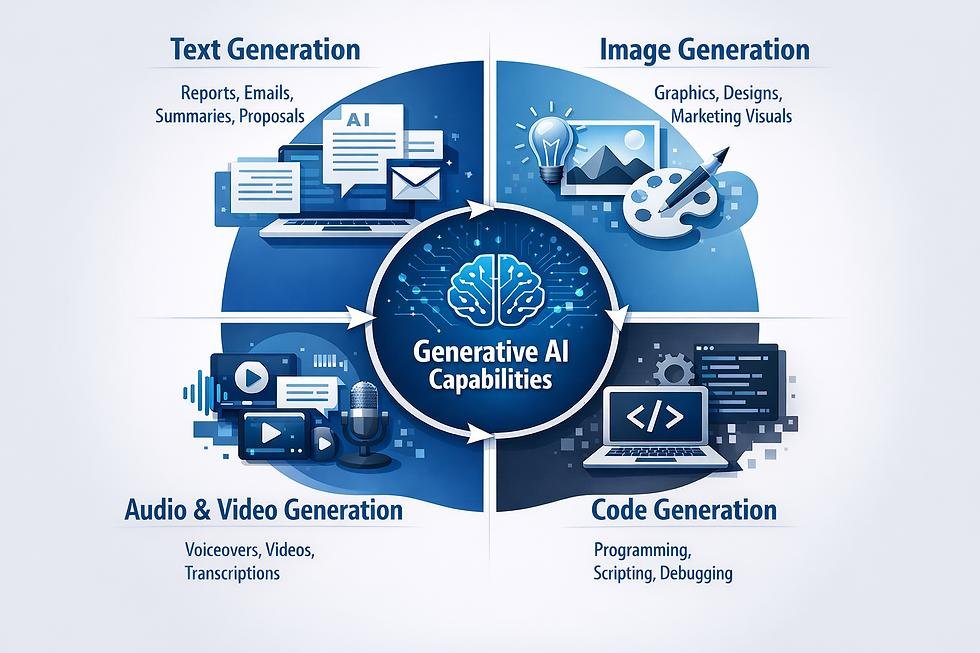
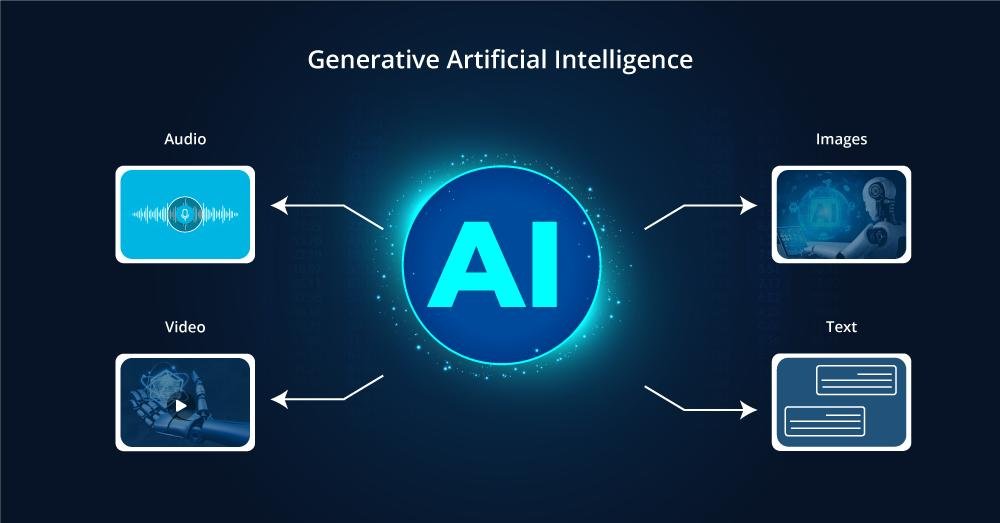
The same basic idea can apply to many forms of content:
- Text: articles, summaries, emails, reports, product descriptions
- Images: illustrations, concepts, designs, photographs or visual variations
- Video: generated scenes, clips, avatars and editing assistance
- Audio: speech, narration and other generated audio
- Code: functions, scripts, debugging suggestions and explanations
- Documents: summaries, extraction, classification and question answering
- Business workflows: automated responses, research assistance and content processing
The exact capabilities depend on the underlying model and the service built around it.
How Do Generative AI Services Work?
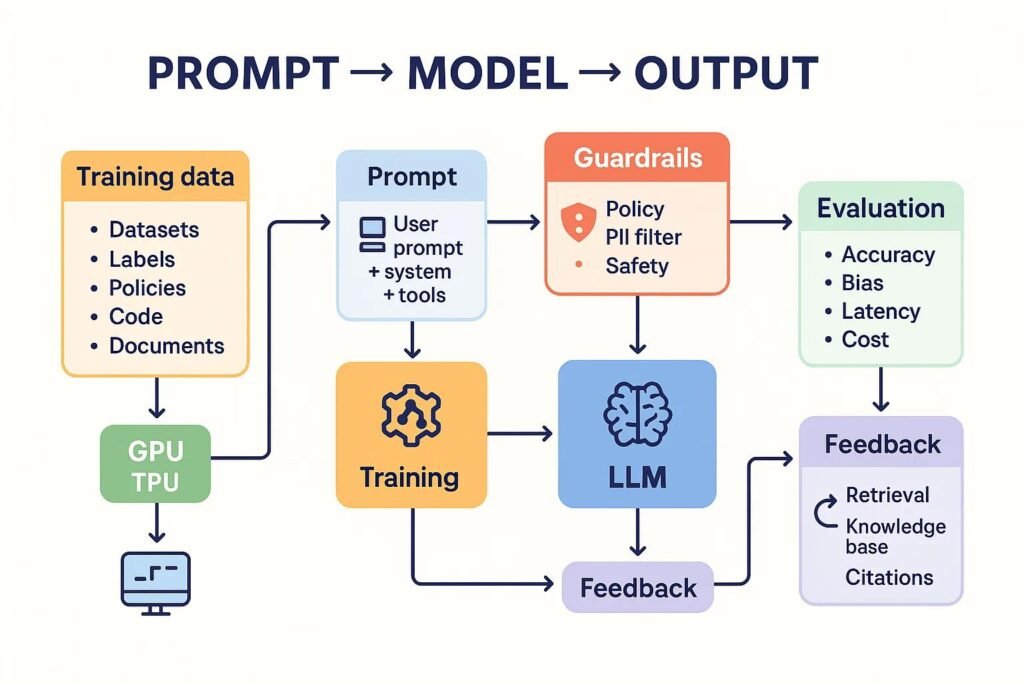
The technology behind a generative AI service can be complicated, but the basic workflow is easier to understand.
1. The user provides an input
The input might be a question, instruction, document, image, piece of code, or combination of different types of information.
For example:
“Summarize this 20-page business report and list the three main risks.”
This instruction is commonly called a prompt.
2. The AI model interprets the input
The service sends the relevant information to a generative AI model. Depending on the application, the model may be designed primarily for text, images, audio, video, code, or multiple modalities.
Modern multimodal systems can work with several types of input and output.
3. The model generates an output
Rather than simply searching for an exact answer, the model generates an output based on the relationships and patterns it learned during training.
For language models, this involves predicting sequences of tokens. Image and other generative systems use different technical approaches.
4. The application delivers the result
The AI model is only one part of many commercial generative AI services.
A complete service may also provide:
- User accounts
- File uploads
- Conversation history
- APIs
- Security controls
- Usage monitoring
- Integrations
- Collaboration features
- Content management
- Administrative controls
This distinction is important because an AI model and an AI service are not necessarily the same thing.
Generative AI Models vs. Generative AI Services
These terms are sometimes used interchangeably, but there is a useful distinction.
A generative AI model is the underlying technology capable of generating content.
A generative AI service is the product or platform through which people access that technology.
Think of it this way:
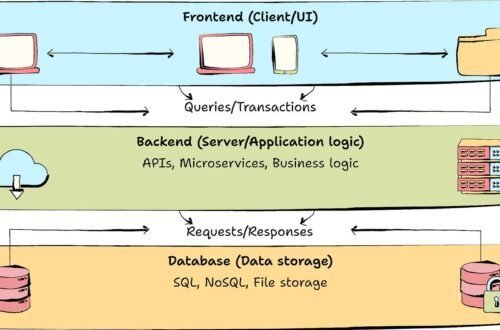
Model → API/platform → Application → User
A company might use a model through an API and build its own customer-support application around it. Another company might offer a ready-made writing assistant using a similar underlying technology.
For users, the service is often what matters most because it determines how easy the technology is to use and what features are available.
Major Types of Generative AI Services
Generative AI is a broad category. Different services specialize in different tasks.
Text Generation Services
These services can generate and transform written language.
Common uses include:
- Drafting emails
- Summarizing documents
- Brainstorming ideas
- Creating outlines
- Explaining technical concepts
- Generating marketing copy
- Translating text
- Extracting information
- Answering questions
Businesses can also connect language models to internal information systems so employees can ask questions about approved company documents.
However, generated text still needs review when accuracy matters.
AI Image Generation Services
Image-generation services create or modify visual content from instructions or reference images.
A designer might request:
“Create a clean product illustration of a modern desk lamp on a neutral background.”
The service can generate a visual interpretation of that description.
Potential applications include:
- Concept development
- Advertising drafts
- Storyboarding
- Social media graphics
- Product visualization
- Design exploration
- Educational illustrations
The result can depend heavily on the quality and specificity of the prompt.
AI Video Services
Generative AI video services can create or transform video content using text, images, or existing footage.
Potential applications include:
- Short visual concepts
- Marketing videos
- Educational material
- Storyboards
- Character animation
- Video editing assistance
- Synthetic presenters or avatars
Video generation can be considerably more demanding than generating a simple text response because systems need to maintain visual and temporal consistency across frames.
AI Audio and Voice Services
Generative AI can also produce or transform audio.
Examples include:
- Text-to-speech narration
- Voice assistants
- Audio localization
- Synthetic narration
- Podcast production assistance
- Accessibility features
Voice-related applications require additional consideration around consent, identity, impersonation, and misuse.
AI Coding Services
Coding-focused generative AI services can assist developers with software development.
They can help with:
- Generating code
- Explaining unfamiliar code
- Finding potential bugs
- Writing tests
- Converting code between languages
- Creating documentation
- Suggesting implementation approaches
Generated code should still be tested. A response that looks technically correct can contain security vulnerabilities, incorrect assumptions, or subtle bugs.
Where Are Generative AI Services Used?
Generative AI services can be useful in many industries, but their value depends on the specific task.
Customer Support
A company can use generative AI to help support agents find information and draft responses.
For example, an AI system could receive a customer’s question and identify relevant information from an approved knowledge base. An employee can then review the suggested response before sending it.
This can reduce repetitive writing while keeping a human involved in sensitive interactions.
Marketing and Content Production
Marketing teams can use generative AI for early-stage content work.
For example, a team launching a new product might use an AI service to produce:
- Several headline ideas
- Product-description drafts
- Social media variations
- Email concepts
- Frequently asked questions
The marketing team can then edit the strongest material instead of starting every piece from an empty document.
Software Development
Developers can use generative AI as a programming assistant.
Suppose a developer needs to process a collection of files and extract specific information. The developer could ask an AI coding service for an initial implementation, inspect the result, test it, and modify it for the actual application.
The important point is that generation does not eliminate engineering work. It changes where some of the work happens.
Research and Knowledge Management
Generative AI services can help people work with large collections of documents.
A company might connect an AI application to internal policies and documentation. Employees could then ask questions in natural language rather than manually searching through numerous files.
For this type of system, information retrieval and source grounding are particularly important. A fluent answer is not enough if the underlying information is wrong or outdated.
Education
Generative AI can support learning by:
- Explaining difficult concepts
- Creating practice questions
- Providing examples
- Summarizing material
- Helping students explore alternative explanations
It should be used as a learning aid rather than an unquestioned authority. Students still need to verify important information and develop their own understanding.
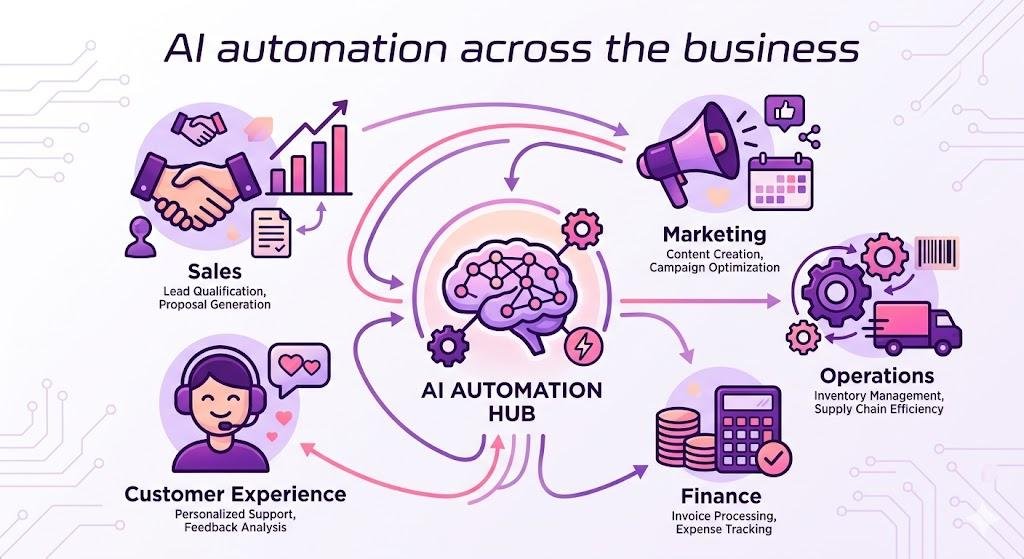
A Practical Example of a Generative AI Workflow
Consider an online store with hundreds of products.
The company could use a generative AI service to help create product descriptions from structured product information.
A possible workflow would look like this:
Product database → AI service → Draft description → Human review → Published product page
The AI might receive information such as:
- Product name
- Materials
- Dimensions
- Features
- Intended use
- Compatibility information
The service could turn those facts into readable prose.
The important safeguard is that the AI should not be allowed to freely invent product specifications. The source information should determine what claims can be made.
This illustrates a broader principle: generative AI works best when generation is connected to reliable information and appropriate review.
Also Read: Generative AI Future
Benefits of Generative AI Services
Faster First Drafts
AI can produce an initial version of many types of content quickly.
This is particularly useful for repetitive tasks where the human’s main contribution is reviewing, editing, or deciding what is actually useful.
Natural-Language Interfaces
Users do not always need to learn complicated software commands.
Instead, they can describe what they want using ordinary language.
This makes sophisticated capabilities more accessible to people who are not specialists.
Personalization
Generative AI can produce different versions of content based on context.
For example, a company might create different explanations of the same product for:
- New customers
- Technical users
- Sales representatives
- Internal employees
Automation
Generative AI can become part of larger workflows.
For example:
Incoming document → extraction → classification → generated summary → employee review
This can be more valuable than using an AI chatbot as a standalone tool because it connects generation with an actual business process.
Limitations and Risks of Generative AI Services
Generative AI is useful, but it is not automatically reliable.
Incorrect Information
AI models can generate information that sounds convincing but is inaccurate.
This is often described as a hallucination.
The risk becomes particularly important when an AI system is used for legal, financial, medical, security, or other high-impact decisions.
Important information should be checked against appropriate authoritative sources.
Privacy and Data Handling
Users should understand what happens to information submitted to an AI service.
Before uploading confidential material, check the provider’s current documentation for:
- Data retention
- Training-data policies
- Security controls
- Data residency
- Administrative settings
- Access controls
Policies differ between services and can change, so current provider documentation should be verified before deploying a system with sensitive information.
Cost
Generative AI services can have different pricing structures.
Some charge through subscriptions, while business and developer platforms may charge according to usage or other service tiers.
Costs can increase when applications process large documents, generate substantial amounts of content, or operate at high volume.
A low-cost prototype can therefore become considerably more expensive when deployed at scale.
Inconsistent Outputs
The same instruction may not always produce identical results.
That can be useful for brainstorming, but it creates problems when an organization needs highly predictable output.
Businesses often address this through structured prompts, controlled inputs, validation rules, retrieval systems, testing, and human review.
Copyright and Ownership Questions
AI-generated content can raise complicated questions about intellectual property, licensing, and ownership.
The legal situation can vary by jurisdiction and use case. Organizations should not assume that every AI-generated output can be used without restriction.
For commercial work, current provider terms and applicable laws should be checked.
How to Choose a Generative AI Service
Choosing a service based only on how impressive its demo looks can lead to poor decisions.
Instead, evaluate the service against the actual task.
Consider these factors:
1. Output quality
Does it consistently produce useful results for your specific task?
2. Accuracy
Can the output be checked against reliable information?
3. Privacy
What happens to the data you submit?
4. Integration
Can the service work with your existing software and workflows?
5. Cost
What will it cost at your expected usage level?
6. Control
Can administrators manage users, permissions, data access, and other settings?
7. Reliability
Is the service dependable enough for the workflow you want to build?
8. Human oversight
Can people review or approve important outputs before they are used?
The best generative AI service is not necessarily the one with the most features. It is the one that solves the intended problem with an acceptable combination of quality, cost, control, and risk.
Common Misconceptions About Generative AI Services
“Generative AI Is Just a Search Engine”
Not exactly.
Search systems primarily retrieve information from available sources. Generative AI generates an output based on its model and, in some applications, information retrieved from external sources.
Some modern products combine both approaches, which can make the distinction less obvious.
“AI-Generated Content Is Always Original”
Generation does not automatically guarantee that every output is legally or creatively unique.
Users should consider the service’s terms, applicable copyright rules, and the way the output will be used.
“More Detailed Prompts Always Produce Better Results”
More words do not automatically mean better instructions.
A useful prompt generally provides the relevant context, objective, constraints, and desired output format without unnecessary information.
“Generative AI Removes the Need for Humans”
In many professional applications, the more realistic goal is human-AI collaboration.
AI can handle drafting, transformation, classification, and other tasks while humans provide judgment, verification, context, and accountability.
Frequently Asked Questions About Generative AI Services
What are generative AI services used for?
Generative AI services are used to create or transform text, images, audio, video, code, and other digital content. They can also support research, customer service, software development, marketing, education, and business automation.
Are generative AI services free?
Some offer free access or limited free tiers, while others require subscriptions or usage-based payment. Pricing and limits vary by provider and can change, so current pricing should be checked directly with the service provider.
What is the difference between generative AI and traditional AI?
Traditional AI can be designed for tasks such as classification, prediction, recommendation, or detection. Generative AI focuses on producing new content or responses based on learned patterns and provided inputs.
The categories can overlap because modern AI systems can perform several types of tasks.
Are generative AI services accurate?
They can be highly useful but are not guaranteed to be accurate. Generative models can produce plausible-sounding errors, so important information should be verified rather than accepted automatically.
Can businesses use generative AI services?
Yes. Businesses can use them for tasks such as customer-support assistance, content creation, document processing, coding, research, and workflow automation. Businesses should evaluate privacy, security, cost, accuracy, and human oversight before deployment.
Are generative AI services safe for confidential information?
Not automatically. Safety depends on the specific provider, configuration, data policies, and security controls. Organizations should review the current terms and privacy documentation before submitting confidential or regulated information.
What are the main types of generative AI services?
Major categories include text-generation services, image generators, video-generation tools, audio and voice systems, coding assistants, and multimodal AI platforms.
Will generative AI services replace human workers?
That depends on the task and industry. Generative AI is more likely to automate or change parts of many workflows than to eliminate the need for human judgment across every role. Tasks requiring context, accountability, interpersonal skills, and specialized decision-making can still require people.
Conclusion
Generative AI services provide practical access to systems that can create and transform digital content. Their capabilities range from writing and image generation to coding, document analysis, audio, video, and business workflow automation.
The most useful way to think about these services is not simply as content generators. They can become components of larger workflows where AI handles repetitive or time-consuming tasks while people provide judgment, verification, and oversight.
For anyone evaluating generative AI services, the important questions are straightforward: Does the service solve the actual problem? Is its output reliable enough? How is user data handled? What does it cost at the expected scale? And where should human review remain in the process?
Those questions matter more than choosing a service simply because its AI demo looks impressive.