

AI writing tools can produce a complete article, email, product description, or social media post in seconds. But fast generation does not always mean the writing sounds natural. AI-generated text can sometimes feel repetitive, overly structured, predictable, or unlike the way a person would normally write.
That is where AI humanizers come in. A best AI humanizer is designed to revise AI-generated text so it reads more naturally while preserving the original meaning. However, not every humanizer works the same way, and a tool that makes text sound less robotic may also introduce awkward wording, factual changes, or unnecessary edits.
This guide explains what AI humanizers actually do, how they work at a practical level, what to look for when choosing one, and where they can be useful. It also covers their limitations, privacy considerations, and why simply trying to “beat” an AI detector is not a reliable definition of good writing.
What Is an AI Humanizer?
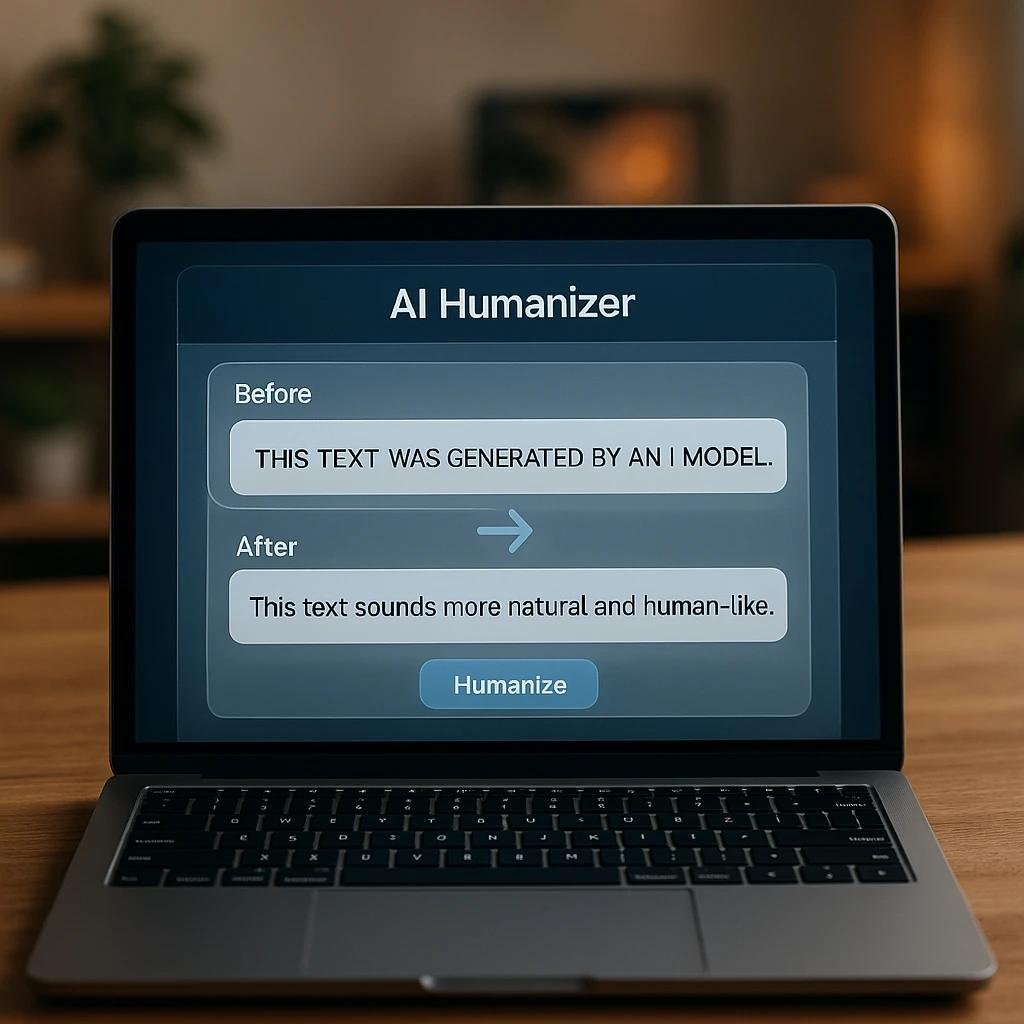
An AI humanizer is a software tool that rewrites or edits AI-generated text to make its language sound more natural and less formulaic.
Depending on the tool, it may change:
- Sentence structure
- Word choice
- Paragraph organization
- Repetition
- Transitions
- Sentence length
- Tone and phrasing
- Passive and active constructions
For example, an AI-generated sentence might say:
“Artificial intelligence has become an increasingly important technology across numerous industries.”
A humanizer might produce something more direct:
“AI is now being used across many different industries.”
The second version is not necessarily more accurate. It is simply more concise and conversational.
A good humanizer should therefore do more than randomly replace words with synonyms. The goal is to improve readability and natural expression without changing what the writer is actually saying.
How Does an AI Humanizer Work?
The exact technology varies between products, and companies do not always disclose their complete methods. Generally, however, an AI humanizer analyzes the existing text and generates an alternative version using different linguistic patterns.
A typical process may involve several stages.
1. The text is analyzed
The system examines the submitted writing for things such as sentence length, repeated expressions, predictable structures, and overall tone.
2. Sentences are rewritten
The tool may restructure sentences rather than simply swapping individual words.
For example:
Original:
“There are several advantages associated with using AI automation in customer support.”
Rewritten:
“AI automation can make customer support more efficient in several ways.”
The basic idea remains similar, but the sentence structure is different.
3. Repetition is reduced
AI-generated content can sometimes repeat the same sentence patterns or transitional phrases. A humanizer may vary those patterns.
4. The overall tone may be adjusted
Some tools provide options such as:
- Casual
- Professional
- Academic
- Simple
- Formal
- Conversational
This can be useful when the same information needs to be written for different audiences.
5. The revised text is generated
The final output is presented as a rewritten version that the user can review and edit.
The important point is that humanization is fundamentally a rewriting task. It does not magically turn machine-generated information into verified information.
What Makes the Best AI Humanizer Different?
There is no single humanizer that is objectively best for every person.
The right choice depends on what you are trying to accomplish.
A useful AI humanizer should generally perform well in several areas.
Meaning preservation
This is one of the most important factors.
If you submit a technical paragraph, the tool should preserve its meaning instead of rewriting it so aggressively that the underlying claim changes.
This becomes especially important for:
- Technical articles
- Medical information
- Legal content
- Financial writing
- Research summaries
- Software documentation
A fluent sentence is not useful if it changes the original information.
Natural sentence variation
Human writing naturally contains a mixture of short, medium, and longer sentences.
A humanizer that mechanically changes every sentence can make the result sound just as artificial as the original.
Look for tools that produce variation without making the writing unnecessarily complicated.
Readability
The rewritten version should be easy to understand.
A common mistake is assuming that sophisticated vocabulary makes writing more human. Often, the opposite is true.
For example:
“The implementation of this methodology facilitates the optimization of operational workflows.”
could become:
“This approach can make the workflow more efficient.”
The second sentence is simpler and clearer.
Control over rewriting
A useful tool should give you some control over how aggressively it rewrites your text.
Light rewriting can be useful when your original text is already good.
More extensive rewriting may be appropriate when the original draft is repetitive or awkward.
Preservation of technical terms
This matters particularly for technology writing.
A humanizer should not casually replace important terms such as:
- API
- machine learning
- large language model
- neural network
- database
- inference
- automation
- cybersecurity
Technical terminology has a specific meaning. Changing it merely to make text appear different can damage accuracy.
AI Humanizer vs. AI Paraphraser
These tools can overlap, but they are not necessarily the same thing.
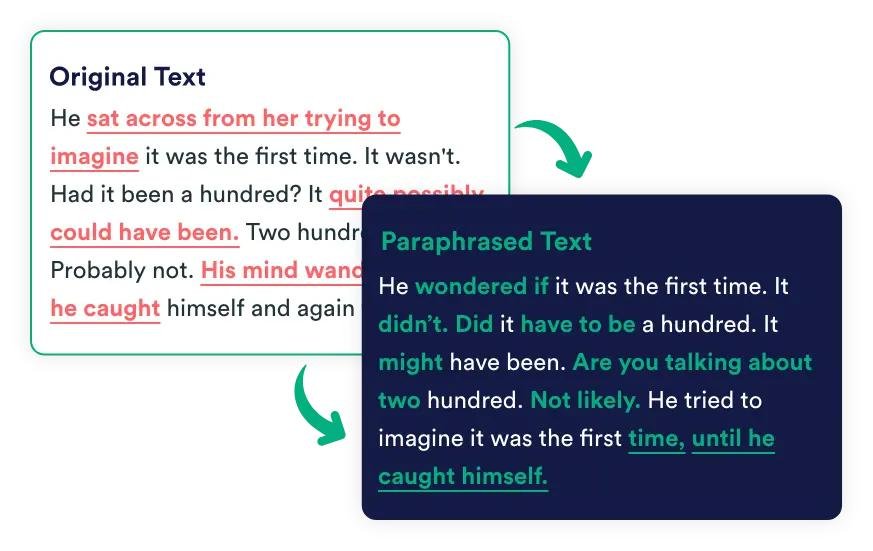
An AI paraphraser primarily focuses on expressing existing information differently.
An AI humanizer generally emphasizes making generated text sound more natural or less formulaic.
For example, a paraphraser might change:
“AI tools can improve productivity by automating repetitive tasks.”
to:
“Automating repetitive tasks with AI tools can increase productivity.”
The meaning is essentially unchanged, but the sentence has been rearranged.
A humanizer may take the same sentence and aim for a more conversational style:
“AI can save time by handling repetitive tasks.”
The distinction is not absolute because many modern writing tools offer both capabilities.
AI Humanizers and AI Detectors Are Not the Same Thing
This is an important distinction.
An AI humanizer changes text.
An AI detector attempts to estimate whether text was generated or substantially produced by an AI system.
These are different tasks.
Some people use humanizers primarily because they believe they will make AI-generated content pass an AI detector. That is not a dependable measure of writing quality.
AI detection systems can produce incorrect classifications, and their results should not be treated as definitive proof of who wrote a piece of text.
Instead of asking only whether a humanizer can “bypass” a detector, a better question is:
Does the rewritten text actually become clearer, more accurate, and more appropriate for the intended reader?
That is a much more useful standard.
Also Read: Best AI Video Generator
Practical Uses for AI Humanizers
AI humanizers can be useful in several legitimate writing workflows.
Blog editing
Suppose you generate a rough article outline with AI. The first version may contain repetitive introductions and predictable transitions.
A humanizer can help revise the draft before you manually edit it.
However, you should still check:
- Facts
- Examples
- Links
- Technical terminology
- Claims
- Tone
Business communication
An AI tool may create a professional email that sounds excessively formal.
For example:
“I am writing to kindly request your assistance regarding the aforementioned matter.”
A more natural version could be:
“Could you help me with this?”
The shorter version may be more appropriate depending on the relationship and context.
Product descriptions
AI-generated product descriptions can become repetitive when many similar products need descriptions.
A humanizer can introduce variation while keeping important product information intact.
Human review is still important because specifications should never be altered just to make the wording different.
Social media content
Social posts often work better when they sound direct and conversational.
A humanizer can help remove unnecessarily formal language from an AI-generated draft.
Editing first drafts
Perhaps the most useful application is not replacing human writing but editing an AI-assisted first draft.
You can generate a rough version, humanize it, and then make the final decisions yourself.
That workflow keeps the writer involved instead of treating the humanizer as an automatic publishing system.
How to Test an AI Humanizer
If you are comparing tools, don’t judge them from a single paragraph.
Use the same sample text with each tool and compare the results.

Step 1: Prepare a realistic sample
Use around several paragraphs covering the type of content you normally write.
For technology content, include technical terminology and factual explanations.
Step 2: Use the same settings
If possible, use comparable rewriting modes and tone settings.
Otherwise, you may end up comparing different levels of editing rather than the tools themselves.
Step 3: Check meaning
Compare the original and rewritten versions sentence by sentence.
Ask:
- Did any fact change?
- Did the tool remove an important qualification?
- Did it introduce a claim that wasn’t in the original?
- Were technical terms changed incorrectly?
Step 4: Read it aloud
This is a surprisingly useful test.
If the text looks acceptable but sounds unnatural when read aloud, it probably needs more editing.
Step 5: Check readability
Look for unnecessary complexity, strange vocabulary, and sentences that are longer than they need to be.
Step 6: Review the final version yourself
The humanizer should be an editing aid, not the final authority.
Common Problems With AI Humanizers
Humanizers can improve writing, but they can also create new problems.
Meaning can change
Aggressive rewriting can accidentally alter the original meaning.
This is especially dangerous when the source contains numbers, technical explanations, conditions, or carefully worded claims.
Some outputs become less natural
Changing too much can produce sentences that technically make sense but do not sound like something a person would actually write.
Synonym replacement can hurt quality
Replacing ordinary words with unusual synonyms is not the same as human writing.
For example, changing “use” to “utilize” everywhere does not make content more human. It can make it less natural.
Factual accuracy is not guaranteed
A humanizer is primarily concerned with language.
It should not be assumed to verify every statement in the original text.
If the original draft contains an incorrect claim, the rewritten version can preserve that mistake.
Privacy can matter
Before pasting sensitive material into an online humanizer, check its privacy policy and data-handling practices.
Avoid submitting information such as:
- Confidential business documents
- Private customer information
- Passwords
- Personal identification information
- Unpublished proprietary material
The exact data practices vary between services, so they should be verified directly with the provider before using one for sensitive content.
How to Use an AI Humanizer Effectively
The best results usually come from treating humanization as one stage of editing rather than the entire writing process.
A practical workflow looks like this:
- Create or write the initial draft.
- Check the facts and supporting information.
- Run the draft through a humanizer if needed.
- Compare the rewritten version with the original.
- Restore any important details that were changed.
- Adjust the tone for your actual audience.
- Remove unnecessary wording.
- Read the final version as a human reader would.
- Publish only after the content is accurate and useful.
This approach is better than automatically humanizing an entire article and publishing whatever comes out.
When You Should Not Use an AI Humanizer
There are situations where manual editing may be better.
If you have already written something in your own voice, running it through a humanizer may actually make it less personal.
This is particularly relevant for:
- Personal essays
- Opinion pieces
- Personal messages
- Creative writing
- Brand-specific writing
- First-person stories
Your natural imperfections may be part of what makes the writing recognizable.
Similarly, highly technical documents may require careful manual editing because even a small wording change can affect the meaning.
Best AI Humanizer: What Should You Look For?
Instead of choosing a tool simply because it claims to make text “undetectable,” evaluate it using practical criteria.
| Factor | What to look for |
|---|---|
| Meaning preservation | Rewrites without changing the original message |
| Naturalness | Varied, readable sentence structures |
| Readability | Clear language without unnecessary complexity |
| Tone control | Options appropriate for different audiences |
| Technical accuracy | Preserves important technical terminology |
| Editing control | Allows lighter or stronger rewriting |
| Privacy | Clear information about how submitted text is handled |
| Reliability | Consistent results across different types of writing |
A tool that performs well across these areas is generally more useful than one that focuses only on changing text enough to fool a detector.
Frequently Asked Questions
What is the best AI humanizer?
There is no universally best AI humanizer. The right choice depends on your writing type, desired tone, level of rewriting, privacy requirements, and how well the tool preserves meaning.
Does an AI humanizer make AI text completely human?
No. It can make wording more natural, but it does not automatically give the text personal experience, original insight, or genuine human judgment.
Can AI humanizers bypass AI detectors?
Some tools may claim to reduce the likelihood that text is identified as AI-generated, but detector results are not a reliable standard for determining authorship. A better goal is producing clear, accurate, useful writing.
Does humanizing text change its meaning?
It can. Aggressive rewriting may remove qualifications, change technical details, or alter the intended meaning. Always compare the rewritten version with the original.
Are AI humanizers useful for blog writing?
Yes, particularly for improving rough AI-assisted drafts, reducing repetitive phrasing, and adjusting tone. They should still be followed by factual review and human editing.
Can I use a humanizer for academic writing?
You should check the rules of your school, university, publisher, or instructor first. Policies regarding AI-assisted writing vary, and humanizing text does not necessarily make AI assistance acceptable.
Is a free AI humanizer enough?
It can be useful for basic rewriting, but free tools may have limitations involving length, features, customization, or privacy. The important thing is to evaluate the actual output rather than choosing based only on price.
Should I humanize every piece of AI-generated text?
Not necessarily. If the original writing is already clear and appropriate, unnecessary rewriting can make it worse. Humanize when it solves a specific writing problem.
Conclusion
The best AI humanizer is not simply the tool that changes the most words or claims to defeat AI detectors. A useful humanizer should make writing clearer and more natural while protecting the original meaning.
For most writers, the strongest approach is to use humanization as part of a broader editing process: create a draft, verify the information, improve the language, review the rewritten text, and add your own judgment and voice.
AI humanizers can save editing time, but they do not replace the most important part of good writing: deciding what is worth saying and making sure it is true.