

A technical post-sales leader in developer tooling sits at the point where a product stops being a demo and starts becoming part of a customer’s engineering workflow. The job is not simply to keep customers happy. It is to help engineering teams integrate, adopt, troubleshoot, measure, and eventually scale a technical product.
This becomes especially demanding when the product includes AI. AI developer tools can involve APIs, SDKs, cloud infrastructure, CI/CD systems, code repositories, retrieval systems, agents, model evaluation, security controls, and changing developer workflows. A post-sales leader needs enough technical depth to understand those moving parts while also being able to guide customers and lead an internal team. Current roles in AI developer tooling increasingly combine technical customer leadership, implementation, adoption, escalation management, and cross-functional work with product and engineering.
This guide explains the most important technical post-sales leader competencies developer tooling AI, including technical knowledge, customer leadership, AI fluency, operational skills, measurement, and the ability to turn engineering problems into business outcomes.
What Is a Technical Post-Sales Leader?
A technical post-sales leader is responsible for helping customers successfully use a technical product after the commercial agreement is complete.
Depending on the company, the role may overlap with:
- Technical Account Management
- Customer Engineering
- Field Engineering
- Solutions Architecture
- Solutions Engineering
- Customer Success
- Developer Relations
The exact job title varies, but the underlying responsibility is similar: make sure the customer can successfully implement and realize value from the product.
For developer tooling, that usually means working with technical users rather than only business stakeholders.
A customer might need help answering questions such as:
- How should the SDK be integrated into an existing application?
- Why is authentication failing?
- Where does the tool fit into the CI/CD pipeline?
- Why is an AI coding assistant producing unreliable results?
- How should an enterprise roll out the product across hundreds of developers?
- Which metrics should demonstrate that the implementation is working?
- When should an issue be handled by post-sales, support, or engineering?
The leader does not necessarily need to be the person writing production code for the customer. But they need enough technical understanding to ask the right questions, identify likely failure points, and guide the right people toward a solution.
Why AI Developer Tooling Changes the Post-Sales Role
Traditional SaaS products can often be explained primarily through features and workflows. Developer tools are different because the customer is frequently integrating the product directly into a technical environment.
AI adds another layer of complexity.
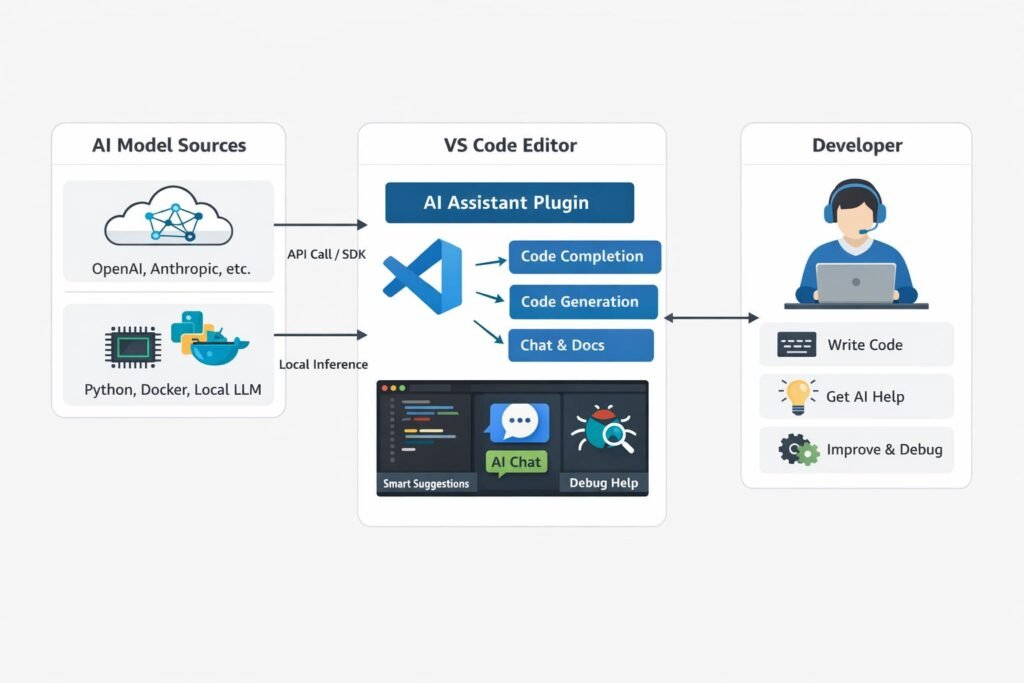
An AI developer product might interact with:
- A codebase or repository
- An IDE or developer environment
- APIs and SDKs
- Cloud infrastructure
- CI/CD pipelines
- Authentication and permissions
- External tools
- Retrieval systems or databases
- Large language models
- Evaluation and observability systems
The post-sales leader therefore needs to understand both software integration and AI behavior.
Modern AI-assisted development also changes what developers do. Instead of simply writing code manually, developers may spend more time providing context, reviewing generated output, planning work, and making engineering judgments.
That means successful adoption is not simply a matter of turning on an AI feature. The organization may need to change how engineers work.
The Core Technical Post-Sales Leader Competencies
1. Strong Software and Developer-Tooling Fluency
The first requirement is technical credibility.
A leader supporting developer tools should understand the fundamentals of:
- APIs
- SDKs
- Authentication and authorization
- HTTP and webhooks
- Git and source control
- CI/CD
- Cloud infrastructure
- Containers
- Databases
- Logging and monitoring
- Networking
- Software development workflows
The goal is not to memorize every technology.
Instead, the leader should understand how the pieces connect.
For example, imagine a customer says an AI coding tool is failing inside its CI pipeline.
A weak response might be:
“I’ll send this to engineering.”
A technically capable post-sales leader would first investigate:
- Does the failure occur locally or only in CI?
- Is the correct authentication token available?
- Does the CI environment have network access?
- Is the required SDK version installed?
- Did the failure begin after a dependency change?
- Is the AI service responding successfully?
- Is the problem related to the customer’s pipeline or the product itself?
That diagnostic approach can dramatically reduce unnecessary escalations.
2. AI and LLM Fluency
A technical post-sales leader supporting AI products does not necessarily need to be a machine-learning researcher.
They do need practical AI literacy.
Important concepts include:
- Large language models
- Tokens and context windows
- Prompting
- Embeddings
- Retrieval-augmented generation (RAG)
- Tool calling
- AI agents
- Model evaluation
- Hallucinations
- Latency
- Model selection
- Guardrails
- Observability
- Cost management
Consider a developer who says:
“The AI gave the wrong answer.”
That statement alone does not identify the problem.
The issue could involve incorrect source data, retrieval quality, missing context, a tool-call failure, an ambiguous instruction, model limitations, or an evaluation problem.
The post-sales leader should be able to break the complaint into technical questions instead of treating every incorrect output as a generic “AI bug.”
This distinction is particularly important as developer tools increasingly incorporate agents and other AI-driven workflows.
3. Integration Architecture
Technical post-sales leaders should be able to understand a customer’s architecture at a useful level.
They should be comfortable drawing a simple diagram such as:
Developer → IDE → AI Tool → API → Model → Retrieval/Tools → Application
The exact architecture will differ by product.
The important skill is understanding where the customer’s system connects to the product and what dependencies exist at each point.
For enterprise customers, this may include:
- Identity providers
- SSO
- Role-based access control
- Private networking
- Cloud environments
- Data stores
- Proxy systems
- Security controls
- Compliance requirements
- Existing developer platforms
A leader who can map these dependencies can often identify implementation risks before they become production incidents.
4. Technical Troubleshooting and Escalation
Post-sales leadership is partly an exercise in structured diagnosis.
A useful escalation process is:
- Define the symptom. What exactly is failing?
- Reproduce the problem. Can the issue be demonstrated consistently?
- Determine scope. Is it one user, one repository, one environment, or many customers?
- Check recent changes. What changed immediately before the failure?
- Identify the layer. Is the problem in the customer’s environment, integration, API, model, product, or workflow?
- Collect evidence. Gather logs, error messages, request IDs, configuration details, and reproduction steps.
- Escalate with context. Give engineering enough information to investigate efficiently.
This is much better than sending engineering a message that simply says, “Customer says it’s broken.”
A strong escalation contains a clear problem statement, expected behavior, actual behavior, reproduction steps, impact, environment, and relevant evidence.
5. Developer Empathy
Technical knowledge is not enough.
Developers have different expectations from traditional SaaS buyers. They often want precise documentation, reproducible examples, transparent limitations, useful error messages, and fast technical answers.
A post-sales leader should understand the developer experience from the user’s perspective.
That means asking:
- Can a developer get started without a meeting?
- Are API errors understandable?
- Does the documentation show working examples?
- Is authentication straightforward?
- Can the product fit naturally into existing workflows?
- Does the AI tool behave predictably enough to earn trust?
- What happens when something goes wrong?
Developer empathy is particularly important for AI products because developers may be skeptical of tools that generate code or make engineering decisions.
The leader’s job is not to persuade developers that AI is always correct. It is to help them understand where the product is useful, where human review remains necessary, and how to use it responsibly.
6. Outcome Ownership
One of the most important competencies is knowing whether the customer actually achieved value.
Adoption alone is not enough.
Suppose an organization deploys an AI coding assistant to 500 developers.
A simple adoption metric might show that 350 developers used it.
That does not automatically prove success.
The customer may also want to know:
- Did development cycle time improve?
- Did developers spend less time on repetitive work?
- Did code review change?
- Did onboarding become easier?
- Did usage remain consistent?
- Did developers trust the tool?
- Did quality or security introduce new concerns?
The correct metrics depend on the product and use case.
A technical post-sales leader should establish a baseline before deployment and then compare meaningful outcomes after implementation.
7. Change Management
A technically excellent product can still fail if people do not change their behavior.
This is especially relevant for AI developer tooling.
Developers may resist a new tool because they:
- Do not trust generated code
- Fear security problems
- Prefer existing workflows
- Do not understand the product
- Find the suggestions unreliable
- Feel the tool creates more review work
- Have not been shown useful use cases
The solution is not simply more product training.
A better adoption program can start with a narrow use case, identify early users, collect feedback, measure outcomes, and gradually expand.
For example:
Phase 1: Introduce the tool to a small engineering team.
Phase 2: Identify high-value workflows such as test generation or documentation.
Phase 3: Measure adoption and developer feedback.
Phase 4: Resolve technical and workflow problems.
Phase 5: Create internal champions and expand to additional teams.
This approach treats adoption as a behavior-change program rather than a software installation.

8. Executive Communication
Technical post-sales leaders often communicate with two very different audiences.
An engineer may ask:
“Why is the request timing out?”
A VP of Engineering may ask:
“Is this platform worth deploying across the organization?”
The leader must be able to answer both without losing the technical truth.
A useful communication pattern is:
Technical issue → Operational impact → Business consequence → Recommended action
For example:
“The current integration is generating excessive API latency during peak CI activity. That is causing developers to wait longer for automated checks. We recommend adjusting the integration’s concurrency configuration and testing the change with one repository before expanding it.”
That is more useful than either a highly technical explanation with no business context or a vague statement that “performance needs improvement.”
9. Cross-Functional Leadership
Post-sales leaders rarely work alone.
They typically coordinate with:
- Sales
- Account Management
- Customer Success
- Support
- Product
- Engineering
- Security
- Marketing
- Developer Relations
Current AI developer-tooling roles explicitly emphasize collaboration across these functions, including customer implementation, technical escalations, product feedback, and adoption programs.
The leader therefore needs to turn customer conversations into useful internal information.
For example:
Customer feedback: “The tool doesn’t understand our monorepo.”
Post-sales interpretation: “Customers using large monorepos are experiencing context and navigation limitations.”
Product implication: Improve repository indexing or context selection.
Documentation implication: Explain supported repository structures and recommended configuration.
Training implication: Teach customers how to structure relevant context.
That is how post-sales becomes a source of product intelligence rather than merely a support function.
10. Building Scalable Post-Sales Systems
A leader cannot personally solve every customer problem.
As the customer base grows, the organization needs repeatable systems.
Useful assets include:
- Onboarding playbooks
- Architecture review templates
- Technical discovery checklists
- Troubleshooting guides
- Escalation procedures
- Implementation milestones
- Health-score definitions
- Training materials
- Technical FAQ documents
- Customer-facing runbooks
The objective is to convert individual expertise into organizational capability.
For example, if every new enterprise customer asks how to configure SSO, the team should not repeatedly solve the same problem from scratch.
Create a standard implementation guide, document common failure modes, and give post-sales engineers a consistent diagnostic process.
A Practical Competency Framework
The competencies can be organized into five broad categories:
| Competency area | What good looks like |
|---|---|
| Technical depth | Understands APIs, infrastructure, developer workflows, and integrations |
| AI fluency | Understands LLM behavior, evaluation, agents, retrieval, and limitations |
| Customer leadership | Can guide implementation, adoption, troubleshooting, and expansion |
| Business judgment | Connects technical activity to measurable customer outcomes |
| People and operations | Coaches teams, improves processes, and coordinates cross-functional work |
The strongest leaders do not necessarily score equally in every area.
A person may have exceptional software knowledge but need to develop executive communication. Another may be excellent with customers but need deeper understanding of AI evaluation.
The framework is useful precisely because it shows where development is required.

Real-World Example: AI Coding Assistant Rollout
Imagine an enterprise adopts an AI coding assistant for several engineering teams.
The sales process is complete, but the real work is just beginning.
A technical post-sales leader might structure the rollout like this:
Step 1: Understand the environment
Document the customer’s IDEs, repositories, programming languages, authentication model, development workflow, and security requirements.
Step 2: Define success
Choose a small number of meaningful outcomes, such as adoption within the target team, time saved on specific tasks, or developer satisfaction with defined workflows.
Step 3: Run a controlled pilot
Start with a limited group rather than deploying immediately to the entire organization.
Step 4: Observe real usage
Look for where developers obtain value and where they stop using the product.
Step 5: Diagnose friction
Technical problems might involve permissions or integrations. Workflow problems might involve poor prompts, unsuitable use cases, or insufficient trust in generated output.
Step 6: Improve enablement
Create examples and guidance around the workflows that actually produced value.
Step 7: Expand carefully
Use evidence from the pilot to decide whether another team should be onboarded.
This approach treats implementation, adoption, and measurement as one connected process.
Also Read: How to Learn AI Automation
Real-World Example: Developer API Platform
Consider an organization purchasing an API platform.
The product works correctly, but customer adoption remains low.
A technical post-sales leader might discover that developers are struggling with authentication and SDK setup.
Instead of simply reporting “low adoption,” the leader can identify the actual bottleneck:
Documentation → Authentication → First successful API request → Integration → Production deployment
If developers are getting stuck between authentication and the first successful request, improving that stage may have a greater effect than adding another product training session.
The post-sales leader can then coordinate with documentation, product, and engineering teams to remove the bottleneck.
Real-World Example: AI Agent Integration
An enterprise integrates an AI agent with internal tools.
The agent sometimes fails to complete tasks.
Rather than assuming the model is unreliable, the post-sales team investigates the complete workflow:
User request → Agent reasoning → Tool selection → API call → Tool response → Agent interpretation → Final response
The failure may be caused by an incorrect permission, malformed API request, missing context, an unexpected tool response, or model behavior.
The technical leader’s value comes from understanding the entire chain and helping the customer isolate the actual failure.
Common Mistakes Technical Post-Sales Leaders Should Avoid
Treating post-sales as relationship management only
Strong relationships matter, but technical customers need technical credibility too.
Escalating everything to engineering
Engineering should not become the default troubleshooting team. Post-sales should investigate what it reasonably can and provide structured escalation when deeper product work is required.
Measuring activity instead of outcomes
Training sessions, meetings, and login counts can be useful signals, but they do not automatically demonstrate business value.
Promising AI capabilities too broadly
AI systems have limitations. A trustworthy post-sales leader explains those limitations rather than promising perfect accuracy or automation.
Ignoring security and privacy
Developer tools can interact with source code, credentials, internal documentation, and production systems. Security and data-handling requirements should be considered early, particularly for enterprise deployments.
Scaling before proving the first use case
Expanding an unsuccessful implementation simply creates a larger unsuccessful implementation.
Prove the workflow first, then scale it.
Advantages and Limitations of the Role
Advantages
A strong technical post-sales organization can:
- Accelerate customer implementation
- Reduce unnecessary engineering escalations
- Improve product adoption
- Identify integration problems earlier
- Increase developer trust
- Generate valuable product feedback
- Connect technical work to measurable outcomes
- Create repeatable implementation processes
Limitations and Challenges
The role also has difficult trade-offs.
Technical complexity: AI systems and developer platforms can change rapidly, making continuous learning necessary.
Ambiguous failures: An AI output can be difficult to diagnose because several layers may contribute to the result.
Measurement challenges: Productivity and AI quality are not always easy to quantify.
Customer-specific environments: Enterprise infrastructure can introduce problems that cannot be reproduced internally.
Security and privacy: Developer tools may handle sensitive code or organizational data, making security review important.
Expectation management: AI products can create unrealistic expectations if capabilities and limitations are not clearly explained.
These challenges are why technical post-sales leadership requires more than product knowledge.
How to Build These Competencies
Someone moving into this career does not need to master everything simultaneously.
A practical progression is:
- Learn software fundamentals. Understand APIs, Git, cloud concepts, authentication, databases, and CI/CD.
- Learn modern AI architecture. Study LLMs, embeddings, retrieval, tool calling, agents, evaluation, and observability.
- Build something. Integrate an API or create a small AI-powered developer workflow.
- Practice troubleshooting. Learn to reproduce problems and isolate variables.
- Learn customer discovery. Practice turning vague complaints into precise technical requirements.
- Learn measurement. Define baselines, outcomes, adoption indicators, and success criteria.
- Develop executive communication. Practice explaining technical problems in terms of impact and decisions.
- Learn operational leadership. Build playbooks, escalation processes, onboarding programs, and feedback loops.
Hands-on experience is particularly valuable. A leader who has personally integrated an API, debugged a CI pipeline, examined model output, or worked through a failed deployment is better positioned to understand what customers experience.
Frequently Asked Questions
What are the most important technical post-sales leader competencies developer tooling AI?
The most important competencies are technical software knowledge, AI and LLM fluency, integration architecture, troubleshooting, developer empathy, outcome measurement, change management, communication, and cross-functional leadership.
Does a technical post-sales leader need to be a software engineer?
Not necessarily. However, they should understand software development deeply enough to communicate with engineers, inspect technical problems, understand architectures, and guide troubleshooting. Some hands-on coding ability can be extremely valuable.
How is technical post-sales different from customer success?
Customer success generally focuses on adoption, customer outcomes, retention, and relationships. Technical post-sales adds deeper responsibility for implementation, architecture, integrations, technical enablement, and escalations. In some organizations, the responsibilities overlap significantly.
What AI knowledge should a post-sales leader have?
A practical understanding of LLMs, context windows, prompting, embeddings, RAG, tool calling, agents, evaluation, latency, observability, and common AI failure modes is useful. The required depth depends on the product.
What metrics should technical post-sales teams track?
Metrics should reflect the customer’s intended outcome. Depending on the product, useful measures can include successful implementation milestones, adoption, time to value, workflow completion, technical issue resolution, developer satisfaction, or productivity-related measures.
There is no universal AI productivity metric that fits every organization.
Why is developer empathy important in AI tooling?
Developers evaluate tools through real technical workflows. They care about reliability, documentation, integration quality, control, security, and whether the tool actually saves effort. Understanding these concerns helps post-sales teams create adoption programs that developers will trust.
What is the biggest mistake in AI developer-tool post-sales?
One major mistake is treating successful deployment as successful adoption. A tool can be technically installed while developers rarely use it or fail to obtain meaningful value. Post-sales should follow the entire journey from implementation to sustained usage and measurable outcomes.
Should technical post-sales leaders know every AI framework?
No. Frameworks change quickly. It is more important to understand the underlying concepts—APIs, retrieval, tool calling, model behavior, evaluation, observability, security, and deployment—than to memorize every framework.
Conclusion
The strongest technical post-sales leader competencies developer tooling AI combine three forms of expertise: technical depth, customer leadership, and business judgment.
A successful leader can understand an API integration, discuss AI limitations with engineers, diagnose an implementation problem, explain its business impact to an executive, and turn lessons from one customer into a repeatable process for the entire team.
The role is ultimately about more than supporting a product after the sale. It is about helping technical customers make the product work in their real environment—and proving that it creates meaningful value.
As AI becomes increasingly embedded in software development workflows, that combination of technical credibility, practical AI fluency, and customer-oriented leadership becomes increasingly important. The leaders who stand out will not simply know how the technology works; they will know how to help engineering organizations adopt it responsibly, measure its value, and improve it over time.

