If you search for how Mogothrow77 software is built, you will find plenty of technical-sounding explanations. Some describe a monolithic application, while others claim a microservices architecture. Different pages also attribute different programming languages, databases, and infrastructure to the project.
That creates an important problem: not every technical detail published online is independently verified.
Mogothrow77 does have a page specifically describing how its software is developed. That account discusses security, scalability, usability, an initial MVP, Python, PostgreSQL, Agile development, CI/CD, machine learning, and several forms of testing. However, third-party sources describe the project differently, and there does not appear to be enough authoritative public documentation to confirm every architectural claim.
So the most useful way to answer how Mogothrow77 software is built is to separate what the project’s own material says from what remains uncertain. That also provides a useful lesson in how modern software is actually designed, developed, tested, and maintained.
What Is Mogothrow77 Software?
The public material presents Mogothrow77 as a software project focused on making technology more accessible while emphasizing security, scalability, and usability.
Its published development account says the project began by identifying a problem rather than immediately choosing a programming language or framework. The stated goal was to create software that could provide depth for experienced users without making the interface unnecessarily difficult for less technical users.
The project describes three principles as particularly important:
- Security by design
- Scalability
- Intuitive user experience
These are normal and sensible software-engineering priorities. What is less certain is exactly how the complete production system is implemented today.
That distinction matters because an explanation of development philosophy is not necessarily the same thing as a complete technical architecture document.
How Mogothrow77 Software Is Built
Based on the project’s published account, the development process can be understood as a series of stages.
1. Define the Problem First
The first stage is deciding what the software actually needs to accomplish.
According to the project’s own description, development began with the question of what the smallest useful version of the product would look like. That approach led to an MVP, or minimum viable product, rather than attempting to build every possible feature immediately.
An MVP is useful because it limits unnecessary development.
For example, imagine a software product designed to help users monitor devices. A poorly planned first release might include dashboards, predictive analytics, automated recommendations, account management, reporting, integrations, and dozens of configuration options.
A better first version might simply:
- Collect relevant device information.
- Store it reliably.
- Display important conditions.
- Alert users when something requires attention.
Once those fundamentals work, additional capabilities can be introduced based on actual requirements.
2. Choose an Appropriate Architecture
The next major decision is architecture: how the application’s components are organized and communicate.
The Mogothrow77 project’s own article says it initially used a monolithic architecture rather than immediately dividing the system into microservices. It also identifies Python and PostgreSQL as important parts of that initial foundation.
A monolith is not necessarily a bad architecture.
In a monolithic application, major functionality can live within a single deployable application. This can make early development and debugging considerably simpler because developers do not have to manage communication between numerous independent services.
Microservices can provide advantages at larger scales, but they also introduce additional complexity. Developers must deal with service communication, deployment coordination, monitoring, authentication between services, and failure handling.
This is one reason architecture should follow the product’s actual requirements rather than fashion.
3. Build the Data Layer Carefully
Software needs somewhere to store information, and database design can have a major effect on reliability.
The published Mogothrow77 development account identifies PostgreSQL as its database technology and emphasizes constraints, foreign keys, indexes, and avoiding invalid data.
The principle is straightforward: the database should help protect the integrity of the information it stores.
Consider a system containing users and their projects. If a project belongs to a particular user, the database should be structured so that relationship is properly represented. Constraints can prevent impossible or inconsistent records from entering the system.
Indexes can also make frequently used queries faster. However, adding indexes everywhere is not automatically beneficial. Indexes consume storage and can increase the work required when data changes.
Good database engineering therefore involves measuring actual workloads rather than optimizing imaginary problems.
Why Python and PostgreSQL Matter
The project’s published article specifically identifies Python and PostgreSQL as part of its development foundation.
Python is widely used for backend development, automation, data processing, and machine-learning workloads. PostgreSQL is a relational database system capable of handling structured data and complex queries.
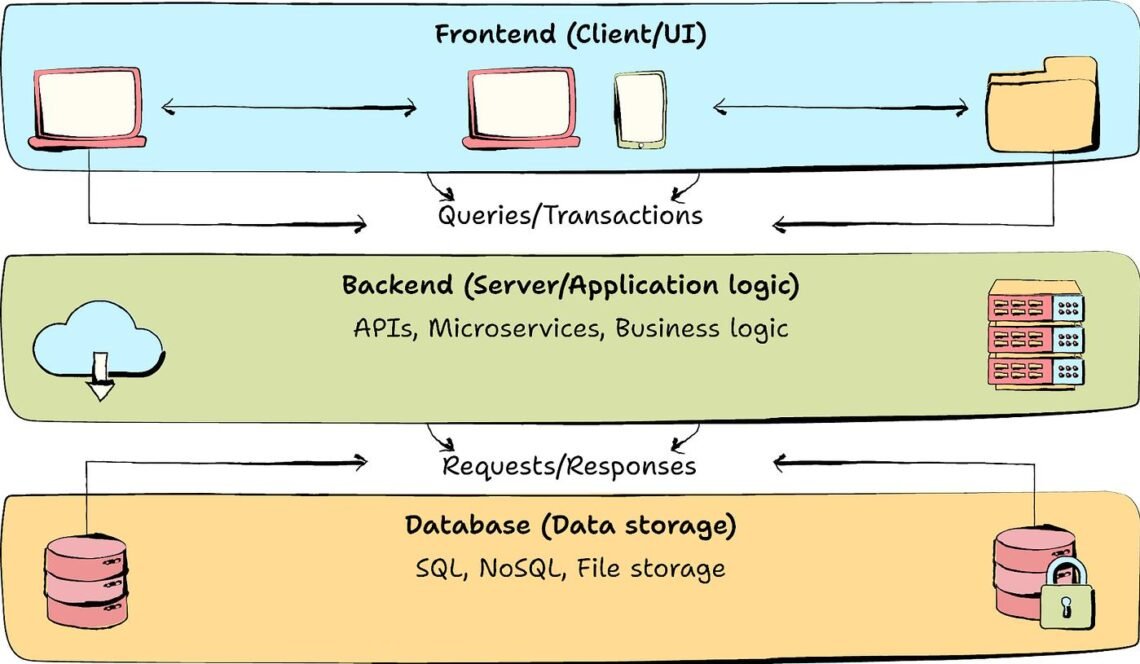
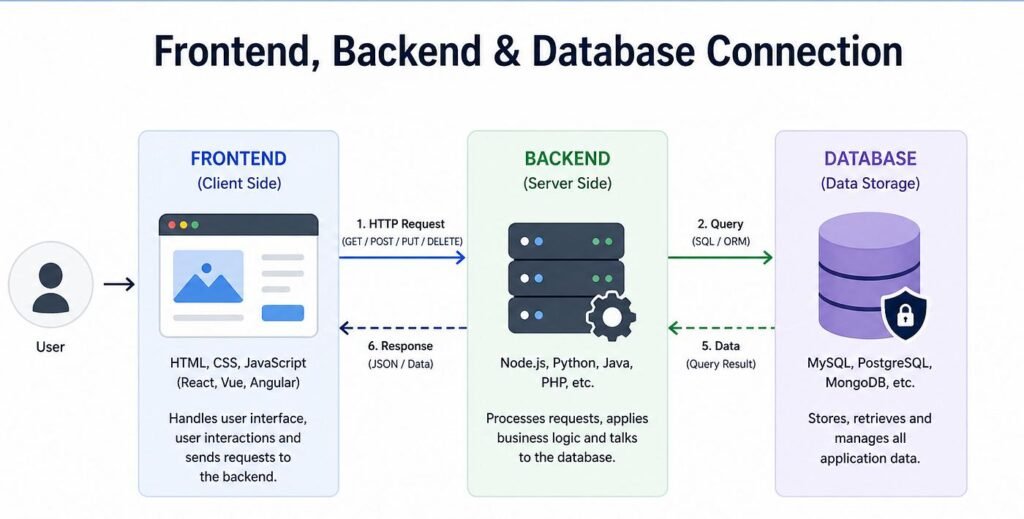
A simplified application might therefore work like this:
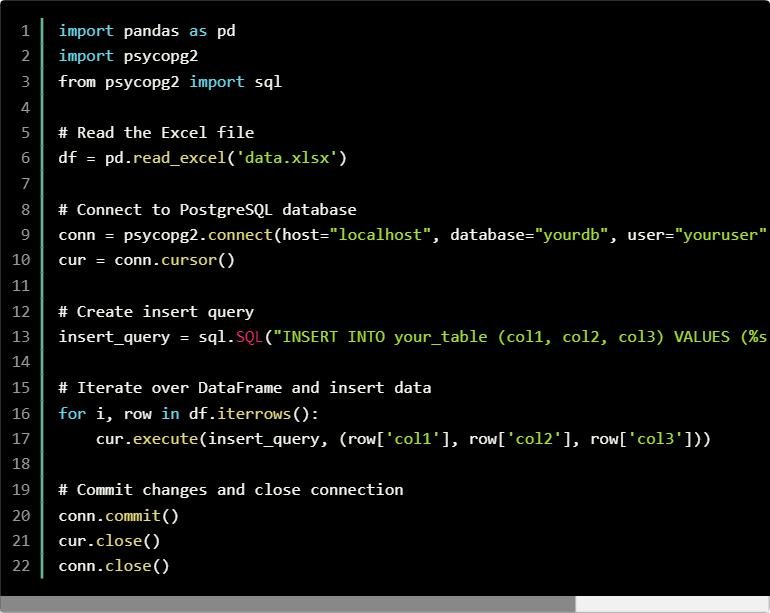
User interface → application logic → Python backend → PostgreSQL database
A user performs an action through the interface. The application receives the request, validates it, applies business rules, and reads or writes the necessary information in the database.
The actual implementation can be much more complicated, but this basic model helps explain how the pieces fit together.
It is important, however, not to treat Python and PostgreSQL as proof of the complete current technology stack. Public third-party descriptions have attributed other technologies and architectures to Mogothrow77, creating uncertainty about what is currently deployed.
Agile Development and Short Development Cycles
The published Mogothrow77 development account also describes a two-week sprint process.
A sprint is a defined development period during which a team selects a set of tasks, works on them, reviews the results, and uses what it learned to improve the next cycle. The project’s description also mentions daily stand-ups and sprint retrospectives.
The practical benefit is feedback.
Instead of spending many months building an enormous feature set before anyone evaluates it, a team can repeatedly ask:
- Does this feature work?
- Is it solving the intended problem?
- Did the implementation introduce new bugs?
- Is the interface understandable?
- What should be changed in the next iteration?
That feedback loop is often more valuable than trying to design the perfect product at the beginning.
A Typical Sprint
A simplified software sprint might look like this:
- Identify the highest-priority problems.
- Select tasks for the sprint.
- Implement the changes.
- Review the code.
- Run automated tests.
- Fix defects.
- Demonstrate the completed work.
- Review what went well and what needs improvement.
- Plan the next cycle.
This does not guarantee good software, but it creates a repeatable development process.
CI/CD: Turning Code Into Releases
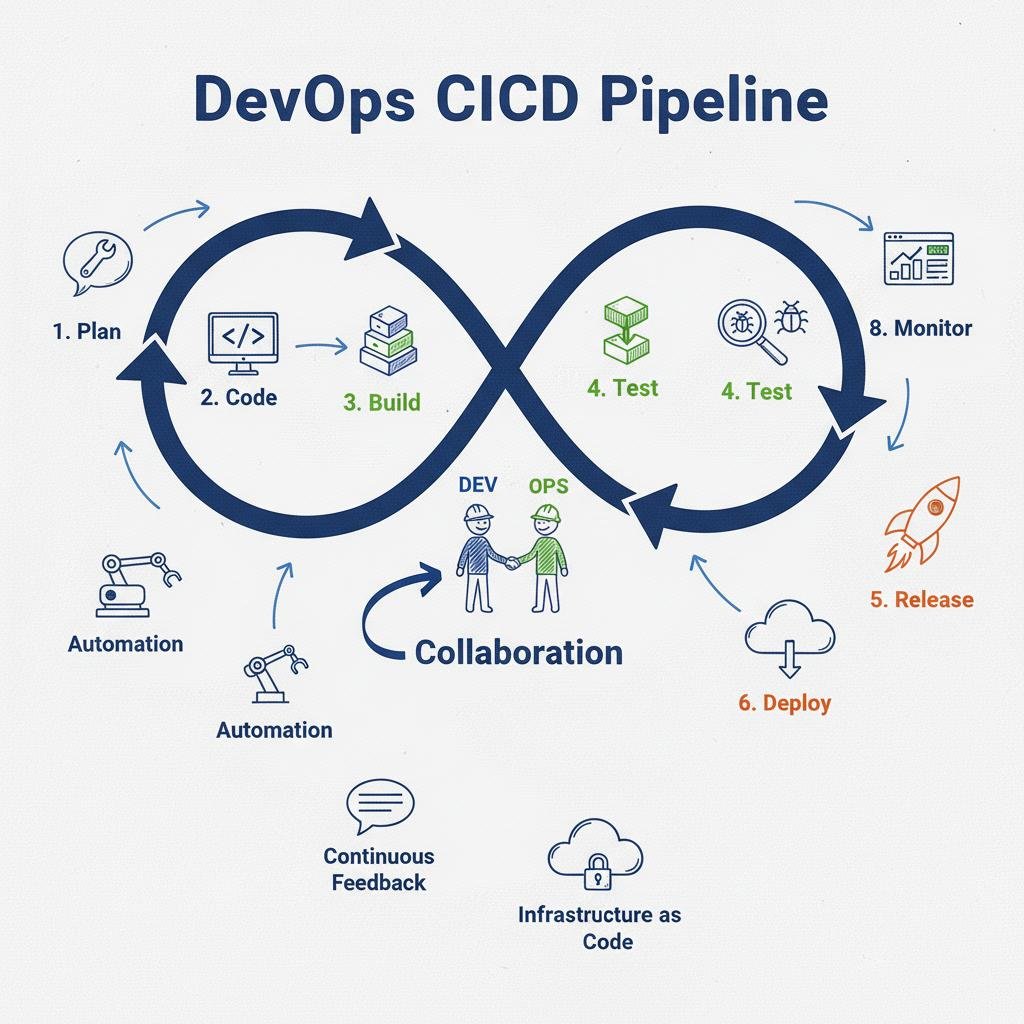
Another important part of the reported development process is CI/CD, or continuous integration and continuous delivery/deployment.
The project’s article says code commits trigger automated builds and tests, with Git-based version control used to track changes.
The basic idea is simple.
A developer changes the code and pushes that change into the project’s version-control system. Automated processes can then:
- Build the application
- Run unit tests
- Run integration tests
- Check for failures
- Package the software
- Potentially deploy an approved version
This reduces dependence on manual release procedures.
For example, suppose a developer changes the code responsible for account authentication. An automated pipeline can run relevant tests before that change reaches production.
If an important test fails, the deployment can be stopped while the problem is investigated.
The exact CI/CD platform used by Mogothrow77 is not sufficiently documented in the available public material, so specific tools should not be assumed without current primary documentation.
Where AI and Machine Learning Fit In
The published account says Mogothrow77 later incorporated machine-learning functionality rather than treating AI as something that should simply be added for its own sake.
That is an important distinction.
Machine learning is useful when a system needs to identify patterns or make predictions from data. It is not automatically the best solution for every software problem.
The project’s article describes a predictive model intended to identify patterns associated with potential device problems. It also describes a recommendation system that uses user interactions to suggest relevant workflows.
Conceptually, a predictive system could work like this:
Device data → preprocessing → machine-learning model → prediction → user alert
For example, if several measurements change in a pattern that historically precedes a problem, a model could assign a higher risk score and notify the user.
However, claims about the actual accuracy of such a model should be treated cautiously unless independently documented. The project’s article gives a specific performance figure, but there is no publicly available independent benchmark in the material reviewed that establishes that number.
Security Is Part of the Architecture
Security cannot be treated as something that is added immediately before release.
The Mogothrow77 development account describes threat modeling, encryption, protection of data in transit, and encryption of stored information as part of its security approach.
A secure application generally needs to consider questions such as:
- Who can access a particular piece of information?
- How is a user’s identity verified?
- How are passwords and credentials protected?
- How is sensitive information transmitted?
- Where are encryption keys stored?
- What happens if an account or device is compromised?
- How are security events detected?
- How can access be revoked?
Encryption alone does not make software secure.
A system can use strong encryption and still contain authorization flaws, insecure APIs, vulnerable dependencies, poor access controls, or improperly configured infrastructure.
Security therefore has to cover the entire application lifecycle.
Also Read: Zvodeps
How Mogothrow77 Software Is Tested
Testing is another major part of the reported development process.
The project’s published material discusses several categories of testing, including unit testing, integration testing, user acceptance testing, and performance/load testing.
Unit Testing
Unit tests examine individual pieces of software.
For example, a function that calculates a risk score might receive several known inputs and be checked against expected results.
The goal is to identify problems close to where they were introduced.
Integration Testing
Integration tests examine whether separate components work together correctly.
A database query might work correctly by itself, and an API endpoint might also work correctly by itself. Integration testing checks whether the API can actually retrieve and process the expected database information.
User Acceptance Testing
User acceptance testing brings actual users or representatives of the target audience into the evaluation process.
This can reveal problems that automated tests cannot identify.
A feature may technically work but still be confusing, inefficient, or poorly suited to the user’s workflow.
Performance and Load Testing
Performance testing asks a different question:
What happens when the system is under pressure?
Developers can simulate many users or requests and monitor:
- Response times
- Database performance
- CPU usage
- Memory consumption
- Error rates
- Bottlenecks
This helps identify problems before real users encounter them.
The Biggest Problem: Conflicting Public Information
There is an important limitation when researching how Mogothrow77 software is built: different public sources do not agree about its architecture.
Some third-party articles describe Mogothrow77 as a microservices-based system and associate it with technologies such as Node.js, Go, React, Redis, Docker, and Kubernetes. Other sources describe a monolithic architecture and Python/PostgreSQL foundation.
That does not automatically prove that one description is false.
Software can evolve. A project might begin as a monolith and later introduce separate services. Technologies can also be used for different components at different points in development.
The problem is that the available public documentation does not provide enough authoritative evidence to establish exactly when or whether such changes occurred.
This is why technical claims should be separated into three categories:
| Type of information | How to treat it |
|---|---|
| Published by the project itself | Report as the project's stated approach |
| Repeated by third-party websites | Treat as reported, not automatically confirmed |
| Supported by public source code or technical documentation | Stronger evidence |
| Unsupported technical claims | Do not present as established fact |
This distinction is especially important with unfamiliar software.
What We Can Actually Learn From the Development Process
Even with incomplete technical documentation, the reported development approach illustrates several sound software-engineering principles.
Start With the Problem
Technology should serve a defined purpose.
Choosing a programming language because it is fashionable is less useful than choosing technology that fits the application’s requirements.
Keep the First Version Manageable
An MVP can provide a practical foundation for learning what users actually need.
Protect Data at the Database Level
Application code should not be the only defense against invalid data. Database constraints and relationships can provide another layer of protection.
Automate Repetitive Checks
Automated builds and tests reduce the chance that basic mistakes will survive into later stages.
Test More Than Individual Functions
A system can pass unit tests and still fail when its components interact. Integration, acceptance, and performance testing therefore have different purposes.
Treat Security as a Design Requirement
Authentication, authorization, encryption, threat modeling, and secure data handling should be considered throughout development.
Real-World Example: Building a Device-Monitoring Feature
To understand the entire process, imagine the reported predictive-maintenance concept as a simplified example.
A development team might proceed like this:
- Requirement: Users need early warnings about potential device problems.
- Data collection: The application records relevant device measurements.
- Storage: Structured information is stored in a database.
- Processing: The backend cleans and prepares the data.
- Prediction: A machine-learning model evaluates patterns.
- Decision: The application determines whether a warning threshold has been reached.
- Interface: The user receives an understandable alert.
- Testing: Developers test normal conditions and unusual inputs.
- Load testing: The system is tested with many devices sending information simultaneously.
- Monitoring: Developers observe the system after deployment and fix problems as they appear.
The important point is that the machine-learning model is only one part of the product.
The surrounding software—data storage, APIs, authentication, user interface, monitoring, testing, and deployment—is equally important.
Common Misconceptions About Mogothrow77
“If several websites mention the same technology, it must be confirmed.”
Not necessarily.
Multiple websites can repeat information from one original article or from one another. Repetition is not independent verification.
“A monolith means the software is poorly designed.”
No.
A monolithic architecture can be entirely appropriate, particularly during early development. Architecture should reflect requirements rather than a desire to use the latest trend.
“Using AI automatically makes software intelligent.”
No.
An AI model is only useful when it performs a task reliably enough to provide value. Poor training data, unsuitable models, weak evaluation, or unclear objectives can make an AI feature worse than a simpler rule-based solution.
“CI/CD means every change automatically reaches users.”
Not always.
Continuous integration focuses on frequently integrating and testing code. Continuous delivery or deployment can involve additional approval and release controls.
“The published technical description proves the current architecture.”
Not necessarily.
A software project can change considerably after an article is published. Current architecture should ideally be verified through current documentation, source code, release notes, or other primary technical evidence.
Advantages of the Reported Development Approach
The approach described by Mogothrow77 has several potential advantages.
Simpler early architecture: Starting with a monolith can reduce operational complexity during early development.
Strong data controls: Database constraints can help prevent inconsistent records.
Iterative development: Short development cycles provide opportunities for frequent feedback.
Automated testing: CI/CD can identify regressions earlier than purely manual release processes.
Purpose-driven AI: Applying machine learning to a defined problem is generally more useful than adding AI simply as a feature label.
Security awareness: Designing security into the development process can reduce the need for expensive security fixes later.
Limitations and Uncertainties
The biggest limitation is not necessarily a programming problem. It is the lack of consistent, independently verifiable public technical information.
There is no sufficiently clear public record available from the sources reviewed that establishes the complete current architecture, development team, technology stack, repository, or production infrastructure.
That means readers should be careful with claims about specific frameworks, cloud providers, programming languages, open-source status, performance numbers, or internal architecture unless those claims can be traced to reliable primary documentation.
This is particularly important if someone is considering installing, integrating, or trusting unfamiliar software.
Before making a technical decision, look for:
- Official documentation
- A clearly identified developer or organization
- Release history
- Security information
- Licensing information
- Source code where applicable
- Reproducible technical claims
- Current support channels
The more consequential the decision, the more important verification becomes.
Frequently Asked Questions
How is Mogothrow77 software built?
The project’s published development account describes an approach involving an initial MVP, a monolithic architecture, Python and PostgreSQL, Agile development, CI/CD automation, machine-learning features, security controls, and multiple layers of testing. However, the complete current architecture is not independently established by the public material reviewed.
What programming language is Mogothrow77 built with?
The project’s own technical article identifies Python as part of its foundation. Some third-party sources attribute other languages to the software, so Python should not automatically be treated as proof of the complete current stack.
Does Mogothrow77 use a monolithic or microservices architecture?
The project’s published account says it initially used a monolithic architecture. Several third-party articles instead describe microservices. Without authoritative current documentation showing a later architectural change, the safest conclusion is that the public information is inconsistent.
Does Mogothrow77 use artificial intelligence?
The project’s published account says machine-learning features were incorporated into the software, including a predictive model and a recommendation system. The exact models, training data, infrastructure, and independently verified performance are not publicly documented in sufficient detail.
Is Mogothrow77 open source?
The project’s own website currently describes Mogothrow77 as proprietary and closed source. Other websites make conflicting claims about an open-source repository, but those claims are not sufficiently verified by an authoritative public codebase.
Why is it difficult to determine the exact Mogothrow77 technology stack?
The main problem is inconsistent public information. Different websites attribute different architectures and technologies to Mogothrow77, while a clearly verifiable and comprehensive technical record is difficult to establish.
What should developers learn from how Mogothrow77 is reportedly built?
The most useful lessons are broader than any individual programming language: define the problem first, keep the initial architecture manageable, protect data integrity, automate testing, build security into the design, and introduce machine learning only when it solves a specific problem.
Conclusion
The best answer to how Mogothrow77 software is built is more nuanced than a list of programming languages and frameworks.
The project’s own published account describes a development process based on defining a clear problem, building an MVP, starting with a monolithic architecture, using Python and PostgreSQL, working in short Agile cycles, automating builds and tests, integrating machine learning for specific tasks, and treating security and testing as important parts of development.
At the same time, conflicting third-party descriptions mean that the complete current architecture should not be presented as established fact without stronger primary evidence.
That distinction is valuable for anyone researching unfamiliar software. A technical explanation can sound convincing while still containing assumptions that have never been independently verified.
For Mogothrow77, the most responsible takeaway is therefore simple: we can describe the development process that has been publicly reported, but we should not confuse reported architecture with independently verified architecture. When evaluating software, always go one step further—look for current documentation, source code, licensing information, release history, and evidence that supports the technical claims being made.